
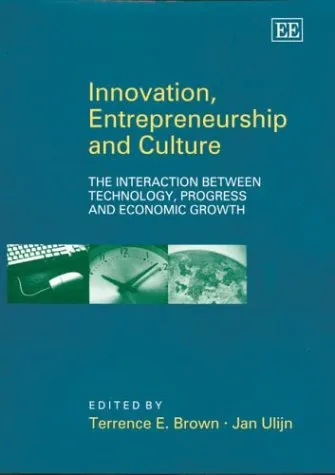
Innovation, Entrepreneurship and Culture: The Interaction Between Technology, Progress and Economic Growth
Terrence E. Brown,Jan Ulijn
2004
View book
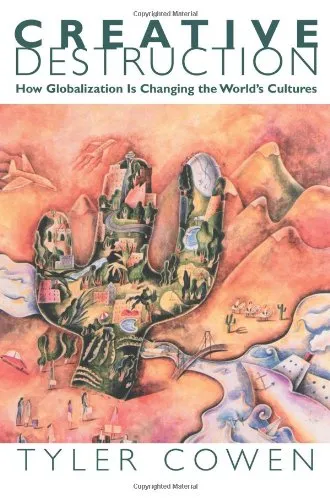
Book guide and evaluation
Tyler Cowen
0 reviews
Published
pages
views
"Creative Destruction: How Globalization Is Changing the World's Cultures" by Tyler Cowen delves deep into the intricacies of globalization and its profound impact on cultural landscapes across the globe. The book presents a nuanced view of how global economic forces transf
Before you read
"Creative Destruction: How Globalization Is Changing the World's Cultures" by Tyler Cowen delves deep into the intricacies of globalization and its profound impact on cultural landscapes across the globe. The book presents a nuanced view of how global economic forces transform cultures, posing both opportunities and challenges for preserving cultural heritage while embracing inevitable change. In this introduction, we explore a detailed summary, key takeaways, notable quotes, and the significance of this work in today's interconnected world.
Tyler Cowen's "Creative Destruction" examines the dynamic interplay between globalization and cultural change. Far from viewing globalization as merely a homogenizing force, Cowen argues that it is a complex process that can lead to the enrichment of cultures while threatening certain traditional aspects. The book moves through various facets of cultural life, including music, art, and cuisine, showcasing both the loss and gain that globalization brings.
Through a series of thought-provoking examples, Cowen illustrates how globalization fosters innovation in the cultural arena, allowing for a mixing of ideas and traditions that can lead to the creation of entirely new cultural forms. However, he does not shy away from discussing the downsides, such as the potential erosion of local cultures and their substitution by more dominant global influences. Cowen’s balanced approach presents readers with a comprehensive view of cultural evolution in the context of economic globalization.
"In the end, globalization provides more options, and the ability to choose is itself a significant cultural boon."
"Cultural futures are uncertain, but the forces that drive globalization—technology and trade—promise both change and novelty."
"Creative Destruction" stands out as a pivotal work that tackles one of the most debated topics of our time—globalization's impact on culture. Tyler Cowen presents readers with a multi-dimensional view of cultural interactions in the global arena, challenging the simplistic narrative of cultural erosion. Through its balanced exploration, the book encourages readers to see globalization as a double-edged sword that necessitates careful navigation to harness its benefits while mitigating its drawbacks. In an era characterized by rapid technological advances and increased cultural interconnectivity, Cowen’s insights provide a valuable framework to understand and navigate the evolving cultural landscapes of our contemporary world.
This work is crucial for policymakers, cultural practitioners, educators, and global citizens alike who seek a deeper understanding of how globalization influences our cultural narratives. It calls for a proactive engagement with globalization's cultural dynamics, urging individuals and communities to shape rather than be shaped by the forces of change.
Your question is answered in the context of this title and author. Each answer uses 2 points.
0 reviews, 4.0 average out of 5
Sign in to publish a review.
Ask a focused question and learn from the community.
Related references that continue this learning path.
Terrence E. Brown,Jan Ulijn
Elias G. Carayannis,Caroline M. Sipp
Sami Mahroum (auth.)
Michael A. Hitt,R. Duane Ireland,Robert E. Hoskisson