
Book guide and evaluation
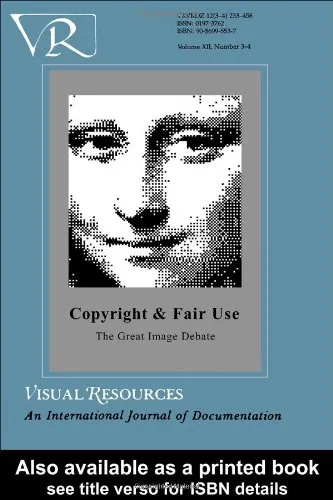
Copyright and Fair Use: The Great Image Debate (Visual Resources (M.E. Sharpe))
BARON
English
Beginner
Programming Languages
4.5 / 5
0 reviews
1997
Published
218
pages
160
views
Introduction to 'Copyright and Fair Use: The Great Image Debate' "Copyright and Fair Use: The Great Image Debate" is a vital exploration of one of the most pressing issues in the world of visual culture today. Authored to clarify and illuminate the increasingly complex relatio
Before you read
What will you get from this book?
Introduction to 'Copyright and Fair Use: The Great Image Debate'
"Copyright and Fair Use: The Great Image Debate" is a vital exploration of one of the most pressing issues in the world of visual culture today. Authored to clarify and illuminate the increasingly complex relationship between copyright law and image use, this book provides a critical foundation for creators, publishers, scholars, and legal practitioners. As visual resources dominate modern communication, gaining a solid understanding of copyright legislation is not only essential but also empowering for those who use or share images in their personal or professional lives.
From the rich historical background of copyright law to the nuanced complexities of determining fair use, this book embarks on a journey to untangle misconceptions, challenge outdated norms, and offer actionable insights. Whether you are a creative professional, teacher, student, or anyone concerned with intellectual property rights, this book equips you with the tools to navigate the great debate around image copyrights with confidence and precision. Below, you'll find a structured overview of the book's core components and significance.
Detailed Summary of the Book
The book delves deeply into the evolving landscape of copyright law and its intersection with visual resources in the digital age. It starts by examining the origins of copyright law, designed initially to encourage creativity and protect creators' intellectual property, and traces how laws have adapted—or failed to adapt—to modern technological advancements. It also explores how fair use emerged as a doctrine to balance creativity and protection, offering some degree of freedom for transformative work, criticism, and academic research.
One of the key focal points of the book is the complex concept of fair use. Through a combination of real-world case studies and hypothetical scenarios, the author sheds light on how the "four-factor test" is applied to determine the legality of using copyrighted images without permission. The book also addresses contentious topics like appropriation art, remix culture, digital sharing, and other resources shaped by the Internet age.
Key legal cases involving visual resources, including landmark rulings with implications for fair use and copyright claims, are examined in detail. Moreover, this book discusses the perspectives of both copyright holders and users in an unbiased manner, bringing a balanced overview to a polarized debate. Finally, the author concludes with actionable advice for navigating this complex legal terrain while fostering a future of equitable access to visual resources.
Key Takeaways
- An in-depth examination of the origins of copyright law and its relevance to visual resources today.
- Practical insights into applying the four-factor test to determine fair use for images and visual content.
- Discussions on how technological advancements, including digital sharing and social media, influence copyright and fair use laws.
- Key case studies that illustrate the real-world implications of copyright law on visual artists, educators, researchers, and publishers.
- Balanced exploration of the rights of copyright owners and the need for public access to creative works.
- Future prospects for shaping copyright law amidst cultural and technological shifts.
Famous Quotes from the Book
"Copyright is not the enemy of creativity; it is a legal framework designed to balance innovation with protection."
"Fair use is the bridge that connects the exclusive rights of creators to the transformative rights of society."
"The future of copyright law must adapt to digital innovation without abandoning its historical purpose to encourage the creative spirit."
Why This Book Matters
In an age when visual images are vital to communication, education, and culture, questions of copyright and fair use have become more relevant than ever. This book matters because it addresses these issues with clarity, balance, and foresight. Unlike generic discussions, it focuses specifically on the challenges faced by visual content creators and users. Understanding your rights and obligations in the realm of copyright not only helps you avoid potential legal pitfalls but also empowers you to create and share responsibly.
Moreover, this book bridges the gap between legal theory and practical application. By reading this book, professionals and amateurs alike can walk away with a stronger grasp of fair use, a deeper appreciation for intellectual property rights, and a toolkit for navigating legal complexities with confidence. At a time when both creators and consumers demand greater clarity, 'Copyright and Fair Use: The Great Image Debate' serves as an indispensable guide for all involved in the sphere of intellectual property and visual content.
Ask this book
Your question is answered in the context of this title and author. Each answer uses 2 points.
Sign in to ask the book assistant.
Reader reviews
0 reviews, 4.5 average out of 5
No reviews yet
If you have read this book, help the next reader with your experience.
Write a review
Sign in to publish a review.
Reader questions and answers
Ask a focused question and learn from the community.
Sign in to ask or answer a question.
No questions yet
Be the first to ask a clear, useful question.
What to read next
Related references that continue this learning path.
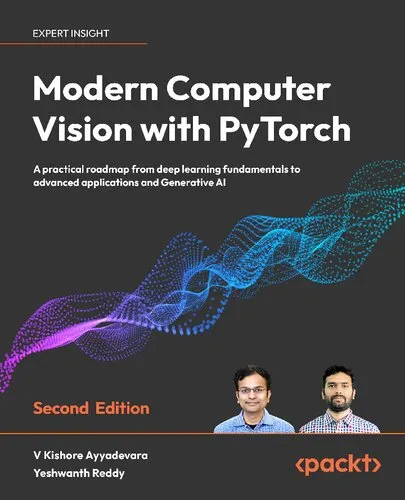
Modern Computer Vision with PyTorch: A Practical Roadmap From Deep Learning Fundamentals to Advanced Applications and Generative AI, 2nd Edition
V Kishore Ayyadevara,Yeshwanth Reddy
2023
View book