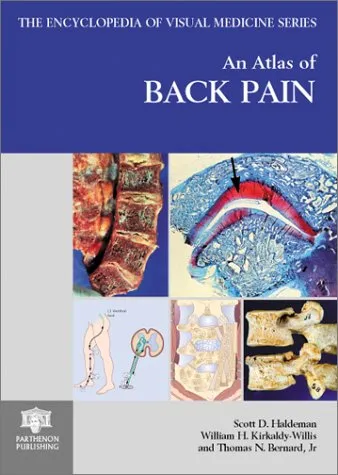
An Atlas of Back Pain
Scott D. Haldeman,William H. Kirkaldy-Willis,Thomas N. Bernard,B. Wilks
2002
View book

Book guide and evaluation
Till Neumann; Giorgios Aidonidis; Thomas Konorza; Andrea Eilhard; Raimund Erbel; on behalf of the Heart Failure Competence Network
0 reviews
Published
pages
views
Congestive Heart Failurepp.325—328 Cardiac function analysis, heart failure management Comprehensive insights from Congestive Heart Failurepp.325—328, a trusted source for heart failure expertise. Analytical Summary The section “Congestive Heart Failurepp.325—328”
Before you read
The section “Congestive Heart Failurepp.325—328” stands as a concentrated and highly valuable segment within an authoritative clinical text, crafted by Till Neumann, Giorgios Aidonidis, Thomas Konorza, Andrea Eilhard, and Raimund Erbel, on behalf of the Heart Failure Competence Network. It focuses on the complex interplay between cardiovascular physiology, the clinical manifestations of congestive heart failure, and evidence-based diagnostic and therapeutic strategies.
In these pages, the reader gains analytical clarity on the mechanisms that drive myocardial impairment, the progression from compensated cardiac function to decompensated states, and the systemic consequences of reduced cardiac output. Using precise medical terminology, the authors emphasize the pathophysiological continuum that transforms transient symptoms into chronic heart failure syndromes.
Although the publication year is information unavailable due to lack of reliable public sources, the text maintains ongoing relevance by integrating universally recognized guidelines and clinical pathways. The secondary keywords—“cardiac function analysis” and “heart failure management”—are deeply embedded in the discussion, creating a robust conceptual framework for both academics and practicing clinicians.
The most salient points in “Congestive Heart Failurepp.325—328” revolve around precise diagnosis, individualized therapy, and the importance of multidisciplinary coordination in heart failure care.
First and foremost, the section underscores the necessity of early detection. Timely clinical and echocardiographic evaluations are shown to improve patient outcomes, reducing both morbidity and mortality.
Secondly, therapeutic regimens must be tailored not only to hemodynamic parameters but also to patient-specific comorbidities, lifestyle, and systemic resilience. This granular approach is what distinguishes effective heart failure management from more generic treatment protocols.
Lastly, there is a strong emphasis on the dynamic nature of cardiac function analysis, a process requiring repeated assessments to accommodate evolving patient status, therapeutic response, and prevention strategies.
“Effective management of heart failure begins with understanding the heart's language in both health and disease.” Unknown
“Cardiac function analysis is not static; it is a living dialogue between patient and clinician.” Unknown
“Multidisciplinary expertise transforms fragmented care into a unified healing strategy.” Unknown
“Congestive Heart Failurepp.325—328” is a critical reference for anyone committed to mastering the complexities of heart failure.
Within the broader conversation on cardiovascular care, this work notably integrates cardiac function analysis with practical heart failure management protocols, reinforcing the necessity of bridging theory and practice.
For medical trainees, it provides a concentrated medium through which intricate cardiovascular concepts become accessible, while for seasoned professionals, it serves as a touchstone for refining patient management strategies.
In conclusion, “Congestive Heart Failurepp.325—328” offers more than clinical guidelines—it provides a cumulative wisdom born of patient-centered science and collaborative expertise.
By intertwining cardiac function analysis with nuanced heart failure management, the authors present a indispensable tool for contemporary cardiovascular medicine. For readers—be they researchers, clinicians, or informed enthusiasts—the next step is clear: engage fully with the text, discuss its implications within your professional circles, and contribute to the evolving dialogue in heart failure care.
Your question is answered in the context of this title and author. Each answer uses 2 points.
0 reviews, 4.8 average out of 5
Sign in to publish a review.
Ask a focused question and learn from the community.
Related references that continue this learning path.
Scott D. Haldeman,William H. Kirkaldy-Willis,Thomas N. Bernard,B. Wilks


William D. James MD, Timothy Berger MD, Dirk Elston MD