Loading
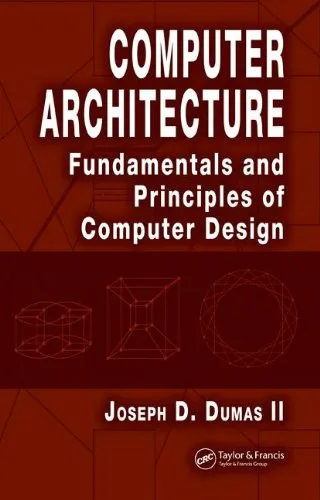
Cover of Computer architecture: fundamentals and principles of computer design

Book guide and evaluation

Computer architecture: fundamentals and principles of computer design

Joseph D. Dumas II

English Intermediate Computer Science and Theory
4.4 / 5

0 reviews

2005

Published

386

pages

462

views

Future computing professionals must become familiar with historical computer architectures because many of the same or similar techniques are still being used and may persist well into the future. Computer Architecture: Fundamentals and Principles of Computer Design discusses the

Before you read

What will you get from this book?

Future computing professionals must become familiar with historical computer architectures because many of the same or similar techniques are still being used and may persist well into the future. Computer Architecture: Fundamentals and Principles of Computer Design discusses the fundamental principles of computer design and performance enhancement that have proven effective and demonstrates how current trends in architecture and implementation rely on these principles while expanding upon them or applying them in new ways. Rather than focusing on a particular type of machine, this textbook explains concepts and techniques via examples drawn from various architectures and implementations. When necessary, the author creates simplified examples that clearly explain architectural and implementation features used across many computing platforms. Following an introduction that discusses the difference between architecture and implementation and how they relate, the next four chapters cover the architecture of traditional, single-processor systems that are still, after 60 years, the most widely used computing machines. The final two chapters explore approaches to adopt when single-processor systems do not reach desired levels of performance or are not suited for intended applications. Topics include parallel systems, major classifications of architectures, and characteristics of unconventional systems of the past, present, and future. This textbook provides students with a thorough grounding in what constitutes high performance and how to measure it, as well as a full familiarity in the fundamentals needed to make systems perform better. This knowledge enables them to understand and evaluate the many new systems they will encounter throughout their professional careers.

Ask this book

Your question is answered in the context of this title and author. Each answer uses 2 points.

Sign in to ask the book assistant.

Reader reviews

0 reviews, 4.4 average out of 5

No reviews yet

If you have read this book, help the next reader with your experience.

Write a review

Sign in to publish a review.

Reader questions and answers

Ask a focused question and learn from the community.

Sign in to ask or answer a question.

No questions yet

Be the first to ask a clear, useful question.