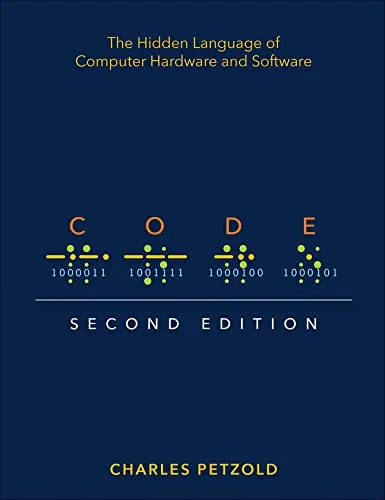
Code: The Hidden Language of Computer Hardware and Software - 2nd Edition
Charles Petzold
2022
View book
Book guide and evaluation
John L. Hennessy
0 reviews
Published
pages
views
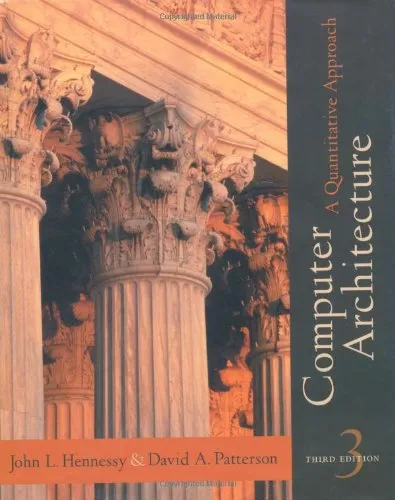
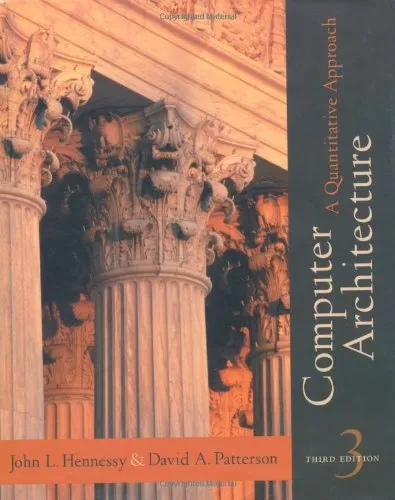
"Computer Architecture: A Quantitative Approach, 3rd Edition, 2002" is an essential resource for understanding the intricate world of computer architecture. Written by John L. Hennessy and David A. Patterson, this book is celebrated for its detailed exploration of architect
Before you read
"Computer Architecture: A Quantitative Approach, 3rd Edition, 2002" is an essential resource for understanding the intricate world of computer architecture. Written by John L. Hennessy and David A. Patterson, this book is celebrated for its detailed exploration of architectural concepts and its commitment to providing quantifiable evaluations of computing performance.
The third edition of "Computer Architecture: A Quantitative Approach" continues to build upon the foundational successes of its predecessors by diving deep into the principles and methodologies that define modern computer architecture. This edition introduces key updates to reflect the rapid advances in computing technologies around the turn of the 21st century. It explores increasingly important areas such as instruction sets, hardware/software interface, and hardware innovations.
The book emphasizes the quantitative approach to design, offering a robust methodology for addressing performance and power efficiency challenges. Through a combination of case studies, examples, and mathematical models, it guides readers in understanding how to analyze and optimize the performance of computer architectures in terms of speed, cost, efficiency, and scalability.
Topics covered include the fundamentals of parallelism and advanced compiler technology, as well as the impact of emerging trends like multicore processors. The authors have meticulously worked to incorporate data from commercial processor benchmarks and describe architectural features that are crucial in competitive markets.
"The persistence of following a framework based on data-driven analysis is the key to understanding real-world architectures."
"Quantitative analysis of architecture is not just an academic exercise; it is the cornerstone of innovation."
"Computer Architecture: A Quantitative Approach" is not just a textbook but a guiding manual for practitioners and students who wish to dig deep into the functional core of computers. As technology firms and academic institutions continue to push the boundaries of what computers can do, understanding their architecture becomes paramount.
This book matters because it distills complex concepts into quantifiable analyses, providing a structured way to evaluate and improve computing technologies. It serves as a critical resource for understanding the trade-offs involved in architectural decisions, positioning readers to innovate and adapt in a rapidly changing digital landscape.
It also acts as a bridge between theoretical knowledge and practical application, fostering a generation of engineers, designers, and architects well-equipped to tackle the challenges of tomorrow's computing environments.
Your question is answered in the context of this title and author. Each answer uses 2 points.
0 reviews, 4.5 average out of 5
Sign in to publish a review.
Ask a focused question and learn from the community.
Related references that continue this learning path.
Charles Petzold