High Dynamic Range Imaging: Acquisition, Display, and Image-Based Lighting
Erik Reinhard,Greg Ward,Sumanta Pattanaik,Paul Debevec
2005
View book
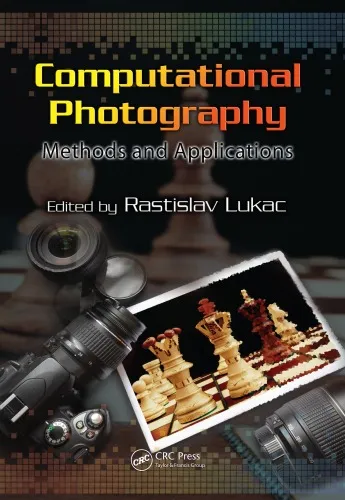
Book guide and evaluation
Rastislav Lukac
0 reviews
Published
pages
views
Introduction to "Computational Photography: Methods and Applications" The field of photography has undergone a transformative revolution in recent decades, catalyzed by advancements in computational methods and a deeper integration of computer science into visual arts. In
Before you read
The field of photography has undergone a transformative revolution in recent decades, catalyzed by advancements in computational methods and a deeper integration of computer science into visual arts. In my book, "Computational Photography: Methods and Applications", I explore the exciting confluence of these disciplines, offering readers an in-depth understanding of how computational techniques can redefine the way we capture, process, and interpret visual data.
This book serves as a comprehensive guide for anyone interested in learning about computational photography—whether you're a photography enthusiast, a researcher in related fields, or a professional in the visual arts industry. By presenting cutting-edge techniques, emerging trends, practical methods, and real-world applications, the book empowers readers to harness the power of computation to push the boundaries of digital imaging.
In "Computational Photography: Methods and Applications", I begin by introducing the conceptual foundations of computational photography—what it means, why it matters, and how it differs from traditional photography. The book carefully dissects how computational tools, algorithms, and machine learning models impact image capture, post-processing, and artistic expression.
The initial chapters focus on fundamental topics like multi-image techniques, camera models, and optical correction. From there, the book delves into more advanced areas, including HDR imaging, image stitching, light field photography, and motion deblurring. Each chapter includes detailed examples, technical workflows, and step-by-step tutorials designed to build an intuitive understanding of the subject matter.
What sets this book apart is its emphasis on practical applications. Case studies showcase innovative uses of computational photography in industries like cinematography, healthcare, security, and even autonomous vehicles. By bridging technical concepts with real-world scenarios, readers are exposed to the profound ways computational methods are reshaping the visual storytelling landscape.
"Computational photography is not merely a tool for better imaging; it is a bridge to seeing the world through mathematics, data, and creativity harmoniously intertwined."
"In a world inundated with visual data, the ability to intelligently process, enhance, and interpret images has become not just a luxury but a necessity."
"Light and pixels are only the beginning; it is the algorithms that breathe life into raw data, transforming them into meaningful narratives."
The advent of computational photography marks a paradigm shift, one that redefines what it means to take a photograph in the digital age. Technology is no longer merely a passive tool but an active participant in shaping visual experiences. This book matters because it equips readers to navigate and contribute to this transformation. It not only explains the "how" but also delves into the "why"—why these technologies are essential, why they are reshaping our perception, and why they hold profound implications for everything from art to science.
Furthermore, this book blends technical rigor with creative exploration, making it accessible to readers with diverse interests. Whether you're an artist experimenting with new techniques, a data scientist curious about visual analytics, or an educator seeking the next frontier for your students, this book offers something unique. Its focus on real-world examples and detailed explanations ensures that the concepts resonate, connecting theory with practical application.
As we journey further into a globalized digital era, the ability to understand and use computational photography will become increasingly vital. This book invites readers to not only learn but also innovate, inspiring them to be pioneers in the next wave of photographic and visual technological breakthroughs.
Your question is answered in the context of this title and author. Each answer uses 2 points.
0 reviews, 4.0 average out of 5
Sign in to publish a review.
Ask a focused question and learn from the community.
Related references that continue this learning path.
Erik Reinhard,Greg Ward,Sumanta Pattanaik,Paul Debevec
Bruce Fraser,Jeff Schewe