
Book guide and evaluation
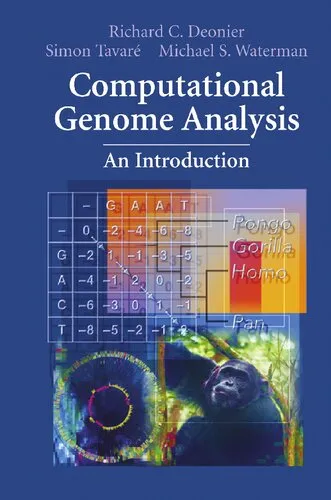
Computational Genome Analysis: An Introduction (Statistics for Biology & Health S)
Richard C. Deonier,Simon Tavaré,Michael S. Waterman
English
Beginner
Machine Learning
4.5 / 5
0 reviews
2005
Published
542
pages
507
views
Introduction Computational genome analysis is an ever-evolving field that sits at the intersection of biology, mathematics, statistics, and computer science. With the rapid rise of genomics as a transformative area in science and medicine, understanding the computational princ
Before you read
What will you get from this book?
Introduction
Computational genome analysis is an ever-evolving field that sits at the intersection of biology, mathematics, statistics, and computer science. With the rapid rise of genomics as a transformative area in science and medicine, understanding the computational principles behind genome analysis has become more vital than ever. Computational Genome Analysis: An Introduction serves as a comprehensive guide to this complex yet profoundly fascinating subject, offering readers both foundational insights and advanced methodologies required to decipher the mysteries of the genomic world.
Co-authored by pioneers and experts in the field—Richard C. Deonier, Simon Tavaré, and Michael S. Waterman—this book delves deep into the statistical and algorithmic tools necessary for understanding and analyzing genome data. Whether you're a student stepping into the field of computational biology or an experienced researcher seeking a structured approach to genomic data analysis, this text provides a clear, accessible, and in-depth overview to help you make sense of the genome's vast and intricate landscape.
Detailed Summary of the Book
A structured exploration of genome analysis.
In Computational Genome Analysis: An Introduction, the reader is taken on a carefully curated journey through the fundamental aspects of genome informatics. The book begins by providing critical background information on genetics and molecular biology, forming the cornerstone of understanding genomic patterns and their computational implications.
The text then dives into the essential mathematical and statistical frameworks that enable computational analyses, including probability theory, Markov chains, and string algorithms. These principles are tied directly to the problems faced in genomic research, such as sequence alignment, genome assembly, and the identification of regulatory motifs. Alongside theoretical explanations, the book presents practical algorithms and examples, empowering readers to translate conceptual knowledge into actionable solutions for real-life genomic datasets.
Key topics covered include sequence alignment, phylogenetics, hidden Markov models, and gene prediction, complemented by sections on statistical pattern recognition and RNA secondary structure. Finally, the book explores emerging computational techniques and challenges in the field, ensuring that readers are updated with the latest developments and applications of genomic data analysis.
Throughout the book, the authors succeed in presenting a fine balance of biological context and computational rigor, making it an indispensable resource for academics, students, and professionals alike.
Key Takeaways
- A thorough grounding in the fundamental biology behind genomes, including DNA, RNA, and proteins.
- Insights into the mathematical and statistical tools necessary for handling large, complex genomic datasets.
- Step-by-step explanations of classic algorithms in genomics, such as dynamic programming for sequence alignment.
- An understanding of how computational frameworks can be applied to real-world problems such as gene identification and phylogenetic analysis.
- Application of advanced concepts like hidden Markov models and RNA structure prediction to contemporary genomics research.
- The ability to critically assess and implement emerging techniques in computational genome analysis.
Famous Quotes From the Book
“A genome is more than a static sequence of letters; it is a dynamic, functional archive of life's history and future potential.”
“Understanding the genome requires a marriage of mathematical abstraction and biological intuition.”
“Computation and biology have formed a union that is reshaping how we view and interpret the natural world.”
Why This Book Matters
A transformative resource for modern genomics.
As genomics continues to push the boundaries of what is possible in healthcare, agriculture, and environmental science, the demand for computational tools to understand genome-level data is only growing. The authors of Computational Genome Analysis: An Introduction recognize this imperative and provide the knowledge necessary to bridge the gap between biology and computation. Their work introduces not only a rigorous theoretical foundation but also equips readers with the algorithmic and statistical skillsets essential for solving today’s most pressing genomic challenges.
Moreover, the book is uniquely relevant due to its interdisciplinary approach, demonstrating how the fusion of biological insights and computational techniques can provide groundbreaking solutions to longstanding questions in biology. For students, researchers, and professionals, this book becomes an invaluable resource as it shapes both academic study and real-world practice. Its clear explanations, practical examples, and depth of coverage ensure that it remains a cornerstone text in the field.
As we enter an era where personalized medicine and genomic-driven solutions are poised to change the world, this book underscores the importance of acquiring the skills and knowledge necessary to lead in computational genome analysis. More than just a guide to algorithms, it’s a roadmap for making sense of the vast and vital information encoded in the DNA of living organisms—truly the blueprint of life itself.
Ask this book
Your question is answered in the context of this title and author. Each answer uses 2 points.
Sign in to ask the book assistant.
Reader reviews
0 reviews, 4.5 average out of 5
No reviews yet
If you have read this book, help the next reader with your experience.
Write a review
Sign in to publish a review.
Reader questions and answers
Ask a focused question and learn from the community.
Sign in to ask or answer a question.
No questions yet
Be the first to ask a clear, useful question.
What to read next
Related references that continue this learning path.
Nature-Inspired Optimization Algorithms and Soft Computing: Methods, technology and applications for IoTs, smart cities, healthcare and industrial automation
Rajeev Arya, Sangeeta Singh, Maheshwari P. Singh, Brijesh R. IyerandVenkat N. Gudivada
2023
View book