Solutions Architect's Handbook - Third Edition: Kick-start your career with architecture design principles, strategies, and generative AI techniques
Saurabh Shrivastava,Neelanjali Srivastav
2024
View book
Book guide and evaluation
Vivek V. Ranade (Eds.)
0 reviews
Published
pages
views
Introduction to 'Computational Flow Modeling for Chemical Reactor Engineering' Welcome to the world of computational fluid dynamics (CFD) tailored for the intricate requirements of chemical reactor engineering. 'Computational Flow Modeling for Chemical Reactor Engineering'
Before you read
Welcome to the world of computational fluid dynamics (CFD) tailored for the intricate requirements of chemical reactor engineering. 'Computational Flow Modeling for Chemical Reactor Engineering' is a pioneering book authored by Vivek V. Ranade. This text bridges the gap between chemical engineering principles and computational modeling techniques, offering readers an insightful perspective into how fluid dynamics, chemical reactions, and multiphase flows can be efficiently modeled using modern computational tools.
The book is designed for a diverse readership, including researchers, academics, and practitioners in the fields of chemical engineering, applied physics, and computational sciences. It focuses on integrating fundamental concepts of reaction engineering with advanced computational methodologies, enabling readers to solve real-world chemical reactor problems effectively. Whether you are an experienced CFD practitioner or a newcomer, this book presents practical insights that will enrich your understanding of flow phenomena within chemical reactors.
With the rapid advancement of technology, computational tools have become indispensable in reactor design and optimization. This book not only provides a strong theoretical foundation but also discusses practical implementations and limitations. From predicting flow patterns in industrial reactors to modeling gas-liquid interphase interactions, the text equips readers with analytical techniques that profoundly enhance reactor performance while reducing inefficiencies and costs.
The book is systematically organized to allow readers to progress from foundational concepts to advanced applications seamlessly. It explores topics such as:
The inclusion of case studies and practical examples ensures that complex theories are elucidated through real-world scenarios. The book provides a step-by-step guide to setting up CFD models, understanding boundary conditions, and interpreting results, making it a practical toolkit for engineers and researchers alike.
"A model is only as good as its ability to predict the reality of the system it represents."
"Understanding turbulence is not just about deciphering chaotic patterns, but about realizing its potential to enhance chemical reaction rates."
"Computational flow modeling doesn’t replace experimentation; it complements it by offering dimensions that experiments cannot easily capture."
The need for precision and optimization in the chemical industry is more critical than ever. Efficiently designing and scaling chemical reactors requires a detailed understanding of flow dynamics and chemical kinetics. 'Computational Flow Modeling for Chemical Reactor Engineering' fills a much-needed gap by presenting a clear and practical framework for incorporating CFD into reactor engineering workflows.
The book’s relevance spans industries such as pharmaceuticals, petrochemicals, environmental engineering, and energy production, where enhancing reactor efficiency can directly translate into economic and environmental benefits. By empowering professionals with the skills to analyze and predict reactor behavior under various scenarios, this book is a cornerstone for advancing the application of computational modeling in chemical processes.
The text is rooted in decades of academic and industrial expertise, ensuring both theoretical rigor and practical relevance. It inspires readers to embrace modeling as an essential partner to experimentation, fostering innovation in reactor design and operational excellence.
Your question is answered in the context of this title and author. Each answer uses 2 points.
0 reviews, 4.6 average out of 5
Sign in to publish a review.
Ask a focused question and learn from the community.
Related references that continue this learning path.
Saurabh Shrivastava,Neelanjali Srivastav
Willi Jäger,Rolf Rannacher,J. Warnatz
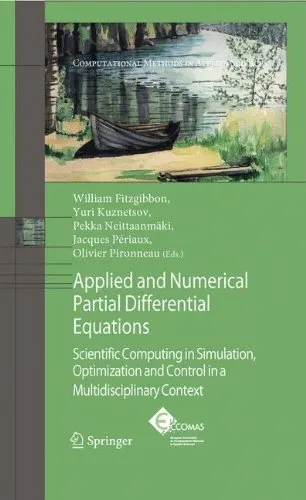
William E. Fitzgibbon,Jacques F. Périaux (auth.),W. Fitzgibbon,Y.A. Kuznetsov,Pekka Neittaanmäki,Jacques Périaux,Olivier Pironneau (eds.)