
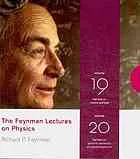
The Feynman lectures on physics. Volume I, Mainly mechanics, radiation and heat
Feynman, Richard Phillips;Sands, Matthew Linzee;Leighton, Robert B.
2013
View book
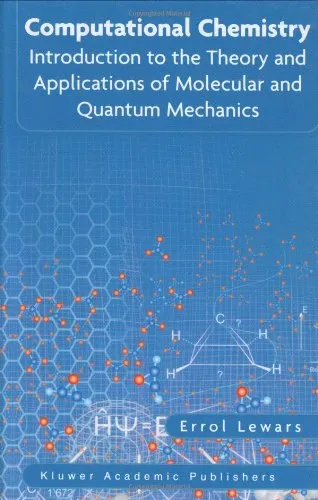
Book guide and evaluation
Errol G. Lewars
0 reviews
Published
pages
views
Introduction to Computational Chemistry: A Journey into Molecular and Quantum Mechanics Welcome to an exploration of the powerful and intricate world of computational chemistry, a pivotal tool that bridges the theory and application of molecular and quantum mechanics. Within t
Before you read
Welcome to an exploration of the powerful and intricate world of computational chemistry, a pivotal tool that bridges the theory and application of molecular and quantum mechanics. Within these pages, you will embark on a journey to understand the frameworks and technologies that allow chemists to simulate complex molecular systems with precision, predict chemical phenomena, and innovate in both academia and industry.
In "Computational Chemistry: Introduction to the Theory and Applications of Molecular and Quantum Mechanics," readers are provided with a comprehensive guide to the principles and methodologies that define the field of computational chemistry. The book delves into the core topics such as molecular mechanics, quantum chemistry, dynamical simulations, and the computation of molecular properties. It meticulously covers the theoretical underpinnings that allow chemists to simulate and interpret physical and chemical phenomena on the atomic scale.
Each chapter is methodically structured to facilitate an understanding of complex topics, starting from basic concepts and advancing to more sophisticated theories. Mathematical formulations, when necessary, are elucidated gradually, ensuring even readers new to the subject can grasp the subject matter. Additionally, practical applications are interwoven to showcase how theory translates to real-world solutions and technological advancements.
"Understanding the intricate dance of atoms and molecules through computational chemistry not only unveils the secrets of matter but empowers us to envisage the materials of the future."
"In the realm of computational chemistry, we possess the unique ability to predict and visualize the unseen, thus transcending the boundaries of experimental limitations."
The importance of this book lies in its exhaustive exploration of computational chemistry, a field that has revolutionized how chemical processes are understood and applied. Computational chemistry is not just a theoretical endeavor, but a practical necessity in modern chemistry, allowing scientists to perform experiments in-silico before attempting them in a laboratory. This transition not only saves tremendous resources but empowers chemists to hypothesize, predict, and refine chemical processes with remarkable accuracy.
For students and seasoned chemists alike, this book provides the tools to harness computational methods effectively, ensuring they remain at the forefront of scientific research and technological innovation. As new computational techniques evolve and technology progresses, understanding the basics becomes crucial to adapting and integrating new advancements.
The book's significance is further amplified by its role in fostering a deeper appreciation of the molecular-level interactions that govern macroscopic attributes. This understanding is essential for developments in pharmaceuticals, materials science, energy, and environmental solutions, making the text not only educational but pivotal for aspiring and established chemists who wish to contribute to solving some of the most pressing global challenges.
Your question is answered in the context of this title and author. Each answer uses 2 points.
0 reviews, 4.5 average out of 5
Sign in to publish a review.
Ask a focused question and learn from the community.
Related references that continue this learning path.
Feynman, Richard Phillips;Sands, Matthew Linzee;Leighton, Robert B.
Richard A. Friesner