
Book guide and evaluation
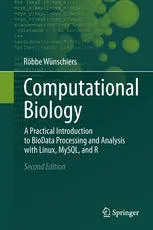
Computational Biology: A Practical Introduction to BioData Processing and Analysis with Linux, MySQL, and R
Röbbe Wünschiers (auth.)
English
Beginner
Physics
4.7 / 5
0 reviews
2013
Published
453
pages
226
views
Introduction to "Computational Biology: A Practical Introduction to BioData Processing and Analysis with Linux, MySQL, and R" Welcome to the transformative world of computational biology, where biology meets computational power and data science. "Computational Biology: A Pract
Before you read
What will you get from this book?
Introduction to "Computational Biology: A Practical Introduction to BioData Processing and Analysis with Linux, MySQL, and R"
Welcome to the transformative world of computational biology, where biology meets computational power and data science. "Computational Biology: A Practical Introduction to BioData Processing and Analysis with Linux, MySQL, and R" is a definitive guide for those aiming to dive into the fascinating domain of analyzing biological data with modern computing tools. Whether you're a biologist striving to transition into data analytics, or a computer scientist curious about biological problems, this book bridges the gap with clear, hands-on explanations and practical tools.
Detailed Summary of the Book
"Computational Biology" offers a comprehensive and structured approach to modern bioinformatics and computational biology by leveraging Linux, MySQL, and R—three powerhouse tools essential for data management, analysis, and visualization. This book is designed to empower readers with the knowledge and skills needed to handle complex biological data effectively.
The content starts with an introduction to the basics of Linux, focusing on navigating file systems, writing simple scripts, and running bioinformatics software. Next, readers are guided through MySQL, where they learn to design databases, manage biological datasets, and perform complex queries to retrieve meaningful information. Building upon these fundamentals, the book progresses into the R programming language, showcasing data visualization, statistical analysis, and interpreting results through practical examples.
One of the standout features of this book is its real-world relevance. Throughout the chapters, the author incorporates practical examples from genomics, proteomics, and transcriptomics, ensuring readers understand how theoretical concepts translate to real-life scenarios. By the end, readers master the computational pipelines necessary for modern biological research, from data acquisition to final analysis and presentation.
This book is not only a guide but a companion for anyone seeking to grow in the ever-expanding world of bioinformatics and computational biology. Whether you work in academia, research, or industry, the lessons within these pages will equip you with confidence and capability in handling biological data.
Key Takeaways
- Learn the basics of Linux for essential bioinformatics tools, file handling, and scripting.
- Understand and implement MySQL databases to store, query, and process biological datasets.
- Master the R language to analyze and visualize complex biological data.
- Develop workflows incorporating Linux, MySQL, and R to solve bioinformatics problems effectively.
- Get hands-on practice with real-world examples from genomics and proteomics.
- Acquire skills directly applicable to careers in computational biology and bioinformatics.
Famous Quotes from the Book
"In the age of big data, learning to handle biological information computationally is not just an advantage—it's a necessity."
"Linux, MySQL, and R are more than tools—they are aids to shaping biological insights from raw data."
"As the complexity of biological problems grows, so must our ability to analyze them with precision and reproducibility."
Why This Book Matters
In today's science-driven world, biology is increasingly a data-focused discipline. Genes, proteins, and cellular functions generate vast amounts of information that require computational expertise to navigate and interpret. However, for many biologists, transitioning from experiments to computational workflows feels daunting. Similarly, for data analysts and programmers, biological data can seem unwieldy due to its multidimensional and often stochastic nature.
This is where "Computational Biology" comes in. The book demystifies computational tools by presenting them in a user-friendly, practical framework. It also emphasizes reproducibility—a cornerstone of modern scientific research. Readers not only gain technical skills but also learn to think algorithmically, ensuring their analyses remain transparent and replicable.
This book matters because it addresses real-world challenges in computational biology with clarity and precision. It equips professionals and students alike with essential skills, preparing them for interdisciplinary collaboration in fields that are evolving at a rapid pace. Whether it's for managing genomic datasets or analyzing protein interactions, the knowledge within these pages resonates well beyond the domain of bioinformatics.
"Computational Biology: A Practical Introduction to BioData Processing and Analysis with Linux, MySQL, and R" is more than a textbook—it's a toolkit for tackling the present and future challenges of biological research in the era of big data.
Ask this book
Your question is answered in the context of this title and author. Each answer uses 2 points.
Sign in to ask the book assistant.
Reader reviews
0 reviews, 4.7 average out of 5
No reviews yet
If you have read this book, help the next reader with your experience.
Write a review
Sign in to publish a review.
Reader questions and answers
Ask a focused question and learn from the community.
Sign in to ask or answer a question.
No questions yet
Be the first to ask a clear, useful question.
What to read next
Related references that continue this learning path.

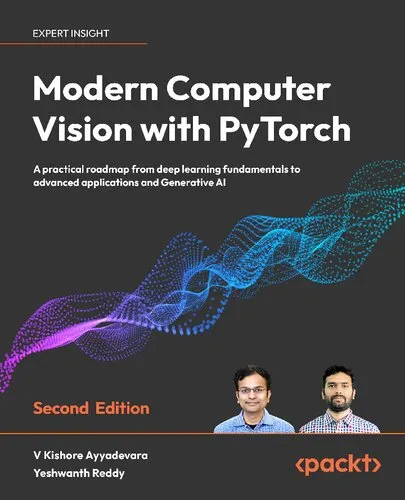
Modern Computer Vision with PyTorch: A Practical Roadmap From Deep Learning Fundamentals to Advanced Applications and Generative AI, 2nd Edition
V Kishore Ayyadevara,Yeshwanth Reddy
2023
View book