
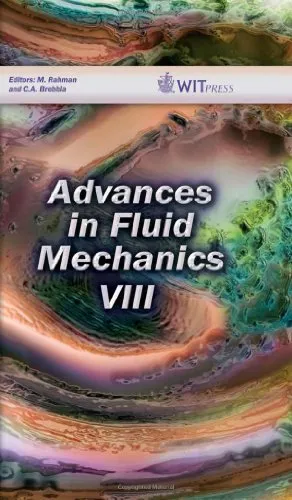
Advances in Fluid Mechanics VIII (Wit Transactions on Engineering Sciences)
M Rahman,C. A. (editors) Brebbia
2010
View book

Book guide and evaluation
Thomas B. Gatski,Jean-Paul Bonnet
0 reviews
Published
pages
views
Introduction to "Compressibility, Turbulence, and High-Speed Flow" Understanding the intricate dynamics of compressibility, turbulence, and high-speed flow is crucial for engineers, physicists, and researchers working in the realm of fluid dynamics. This book presents a compre
Before you read
Understanding the intricate dynamics of compressibility, turbulence, and high-speed flow is crucial for engineers, physicists, and researchers working in the realm of fluid dynamics. This book presents a comprehensive exploration of how these phenomena interconnect and influence one another in various scenarios, particularly in aerospace, engineering, and other high-speed applications. Written by Thomas B. Gatski and Jean-Paul Bonnet, this text serves as both an authoritative guide for advanced students and a reliable reference for professionals in the field.
From foundational principles to cutting-edge research, this book provides a meticulous overview of compressible flows and turbulent systems. By blending theoretical insights with practical examples, it bridges the gap between academic knowledge and real-world applications, making it an indispensable resource.
The book begins by laying the groundwork with a thorough discussion of compressibility in fluid systems. It explains how changes in density, pressure, and temperature interact in high-speed flows, critically affecting the behavior of fluids. The implications of shock waves, expansion fans, and other compressible phenomena are explored in depth.
Moving forward, the focus shifts to turbulence, one of the most challenging aspects of fluid mechanics. The authors delve into the chaotic nature of turbulent flow, emphasizing its impact in compressible systems. Topics such as Reynolds-averaged Navier-Stokes (RANS) equations, mixing layers, and stability analysis are presented with clarity, supported by detailed derivations and examples.
The high-speed flow section integrates both compressibility and turbulence to address complex problems encountered in aerodynamics and propulsion systems. From boundary layers to supersonic flows, the book equips readers with an understanding of various flow regimes, numerical techniques, and computational modeling approaches.
In addition, the text highlights advancements in experimental methods and diagnostic techniques, enabling researchers to measure and analyze high-speed flows more effectively. The inclusion of historical context and emerging trends ensures the material feels relevant and forward-thinking.
Here are some of the key takeaways readers can expect from this book:
The following quotes encapsulate the essence of the book and its profound insights into fluid mechanics:
"Compressibility, turbulence, and high-speed flow are not merely phenomena to be studied; they are the forces that shape the structures and systems of modern engineering."
"The study of turbulent flows is not driven solely by curiosity—it’s a necessity for advancing technologies in energy, transport, and aerospace."
"High-speed flows amplify the beauty and complexity of fluid dynamics, and understanding them requires a union of theory, experimentation, and computation."
"Compressibility, Turbulence, and High-Speed Flow" is far more than a textbook; it is a cornerstone for anyone pursuing expertise in aerospace engineering, energy systems, or any field involving high-speed fluid mechanics. Its unique synthesis of theory and practical application ensures that it appeals to a broad audience, from academia to industry professionals.
The challenges posed by supersonic and hypersonic transport, space exploration, and energy production demand a deeper understanding of compressible turbulence phenomena. This book provides the tools and knowledge necessary to tackle these challenges head-on. Its meticulous approach fosters both analytical problem-solving abilities and an appreciation for the nuances of fluid mechanics.
In a world driven by technological advancements, mastering high-speed flow dynamics is critical to innovation. By addressing both foundational concepts and the latest developments, this book remains an invaluable resource for anyone dedicated to pushing the boundaries of what's possible in modern engineering and science.
Your question is answered in the context of this title and author. Each answer uses 2 points.
0 reviews, 4.0 average out of 5
Sign in to publish a review.
Ask a focused question and learn from the community.
Related references that continue this learning path.
M Rahman,C. A. (editors) Brebbia
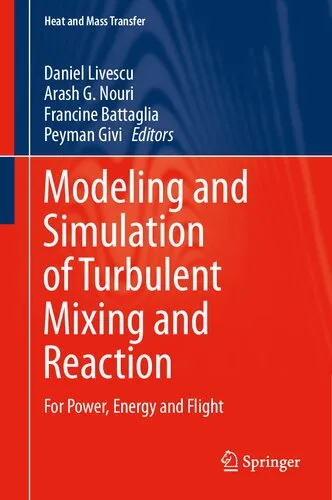
Daniel Livescu (editor),Arash G. Nouri (editor),Francine Battaglia (editor),Peyman Givi (editor)
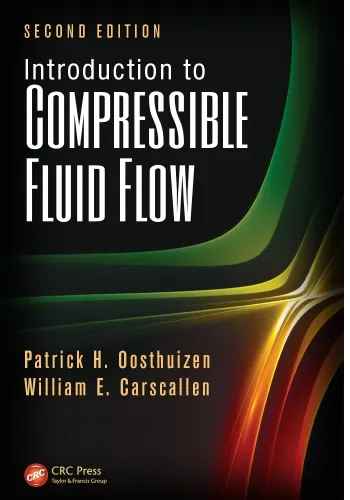
Carscallen, William E.;Oosthuizen, Patrick H
