

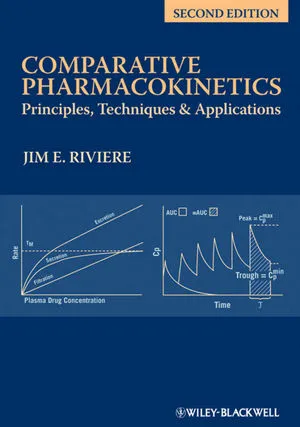
Book guide and evaluation
Comparative Pharmacokinetics: Principles, Techniques, and Applications, Second Edition
Jim E. Riviere(auth.)
English
Beginner
Medical
4.5 / 5
0 reviews
2011
Published
442
pages
461
views
Introduction to "Comparative Pharmacokinetics: Principles, Techniques, and Applications, Second Edition" Pharmacokinetics is the science that bridges the gap between biology, chemistry, and medicine to understand how drugs are absorbed, distributed, metabolized, and excret
Before you read
What will you get from this book?
Introduction to "Comparative Pharmacokinetics: Principles, Techniques, and Applications, Second Edition"
Pharmacokinetics is the science that bridges the gap between biology, chemistry, and medicine to understand how drugs are absorbed, distributed, metabolized, and excreted across different species. In the second edition of Comparative Pharmacokinetics: Principles, Techniques, and Applications, I set out to deliver a comprehensive and updated exploration of this fascinating field. This book serves as a vital resource for researchers, veterinarians, clinicians, pharmacologists, and academicians interested in understanding the comparative pharmacokinetics of veterinary therapeutics and its application across a variety of species.
Since its first edition, comparative pharmacokinetics has emerged as a more refined discipline, advancing integrative models and expanding cross-species data to help optimize drug development, dosage, and therapeutic outcomes. This updated edition comes with new chapters and enhanced coverage of the critical principles, advanced methods, and their real-world implications. Whether you are a scientist, veterinarian, or student in the field, this book caters to a broad readership with varying levels of expertise.
Detailed Summary of the Book
A Holistic Approach to Pharmacokinetics Across Species
This book takes a systematic approach to explain the foundational principles of pharmacokinetics and then delves into the unique challenges of applying these principles in comparative frameworks. The key areas of focus include absorption, distribution, metabolism, and elimination (ADME) profiles, as well as the methods to analyze and interpret these profiles in both large and small animals, aquatic species, and exotic species.
The second edition incorporates the latest techniques in experimental design and data modeling. Readers will learn how to apply mathematical models like physiologically based pharmacokinetic (PBPK) models to predict drug activity and understand the interplay between physiology and pharmacodynamics. Each chapter is enriched with practical case studies examining real-world applications of veterinary drug pharmacokinetics in food-producing animals, companion animals, and wildlife species.
In addition, this edition emphasizes the importance of regulatory considerations and ethical frameworks, especially in veterinary medicine, where species diversity and environmental factors play significant roles. By integrating scientific rigor with practice-oriented insights, the book ensures a balanced approach that caters to both academic and applied needs.
Key Takeaways
- A clear understanding of ADME processes across different species.
- Cutting-edge techniques for designing and interpreting pharmacokinetics experiments.
- How comparative pharmacokinetics aids veterinary medicine, drug formulation, and toxicology.
- Applications of PBPK and other mathematical models in cross-species pharmacokinetics.
- Insight into regulatory frameworks and ethical considerations impacting veterinary drug use.
Famous Quotes from the Book
"Comparative pharmacokinetics is not merely a science of equations and graphs; it is the intuitive art of understanding life itself in all its species-specific diversity."
"The interplay of drug and species represents one of the most fascinating dialogues in pharmacology, a conversation governed by biology, physiology, and environment."
Why This Book Matters
This book matters because it addresses a critical gap in veterinary pharmacology and personalized medicine. With the increasing demand for precision in veterinary therapeutics and the growing prominence of regulatory issues in drug development, a comprehensive understanding of cross-species pharmacokinetics has never been more relevant.
What sets this book apart is its explicit focus on applying pharmacokinetics knowledge to real-world scenarios. By encompassing a wide variety of species—from traditional livestock to exotic and aquatic species—the book equips its readers with both specialized knowledge and a broader perspective. This is not just a book for scientists; it is a toolkit for problem-solvers who must navigate the complexity of animal health challenges in diverse ecosystems.
Whether you're tasked with designing veterinary drugs, handling regulatory compliance, or researching cross-species biological processes, Comparative Pharmacokinetics offers the tools, insights, and strategies necessary for success. The updated content solidifies its position as an essential guide for both students entering the field and seasoned professionals seeking to stay updated with the latest advancements. This is why the second edition has been meticulously developed to serve the evolving needs of the scientific and veterinary communities.
Ask this book
Your question is answered in the context of this title and author. Each answer uses 2 points.
Sign in to ask the book assistant.
Reader reviews
0 reviews, 4.5 average out of 5
No reviews yet
If you have read this book, help the next reader with your experience.
Write a review
Sign in to publish a review.
Reader questions and answers
Ask a focused question and learn from the community.
Sign in to ask or answer a question.
No questions yet
Be the first to ask a clear, useful question.
What to read next
Related references that continue this learning path.

Current Developments in Solid State NMR Spectroscopy
Alexej Jerschow (auth.),Dr. Norbert Müller,Dr. Perunthiruthy K. Madhu (eds.)
2003
View book

Discovering Modern Set Theory. II: Set-Theoretic Tools for Every Mathematician
Martin Weese Winfried Just
1997
View book