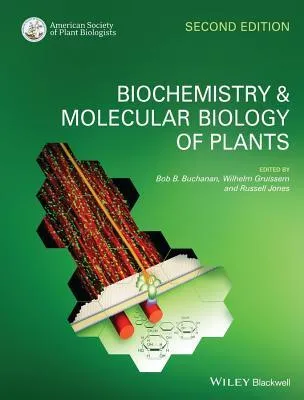
Biochemistry and Molecular Biology of Plants
Buchanan, Bob(Editor);Gruissem, Wilhelm(Editor);Jones, Russell(Editor)
2015;2012
View book

Book guide and evaluation
K.B. Morais; K.F. Grego; A.M. Tanaka-Azevedo
0 reviews
Published
pages
views
Comparative Biochemistry and Physiology Part A: Molecular & Integrative Physiologypp.S106—0 Molecular physiology, integrative biochemistry Authoritative analysis of Comparative Biochemistry and Physiology Part A: Molecular & Integrative Physiologypp.S106—0. Analytica
Before you read
The book Comparative Biochemistry and Physiology Part A: Molecular & Integrative Physiologypp.S106—0 stands as an essential academic resource for researchers, educators, and practitioners seeking a detailed understanding of biochemical and physiological processes across diverse species. It weaves together molecular physiology and integrative biochemistry into a coherent narrative, enriched with comparative analyses.
As its title suggests, the work bridges molecular-level phenomena with larger physiological systems, offering an integrative perspective that is seldom achieved in discipline-specific studies. Through rigorous methodologies and critically examined evidence, the volume invites readers to examine how biochemical pathways and physiological mechanisms adapt and vary among organisms in response to environmental pressures, genetic heritage, and evolutionary trajectories.
Information on the publication year of this work is unavailable, as no reliable public source provides this detail. Nevertheless, the text’s relevance is undeniable within the scientific community devoted to molecular and comparative physiology. Its insights help establish foundational knowledge that extends across fields such as biochemistry, cell biology, zoology, and environmental physiology.
Readers will come away with a richer appreciation for the complex interplay between molecular physiology and integrative biochemistry, allowing for nuanced exploration of adaptive mechanisms across species.
The primary takeaway is the importance of a comparative lens when investigating physiological processes. By examining multiple species, the work uncovers patterns and divergences that highlight evolutionary adaptability.
Secondary insights include the value of integrating biochemical data with system-level analyses, reinforcing the notion that molecules and organs cannot be fully understood in isolation.
The text also advances the scientific conversation about environmental influences on biochemical pathways, shedding light on how external factors drive variation and resilience at both molecular and systemic levels.
Finally, the work emphasizes a multidisciplinary approach, urging scientists to collaborate across molecular biology, ecology, and evolutionary sciences to deepen understanding.
“Understanding the molecular underpinnings of physiology requires a holistic view across species.”Unknown
“Comparative analysis is not a luxury—it is the cornerstone of integrative biochemical research.”Unknown
“Integration of data from the molecular to the systemic level reveals the true fabric of life’s complexity.”Unknown
In the realm of scientific inquiry, few resources achieve the breadth and depth found in Comparative Biochemistry and Physiology Part A: Molecular & Integrative Physiologypp.S106—0.
This work matters because it consolidates knowledge from traditionally siloed fields—molecular physiology and integrative biochemistry—into a unified framework that fosters interdisciplinary dialogue. For educators, it serves as a comprehensive course companion; for researchers, it offers a reference point for designing experiments with comparative scope; and for professionals, it provides actionable insights that inform environmental policy and biomedical innovation.
Its focus on cross-species analysis enables a deeper understanding of biological resilience and vulnerability, especially relevant in the age of climate change and rapid habitat alteration. This adaptability-oriented approach is vital for developing predictive models of organismal response to shifting ecological conditions.
By investing time in studying and discussing Comparative Biochemistry and Physiology Part A: Molecular & Integrative Physiologypp.S106—0, readers engage with a text that not only broadens scientific horizons but also strengthens connections between disciplines.
This work encourages us to think beyond the confines of laboratory or field data, inviting a holistic appreciation for the interconnectedness of life at its most molecular and systemic levels. Now is the moment to delve into its pages, to share its insights with colleagues, and to spark discourse that might lead to new avenues of research. Whether in academia, applied science, or policy development, the value embedded within this book’s content is profound and enduring.
Your question is answered in the context of this title and author. Each answer uses 2 points.
0 reviews, 4.6 average out of 5
Sign in to publish a review.
Ask a focused question and learn from the community.
Related references that continue this learning path.
Buchanan, Bob(Editor);Gruissem, Wilhelm(Editor);Jones, Russell(Editor)