
Constrained Optimization in the Calculus of Variations and Optimal Control Theory
John Gregory Ph.D.,Cantian Lin Ph.D. (auth.)
1992
View book
Book guide and evaluation
John C. Nash
0 reviews
Published
pages
views
Introduction Welcome to "Compact Numerical Methods for Computers Linear Algebra and Function Minimisation," a guide that deftly combines theoretical depth with practical insights in the world of numerical analysis. This book delves into the essentials of numerical metho
Before you read
Welcome to "Compact Numerical Methods for Computers Linear Algebra and Function Minimisation," a guide that deftly combines theoretical depth with practical insights in the world of numerical analysis.
This book delves into the essentials of numerical methods, focusing on linear algebra and function minimization, providing a comprehensive yet concise resource that bridges the gap between complex mathematical concepts and their practical implementation in computational environments. Whether you're a student, educator, or professional working with numerical data and algorithms, this book offers both foundational knowledge and advanced techniques to enhance your computational efficiency.
The book is structured to guide the reader through the basics of numerical methods, introducing key principles of linear algebra and function minimization. It begins with a foundational overview of numerical algorithms, highlighting their role and significance in solving real-world problems. Subsequent chapters meticulously explore critical topics such as matrix operations, eigenvalues and eigenvectors, and optimization algorithms.
Throughout its chapters, the book emphasizes the importance of numerical stability and efficiency, offering solutions that not only work in theory but also in practice, scaling effectively with computational demands. By discussing both direct and iterative methods, readers gain a thorough understanding of how to approach different classes of problems effectively.
Moreover, advanced topics such as least squares methods, non-linear equations, and constrained optimization are presented in a manner that balances mathematical rigor with accessibility. The book includes numerous worked examples and theoretical discussions that lead to practical algorithms, providing readers with the tools necessary to implement robust solutions in software.
1. In-Depth Understanding: Gain a comprehensive understanding of linear algebra and function minimization techniques, crucial for developing efficient numerical solutions.
2. Practical Application: Learn to apply numerical methods in a variety of scenarios, from basic computations to complex real-world problems.
3. Algorithmic Insights: Discover the principles of algorithm design, ensuring solutions are not only accurate but also computationally efficient and stable.
4. Theoretical and Practical Balance: Appreciate the blend of rigorous mathematical arguments with practical applicability, empowering readers to transition from theory to practice seamlessly.
"Mathematics is not just about numbers, equations, computations, or algorithms: it is about understanding."
"In numerical analysis, stability and accuracy are crucial — they determine whether our calculated answers are close to the truth we seek."
"With the right tools and knowledge, tackling complex numerical problems can become not only manageable but also insightful."
In a world that increasingly relies on the precision and efficiency of computational tools, understanding the computational underpinnings is essential. This book matters because it equips readers with the ability to create algorithms that are both efficient and reliable — indispensable skills in scientific computing, engineering domains, and data analysis.
By providing a compact yet complete exploration of numerical methods, this book enables practitioners to make informed decisions in their computational tasks, ensuring solutions are both effective and elegant. Its compact format doesn't sacrifice depth, offering a tailored educational journey for anyone striving to deepen their expertise in numerical analysis.
Ultimately, "Compact Numerical Methods for Computers Linear Algebra and Function Minimisation" is not just a textbook; it's a key resource that empowers its readers to solve some of the most compelling challenges in computation today.
Your question is answered in the context of this title and author. Each answer uses 2 points.
0 reviews, 4.2 average out of 5
Sign in to publish a review.
Ask a focused question and learn from the community.
Related references that continue this learning path.
John Gregory Ph.D.,Cantian Lin Ph.D. (auth.)
Mike Mesterton-Gibbons
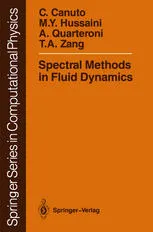
Professor Claudio Canuto,Dr. M. Yousuff Hussaini,Professor Alfio Quarteroni,Dr. Thomas A. Zang Jr. (auth.)