

The devil's long tail : religious and other radicals in the internet marketplace
O'Hara, Kieron;Stevens, David
2015
View book
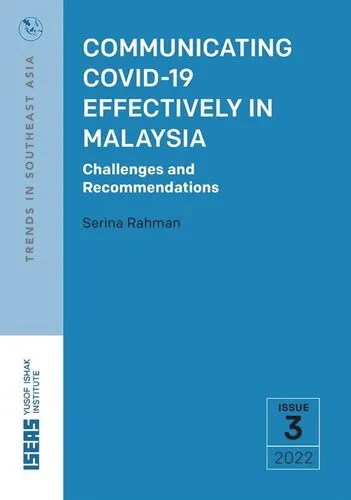
Book guide and evaluation
Serina Rahman
0 reviews
Published
pages
views
Introduction to 'Communicating COVID-19 Effectively in Malaysia: Challenges and Recommendations' The COVID-19 pandemic has profoundly reshaped the way we communicate, both locally and globally. In Malaysia, an incredibly diverse and multicultural society, effective commu
Before you read
The COVID-19 pandemic has profoundly reshaped the way we communicate, both locally and globally. In Malaysia, an incredibly diverse and multicultural society, effective communication during this public health crisis took center stage as a critical element in mitigating the virus's impact. 'Communicating COVID-19 Effectively in Malaysia: Challenges and Recommendations' serves as a comprehensive exploration of this vital topic. This book examines how communication strategies were formed, executed, and received, highlighting the unique hurdles Malaysia faced while proposing actionable recommendations for future crises.
The book begins by examining the timeline of COVID-19 in Malaysia, mapping out the various phases of the pandemic and the respective communication methods deployed during each stage. From the initial outbreak to subsequent waves of infection and the nationwide vaccination rollout, the book paints a detailed picture of Malaysia’s public health communication in action.
A significant section is dedicated to identifying the key challenges faced by policymakers, healthcare professionals, and media outlets. These challenges include addressing misinformation, combating vaccine hesitancy, and reaching vulnerable populations such as those in rural or underserved areas. The book also places substantial emphasis on the role of multiculturalism and language diversity in Malaysia, which often compounded difficulties in delivering a unified and coherent public health message.
The latter chapters of the book focus on the successes and shortcomings of various communication campaigns conducted by the Malaysian government and related agencies. It delves into the role of social media, community leaders, and grassroots organizations in bridging information gaps and fostering trust among citizens. By analyzing these case studies, the book provides readers with critical insights into what worked, what didn’t, and why certain strategies resonated with different segments of society.
Finally, the book culminates in a series of well-thought-out recommendations aimed at improving public health communication strategies for future pandemics or national disasters. These include fostering stronger collaborations between various stakeholders, leveraging technology effectively, and adopting a more inclusive communication approach that respects Malaysia’s unique sociocultural fabric.
"Effective communication during a pandemic is not just about disseminating information—it's about fostering trust, clarity, and unity in the face of widespread uncertainty."
"A pandemic exposes not just the vulnerabilities of our healthcare systems but also the gaps in how we convey vital, life-saving information to the public."
As the world grapples with the aftereffects of COVID-19, the lessons learned during this crisis have far-reaching implications beyond just public health. This book is not merely about the Malaysian experience; it is a reflection of global challenges and a roadmap for addressing them. For policymakers, public health officials, academics, and communication professionals, 'Communicating COVID-19 Effectively in Malaysia: Challenges and Recommendations' offers actionable insights and practical tools for refining crisis communication strategies.
The COVID-19 pandemic may have been an unprecedented event, but it will not be the last global crisis humanity faces. Learning from past successes and mistakes is essential to prepare for the future. This book considers Malaysia’s unique context while offering universally applicable lessons, making it an invaluable resource for readers from any corner of the globe.
By intertwining statistical analyses, real-world anecdotes, and expert opinions, this book bridges the gap between academia and practical application. Its relevance is timeless, not just as a historical account, but as a guide that will continue to inform public health policies and communication frameworks in the years to come.
Your question is answered in the context of this title and author. Each answer uses 2 points.
0 reviews, 4.2 average out of 5
Sign in to publish a review.
Ask a focused question and learn from the community.
Related references that continue this learning path.
O'Hara, Kieron;Stevens, David
Robin Ticic,Elise Kushner,Bruce Ecker
Angela M. Cirucci,Urszula M. Pruchniewska

Eric Angel,Evripidis Bampis,Fanny Pascual (auth.),Ratislav Královic̆,Ondrej Sýkora (eds.)