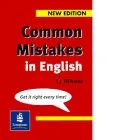
Book guide and evaluation
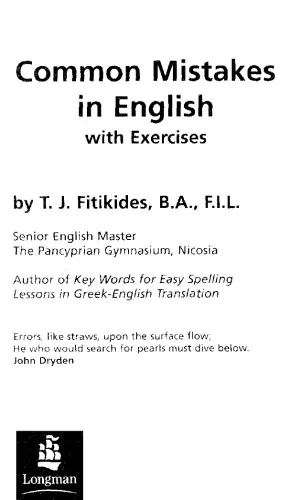
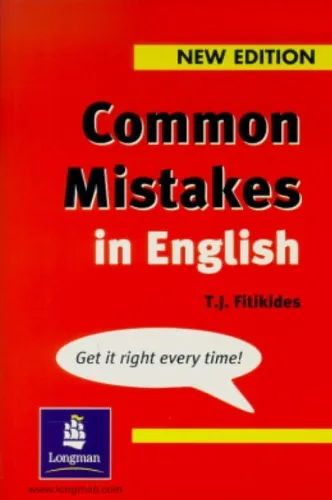
Common Mistakes in English (Grammar Practice)
T.J. Fitikides
English
Beginner
Language Learning
4.0 / 5
0 reviews
2002
Published
110
pages
706
views
Introduction Welcome to a comprehensive journey through the intricacies of English grammar with "Common Mistakes in English (Grammar Practice)" by T.J. Fitikides. This book has served as an invaluable resource for students, educators, writers, and anyone keen on re
Before you read
What will you get from this book?
Introduction
Welcome to a comprehensive journey through the intricacies of English grammar with "Common Mistakes in English (Grammar Practice)" by T.J. Fitikides. This book has served as an invaluable resource for students, educators, writers, and anyone keen on refining their English language proficiency. Its enduring popularity and relevance are testimony to its effectiveness in addressing the nuances and common pitfalls that learners encounter in their quest to master English. This introduction provides a succinct overview of what the book offers, key takeaways, treasured insights, and the significance of its contribution to English language learning.
Detailed Summary of the Book
"Common Mistakes in English (Grammar Practice)" is an insightful guide that delves deep into the typical mistakes made by learners of English across the globe. Its structured format, divided into clear, concise sections, allows readers to easily navigate and pinpoint areas that require attention. Each section is dedicated to specific grammatical errors, providing explanations and corrections with examples that illustrate the nuances of proper usage. The book covers a broad spectrum of topics, ranging from incorrect verb tenses to misused prepositions, faulty article usage, and the often-confusing English idioms. Beyond mere corrections, it incorporates practice exercises and practical tips to facilitate the absorption and application of correct grammar in everyday communication.
Key Takeaways
- Identification of common English grammar mistakes and misconceptions.
- Clear explanations for why certain usages are incorrect, accompanied by corrected examples.
- Practical exercises to reinforce grammatical understanding and correct application.
- Insights into avoiding common pitfalls in spoken and written English.
Famous Quotes from the Book
"Accuracy is the twin brother of honesty; inaccuracy, of dishonesty."
"To write or speak what is perfectly acceptable in English is what every learner aspires to achieve."
Why This Book Matters
In today's globalized world, the ability to communicate fluently in English has become a pivotal asset. "Common Mistakes in English (Grammar Practice)" plays a crucial role in equipping learners with the tools needed to navigate the intricacies of English grammar, thereby empowering them to express themselves with confidence and clarity. The book’s practical, example-driven approach bridges the gap between theoretical grammar knowledge and real-life application, making it a valuable adjunct to both formal education settings and independent study environments. Its enduring relevance and accessibility continue to make it a cornerstone of English language learning, benefiting countless individuals in their personal and professional journeys.
The book is more than just a catalog of errors; it is a guide that fosters understanding, corrects misconceptions, and heralds the importance of linguistic precision. It emphasizes the notion that mastering English is not merely about adhering to rule-based conformity but about unlocking the potential of clear, effective communication.
Ask this book
Your question is answered in the context of this title and author. Each answer uses 2 points.
Sign in to ask the book assistant.
Reader reviews
0 reviews, 4.0 average out of 5
No reviews yet
If you have read this book, help the next reader with your experience.
Write a review
Sign in to publish a review.
Reader questions and answers
Ask a focused question and learn from the community.
Sign in to ask or answer a question.
No questions yet
Be the first to ask a clear, useful question.
What to read next
Related references that continue this learning path.