Book guide and evaluation
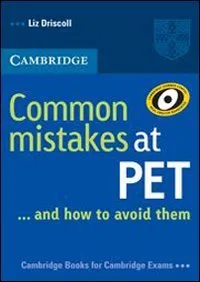
Common Mistakes at PET...and How to Avoid Them (Common Mistakes)
Liz Driscoll
English
Beginner
Language Learning
4.0 / 5
0 reviews
2005
Published
31
pages
757
views
Introduction First Certificate in English (FCE) and Preliminary English Test (PET) are two of the most important English proficiency tests conducted by Cambridge. For learners who aim to succeed in PET, identifying and avoiding common mistakes is crucial. Liz Driscoll’s bo
Before you read
What will you get from this book?
Introduction
First Certificate in English (FCE) and Preliminary English Test (PET) are two of the most important English proficiency tests conducted by Cambridge. For learners who aim to succeed in PET, identifying and avoiding common mistakes is crucial. Liz Driscoll’s book, "Common Mistakes at PET...and How to Avoid Them" serves as an enlightening guide to navigate these challenges effectively. Let's delve into what this essential resource offers.
Detailed Summary of the Book
In "Common Mistakes at PET...and How to Avoid Them," Liz Driscoll provides a comprehensive exploration of frequent errors made by students preparing for the Preliminary English Test (PET). The book is meticulously structured around the real-world pitfalls students encounter, with each chapter dedicated to a specific type of mistake. By focusing on areas like pronunciation, grammar, vocabulary, and writing, the book emphasizes not only recognition of these errors but also practical strategies to overcome them.
The book uses clear, real-life examples drawn directly from past exams, allowing learners to relate to each scenario effectively. Each section provides exercises and tests that mimic the exam format, ensuring students are well-prepared. Furthermore, Driscoll infuses practical advice on test-taking strategies, empowering students with the confidence and skills needed to excel.
Key Takeaways
- Understanding of common mistakes in areas such as grammar, listening, and speaking.
- Practical insights into avoiding these mistakes and improving test performance.
- Comprehensive exercises to consolidate learning and build test-taking strategies.
- Enhanced ability to self-assess and identify personal weaknesses.
Famous Quotes from the Book
"To succeed in PET, one must not only know the language but also understand the examiners’ perspective."
"Avoidance of mistakes is just as powerful a strategy as mastering new content."
"Preparation isn’t just about practice; it’s about practicing smart and learning from the common pitfalls."
Why This Book Matters
Liz Driscoll’s "Common Mistakes at PET...and How to Avoid Them" holds significant value for students seeking to excel in PET. Its targeted focus on the most frequent mistakes provides a realistic path to success, even for non-native speakers. By understanding the traps that others often fall into, learners are presented with the rare opportunity to pre-emptively correct their course.
Moreover, the book’s relevance extends beyond mere test preparation. Its teachings augment one’s overall command of English, which is invaluable in real-life communication scenarios. By addressing the common errors head-on, Driscoll provides learners not just with test-specific knowledge, but with true linguistic empowerment. The book’s robust strategy and meticulously curated content make it a transformative tool in a learner’s journey to mastering English.
Audio introductions
Persian Summary
Ask this book
Your question is answered in the context of this title and author. Each answer uses 2 points.
Sign in to ask the book assistant.
Reader reviews
0 reviews, 4.0 average out of 5
No reviews yet
If you have read this book, help the next reader with your experience.
Write a review
Sign in to publish a review.
Reader questions and answers
Ask a focused question and learn from the community.
Sign in to ask or answer a question.
No questions yet
Be the first to ask a clear, useful question.
What to read next
Related references that continue this learning path.