Book guide and evaluation
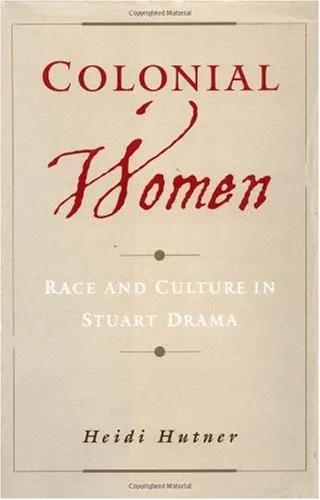
Colonial Women: Race and Culture in Stuart Drama
Heidi Hutner
English
Intermediate
novel
4.5 / 5
0 reviews
2001
Published
152
pages
367
views
Colonial Women: Race and Culture in Stuart Drama Stuart period literature, early modern women's history An in-depth study, Colonial Women: Race and Culture in Stuart Drama explores race, gender, and power in early modern theater. Analytical Summary In Colonial Wom
Before you read
What will you get from this book?
Analytical Summary
In Colonial Women: Race and Culture in Stuart Drama, Heidi Hutner engages readers with a rigorous exploration of the intersections between gender, race, and performance during the Stuart period in England. This scholarly work dissects how theatrical productions of the seventeenth century both reflected and shaped the socio-political discourses of the British Empire in its formative colonial phase.
The book situates female characters—both fictional and referential—within a broader cultural framework that grapples with the emergent ideologies of race and colonialism. Using critical methodologies rooted in feminist theory, postcolonial studies, and literary history, Hutner reveals how the Stuart stage became a battleground for contested meanings around femininity, racial identity, and imperial power.
Plays of the period often depicted “colonial women” as not merely passive symbols, but as active participants—sometimes subversive, sometimes complicit—in imperial discourse. Hutner carefully examines these roles in light of contemporaneous political tensions, colonial encounters, and the evolving English sense of self in contrast to the perceived “other.”
Information unavailable about its exact publication date, as no reliable public source confirms the year. Nevertheless, the text stands as a significant scholarly resource for academics in literature, history, and cultural studies.
Key Takeaways
Readers will come away with a sharpened understanding of how early modern drama acted as both mirror and agent of colonial ideology, particularly in its representations of women.
The book elucidates the ways female characters were used to signal moral, racial, and political anxieties of a society grappling with the implications of overseas expansion.
By integrating historical context with close readings of plays, Hutner offers insights valuable to scholars of Stuart period literature and social historians alike.
The interplay between performance and ideology underscores the complexity of race and gender as intertwined social constructs in early modern England.
Memorable Quotes
"The stage was a site where imperial fantasies and fears came to life, shaping cultural understandings of race and womanhood." Unknown
"To examine colonial women on the Stuart stage is to uncover the fractures in England’s own identity during its early imperial ventures." Unknown
Why This Book Matters
Colonial Women: Race and Culture in Stuart Drama matters because it addresses an underexplored nexus of race, gender, and performance in one of the most formative periods of British history.
Through an authoritative yet accessible analysis, Hutner invites readers to reconsider canonical texts not as static works but as dynamic cultural artifacts embedded in the politics of their time. The engagement with both primary and secondary sources enriches our understanding of Stuart cultural production.
This focus is particularly relevant to scholars in early modern studies, as it challenges simplified narratives of the period and brings to light the complexity of women’s roles both onstage and symbolically.
Inspiring Conclusion
In revisiting Colonial Women: Race and Culture in Stuart Drama, readers gain more than literary analysis—they gain a framework for understanding how art, politics, and identity have long been intertwined.
Hutner’s work underscores that the voices on the Stuart stage still resonate today, shaping ongoing conversations about race, gender, and cultural memory. This makes the book not only a historical study, but also a living dialogue between past and present.
If you are ready to delve deeper into the complexities of representation in early modern drama, take the next step—read, share, and discuss this important work with peers and colleagues. The conversations it ignites are vital for both scholarly inquiry and cultural reflection.
Ask this book
Your question is answered in the context of this title and author. Each answer uses 2 points.
Sign in to ask the book assistant.
Reader reviews
0 reviews, 4.5 average out of 5
No reviews yet
If you have read this book, help the next reader with your experience.
Write a review
Sign in to publish a review.
Reader questions and answers
Ask a focused question and learn from the community.
Sign in to ask or answer a question.
No questions yet
Be the first to ask a clear, useful question.
What to read next
Related references that continue this learning path.