

Book guide and evaluation
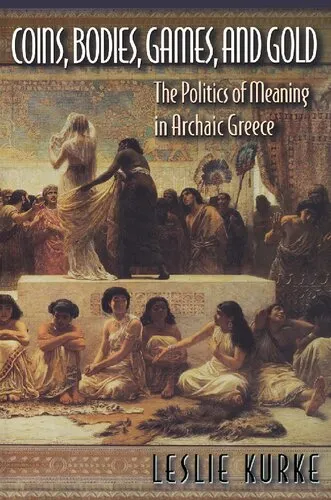
Coins, Bodies, Games, and Gold: The Politics of Meaning in Archaic Greece
Leslie Kurke
English
Beginner
Art
4.6 / 5
0 reviews
1999
Published
410
pages
164
views
Introduction to "Coins, Bodies, Games, and Gold: The Politics of Meaning in Archaic Greece" Written by Leslie Kurke, "Coins, Bodies, Games, and Gold: The Politics of Meaning in Archaic Greece" is a profound exploration of how the cultural, social, and political complexitie
Before you read
What will you get from this book?
Introduction to "Coins, Bodies, Games, and Gold: The Politics of Meaning in Archaic Greece"
Written by Leslie Kurke, "Coins, Bodies, Games, and Gold: The Politics of Meaning in Archaic Greece" is a profound exploration of how the cultural, social, and political complexities of archaic Greece were reflected in its material culture, especially through coins, games, and bodily metaphors. The book takes the reader on a meticulously researched journey into the intricacies of how meanings were constructed and contested in this ancient world, offering an interdisciplinary approach that spans archaeology, literature, politics, and anthropology.
This book delves into how seemingly mundane aspects of daily life, such as coinage and athletic contests, held significant sociopolitical and cultural weight in archaic Greek society. At its heart, the work examines the intricate ways in which cultural production shaped, and was shaped by, varying hierarchies and power dynamics. For scholars, students, and anyone intrigued by the ancient world, this book is an essential resource that reveals the deep entanglements between material objects and the construction of meaning.
Detailed Summary of the Book
The central focus of Leslie Kurke's book lies in unpacking how seemingly everyday items in archaic Greece—coins, rituals, games, and more—served as vehicles for negotiating power, identity, and societal values. It situates these objects within their broader cultural contexts, utilizing an interdisciplinary frame of reference.
One of the major facets explored in the book is the advent of coinage during the archaic period. Kurke illustrates how the introduction of coinage revolutionized not only economic transactions but also contributed to a broader cultural transformation. Through the lens of this invention, the book examines its interplay with long-standing oral traditions, elite values, and the democratization of certain cultural elements.
Another significant theme is the role of the human body—whether through its depiction in art, its participation in athletic contests, or its involvement in religious rituals. Kurke deftly analyzes how the body became a site for expressing, contesting, and symbolizing gender, class, and social status within the larger community. From the athlete’s body at the games to the symbolic weight of sacrifices, the study reveals how metaphors of the body were central to articulating social and political meanings in archaic society.
Additionally, the book delves into Greek games—both physical and verbal—as spaces where important societal tensions and hierarchies were played out. These contests served not simply as entertainment but also as arenas for exploring ethical, philosophical, and cultural codes, creating a vibrant platform for social discourse.
Key Takeaways
- The introduction of coinage in archaic Greece was not just an economic revolution but also a cultural and social phenomenon with far-reaching impacts.
- Material culture, such as coins and other artifacts, played a pivotal role in the construction of meaning and power in society.
- The human body—in its physical, artistic, and symbolic forms—became a critical site for negotiating identity, status, and societal values.
- Cultural practices, including games and rituals, served both as reflections of and challenges to the prevailing hierarchies of the time.
- An interdisciplinary approach reveals the entanglement of politics, culture, and tradition in shaping public meaning during the archaic period.
Famous Quotes from the Book
"Coinage was not merely a tool of the marketplace; it was a foundational metaphor for a new social order."
"The body, like the coin, served as a text onto which society inscribed its negotiations over identity, power, and community."
"Games epitomized the dual nature of archaic Greek culture: simultaneously competitive and deeply communal."
Why This Book Matters
"Coins, Bodies, Games, and Gold" matters because it illuminates fascinating aspects of archaic Greek society that might otherwise be overlooked. Leslie Kurke demonstrates how objects and practices often considered mundane in modern times carried deep cultural and political significance in the archaic world.
The book challenges readers to rethink their perspectives on material culture and its impact on societal structures. By bridging the gap between historical texts, archeological artifacts, and anthropological theories, it provides both specialists and general readers with new insights into the dynamics of power and meaning in ancient Greece. For anyone interested in the intersection of politics, culture, and history, this book offers a wealth of knowledge that continues to resonate across disciplines.
Ask this book
Your question is answered in the context of this title and author. Each answer uses 2 points.
Sign in to ask the book assistant.
Reader reviews
0 reviews, 4.6 average out of 5
No reviews yet
If you have read this book, help the next reader with your experience.
Write a review
Sign in to publish a review.
Reader questions and answers
Ask a focused question and learn from the community.
Sign in to ask or answer a question.
No questions yet
Be the first to ask a clear, useful question.
What to read next
Related references that continue this learning path.



Modern Computer Vision with PyTorch: A Practical Roadmap From Deep Learning Fundamentals to Advanced Applications and Generative AI, 2nd Edition
V Kishore Ayyadevara,Yeshwanth Reddy
2023
View book