

Book guide and evaluation
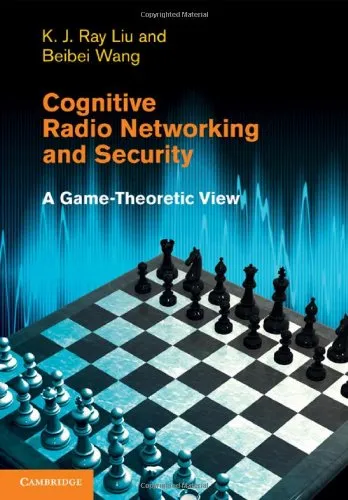
Cognitive Radio Networking and Security A Game Theoretic View
K. J. Ray Liu,Beibei Wang
English
Beginner
Engineering
4.7 / 5
0 reviews
2010
Published
619
pages
165
views
Introduction to "Cognitive Radio Networking and Security: A Game Theoretic View" "Cognitive Radio Networking and Security: A Game Theoretic View" is a pioneering book that delves into the convergence of game theory with the concepts of cognitive radio networks (CRNs). Auth
Before you read
What will you get from this book?
Introduction to "Cognitive Radio Networking and Security: A Game Theoretic View"
"Cognitive Radio Networking and Security: A Game Theoretic View" is a pioneering book that delves into the convergence of game theory with the concepts of cognitive radio networks (CRNs). Authored by K. J. Ray Liu and Beibei Wang, this work offers a holistic and in-depth exploration into the realm of CRNs, emphasizing both networking challenges and security concerns through the lens of game theory. Designed for professionals, academics, and researchers alike, the book strikes a perfect balance between theoretical rigor and practical utility. With the rapid growth of wireless technologies, the book’s innovative approach provides insights into how intelligent, adaptive systems can improve coexistence, efficiency, and security in spectrum usage.
Detailed Summary of the Book
The rapid proliferation of wireless devices has created unprecedented challenges in spectrum management, leading to the emergence of cognitive radio networks. These dynamic systems empower communications devices with the ability to sense their environment, adapt transmission parameters, and share resources more efficiently. However, this adaptability introduces a host of complexities regarding network performance optimization, user cooperation, and security.
"Cognitive Radio Networking and Security: A Game Theoretic View" serves as a comprehensive guide to solving these challenges. The book employs game theory as a robust mathematical framework to model, analyze, and address problems inherent to CRNs. Game theory focuses on strategic interactions between rational decision-makers, making it a perfect tool to examine how cognitive radios interact within competitive and cooperative environments. The book applies these principles not only to networking concerns such as spectrum sharing and resource allocation but also to address critical security vulnerabilities such as jamming attacks and malicious behavior.
Beginning with an introduction to cognitive radio networks and their foundational concepts, the book progresses to cover advanced topics, such as dynamic spectrum access, coalition formation, and distributed algorithms for resource allocation. The security section provides a detailed look at threats, countermeasures, and how game-theoretic models can strengthen the resilience of CRNs. What sets this book apart is its unique ability to bridge theoretical sophistication with real-world applications, offering readers theoretical models, algorithmic insights, and practical case studies.
Key Takeaways
- Thorough understanding of cognitive radio networks and the challenges associated with spectrum management in wireless communication.
- Insight into how game theory serves as a framework to model strategic decision-making and interactions in dynamic systems.
- Applications of cooperative and non-cooperative game theory in solving resource allocation, spectrum sensing, and sharing problems in CRNs.
- Comprehensive exploration of security threats to CRNs, including jamming and malicious attacks, and the game-theoretic approaches to mitigating these risks.
- Practical applications, architectures, and algorithms that integrate game-theoretic models in real-world CRN deployments.
Famous Quotes from the Book
"Cognitive radio networks are not just about smarter spectrum sharing—they represent a fundamental shift in how we think about wireless communications, collaboration, and security."
"Game theory offers a framework where competition meets collaboration, enabling cognitive radios to navigate complex environments effectively."
"The future of wireless communication depends on our ability to design systems that are both intelligent and secure—game theory bridges this gap seamlessly."
Why This Book Matters
The growing demands on wireless communication systems, coupled with the scarcity of radio spectrum, have made traditional spectrum management methods obsolete. Cognitive radio networks and dynamic spectrum access offer viable solutions, but their implementation comes with significant challenges. This is where the book "Cognitive Radio Networking and Security: A Game Theoretic View" makes a substantial contribution.
By leveraging game theory to address the complexities of resource allocation, cooperative behavior, and security, the authors provide actionable insights and a framework that is both innovative and highly relevant for modern communication systems. The book not only equips researchers with valuable tools to solve complex problems in wireless networking but also provides practitioners with practical implementations that enhance efficiency and robustness in CRNs.
Whether you are working on spectrum policy, developing cognitive radio algorithms, or designing secure wireless networks, this book offers invaluable perspectives and solutions that are set to shape the future of wireless technology.
Ask this book
Your question is answered in the context of this title and author. Each answer uses 2 points.
Sign in to ask the book assistant.
Reader reviews
0 reviews, 4.7 average out of 5
No reviews yet
If you have read this book, help the next reader with your experience.
Write a review
Sign in to publish a review.
Reader questions and answers
Ask a focused question and learn from the community.
Sign in to ask or answer a question.
No questions yet
Be the first to ask a clear, useful question.
What to read next
Related references that continue this learning path.

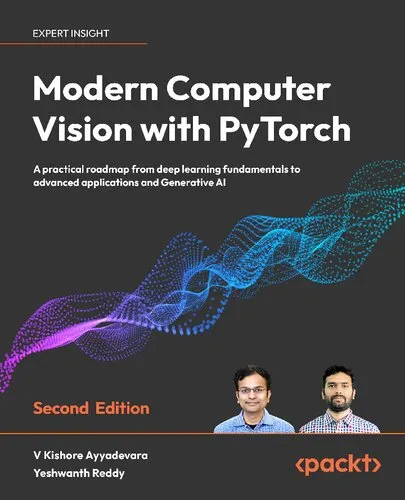
Modern Computer Vision with PyTorch: A Practical Roadmap From Deep Learning Fundamentals to Advanced Applications and Generative AI, 2nd Edition
V Kishore Ayyadevara,Yeshwanth Reddy
2023
View book