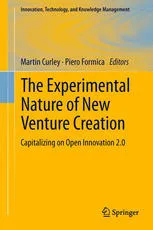
The Experimental Nature of New Venture Creation: Capitalizing on Open Innovation 2.0
Martin Curley,Piero Formica (auth.),Martin Curley,Piero Formica (eds.)
2013
View book

Book guide and evaluation
J. R. Storment,Mike Fuller
0 reviews
Published
pages
views
Introduction to "Cloud FinOps: Collaborative, Real-Time Cloud Financial Management" Welcome to the world of Cloud FinOps—a groundbreaking discipline that merges financial accountability with the agility and innovation of cloud technology. Whether you're a finance leader, IT pr
Before you read
Welcome to the world of Cloud FinOps—a groundbreaking discipline that merges financial accountability with the agility and innovation of cloud technology. Whether you're a finance leader, IT professional, or cloud enthusiast, this book equips you with the essential skills and strategies to effectively manage cloud costs while fostering collaboration between diverse teams.
Written by J.R. Storment and Mike Fuller, "Cloud FinOps: Collaborative, Real-Time Cloud Financial Management" dives deep into the core practices, challenges, and solutions related to cloud financial management. As enterprises accelerate their adoption of the cloud, the traditional silos of finance and IT are no longer sufficient to keep up with the dynamic and variable cost structure of cloud services. This book bridges the gap by introducing a practical and collaborative framework that unlocks the full potential of FinOps.
With real-world examples, actionable strategies, and best practices, this book isn't just a guide—it’s a blueprint for modern financial success in the cloud era.
The book begins by defining FinOps—a term short for "Cloud Financial Operations"—and establishes its importance as cloud computing becomes the backbone of digital transformation. Unlike traditional IT expenditures, cloud costs are dynamic, distributed, and directly tied to usage. The authors emphasize that FinOps isn’t just about cost-cutting—it’s about achieving business value and innovation through optimization.
The narrative is split into clear, actionable chapters. The first few sections outline foundational concepts for building a FinOps culture within your organization. The book stresses collaboration, ensuring that engineering, finance, and business teams work together seamlessly to monitor, forecast, and optimize cloud spending.
The subsequent chapters delve deeper into the FinOps lifecycle, focusing on three key phases: Inform, Optimize, and Operate. The "Inform" phase empowers teams with visibility into cloud usage and costs, providing the data needed for decision-making. The "Optimize" phase looks at cost reduction strategies such as rightsizing, reserved instance planning, and utilizing spot instances. Finally, the "Operate" phase ensures continuous improvement through automation, real-time insights, and accountability frameworks.
Pulling from diverse industry experiences, the authors include case studies and success stories from organizations that have implemented FinOps, demonstrating how these principles can be adapted to businesses of all sizes and sectors.
"The cloud isn’t just someone else’s computer—it’s someone else’s cost center."
"FinOps is not about finance telling you what to do—it’s about empowering your teams with the data to make smarter decisions."
"What gets measured gets optimized, but only when teams are empowered to act on the insights."
In today's digital-first world, cloud computing has become the backbone of innovation. However, the financial implications of this shift often go overlooked—or worse, misunderstood. The lack of visibility, accountability, and optimized decision-making leads to unnecessary costs and inefficiencies.
"Cloud FinOps: Collaborative, Real-Time Cloud Financial Management" offers a comprehensive approach to tackling this challenge. By focusing on collaboration, it aligns business and technology teams around a common mission: maximizing the value of cloud investments. This cultural shift is critical for organizations striving to remain competitive while embracing the financial flexibility and scalability of cloud environments.
Whether you’re looking to manage cloud costs, foster innovation, or build a more collaborative culture, this book provides the framework you need. It’s not just a guide to saving money—it’s a roadmap for achieving sustainable cloud success in an ever-evolving landscape.
Your question is answered in the context of this title and author. Each answer uses 2 points.
0 reviews, 4.5 average out of 5
Sign in to publish a review.
Ask a focused question and learn from the community.
Related references that continue this learning path.
Martin Curley,Piero Formica (auth.),Martin Curley,Piero Formica (eds.)
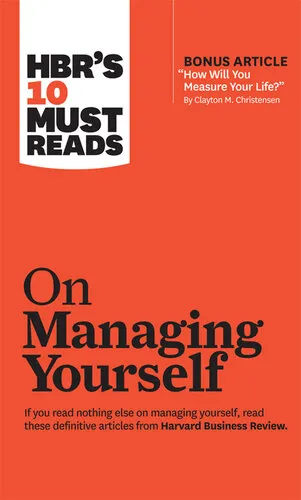
Harvard Business Review,Peter F. Drucker,Clayton M. Christensen,Daniel Goleman