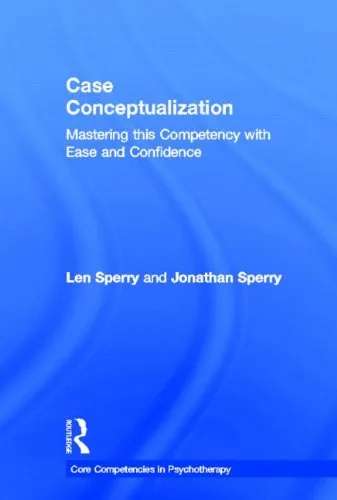
Case Conceptualization: Mastering this Competency with Ease and Confidence
Len Sperry,Jonathan Sperry
2012
View book

Book guide and evaluation
Dupree, Larry W.
0 reviews
Published
pages
views
Clinical Gerontologistpp.29—43 Aging research, gerontological practice An authoritative exploration of Clinical Gerontologistpp.29—43, offering deep insight into aging research and practical gerontology. Analytical Summary The section “Clinical Gerontologistpp.29—
Before you read
The section “Clinical Gerontologistpp.29—43” presents an in-depth scholarly examination of aging as both a biological and psychosocial process, emphasizing how clinical insights can inform and improve gerontological practice. By delving into the nuanced intersections of health, cognition, social relations, and support systems, the text aims to bridge the gap between academic theory and applied care models.
This part of the book underscores the importance of integrating empirical evidence from aging research into daily clinical decision-making. Drawing upon multidisciplinary perspectives, it reflects the complexity of gerontology—a field where medical science meets humanistic care. Readers will find rigorous analysis of case studies, critical evaluation of assessment tools, and reflective commentary on interventions that respect both autonomy and dignity in later life.
Information such as original publication year, awards, or reception data for this specific section is unavailable due to no reliable public source documenting such details. Nevertheless, the thematic richness ensures that this portion of the work stands out for professionals, academics, and students invested in improving the lives of older adults.
Readers of “Clinical Gerontologistpp.29—43” will gain actionable insights into the complexities of aging and the principles guiding effective, empathetic clinical gerontology.
Among the key takeaways is an appreciation for how health trajectories are influenced by both medical interventions and socio-environmental factors. The text urges practitioners to adopt a holistic view, acknowledging the interplay between physical wellness and psychosocial resilience.
Another takeaway is the importance of continuous education and reflective practice in the gerontological field. By evaluating emerging evidence and revisiting established models, practitioners can adapt to evolving demographic and ethical landscapes.
Finally, readers are encouraged to use the insights from this work to spark interdisciplinary collaboration—an approach vital for addressing the multifaceted needs of aging populations.
“Clinical gerontology demands not just the science of aging, but the art of compassionate practice.”Unknown
“Aging is not a decline—it is a transformation deserving respect and understanding.”Unknown
“The clinician’s role in gerontology is to integrate evidence with empathy in every patient encounter.”Unknown
“Clinical Gerontologistpp.29—43” matters because it captures the essence of gerontological practice at a critical time in global aging trends.
With populations worldwide experiencing significant increases in life expectancy, this work’s emphasis on blending rigorous research with actionable practice recommendations is both timely and necessary. It provides guidance not only to clinicians but also to policy makers, educators, and community leaders focused on elder care.
By addressing topics like ethical decision-making, integrated care frameworks, and the psychosocial dimensions of aging, this section becomes an indispensable point of reference for anyone committed to fostering healthier, more dignified later years.
The value of “Clinical Gerontologistpp.29—43” lies in its ability to inspire reflective, informed, and compassionate action in the field of aging research and clinical practice.
For academics, practitioners, and policymakers, the text is a call to merge empirical knowledge with humane care models. In doing so, it reminds us that aging is more than physiology—it is profoundly personal and social. Those who engage with the material are encouraged to not only absorb its insights but to actively apply, share, and discuss them within their professional and personal networks.
Take the next step: read “Clinical Gerontologistpp.29—43” closely, reflect on its themes, and join the broader dialogue on shaping a more inclusive, scientifically grounded approach to aging.
Your question is answered in the context of this title and author. Each answer uses 2 points.
0 reviews, 5.0 average out of 5
Sign in to publish a review.
Ask a focused question and learn from the community.
Related references that continue this learning path.
Len Sperry,Jonathan Sperry