Sturdevant's Art and Science of Operative Dentistry
Harald O. Heymann,Edward J. Swift,Jr.,Andre V. Ritter
2012
View book
Book guide and evaluation
Driscoll, Carl F.;Masri, Radi
0 reviews
Published
pages
views
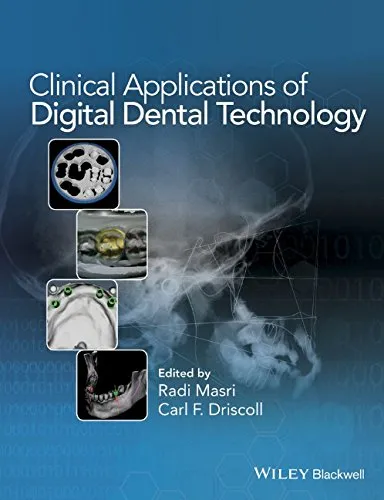
Introduction to Clinical Applications of Digital Dental Technology The rapid evolution of digital technology has revolutionized countless fields, and dentistry is no exception. Clinical Applications of Digital Dental Technology, authored by Driscoll, Carl F. and Masri, R
Before you read
The rapid evolution of digital technology has revolutionized countless fields, and dentistry is no exception. Clinical Applications of Digital Dental Technology, authored by Driscoll, Carl F. and Masri, Radi, bridges the gap between theoretical advancements and their practical application in the dynamic environment of dental practice. This book serves as an indispensable guide for clinicians, educators, and students alike, delving deeply into how digital innovations are reshaping diagnostic methods, treatment planning, and the delivery of care in modern dentistry.
With a focus on real-world applications, this book offers readers an in-depth understanding of how to integrate state-of-the-art digital tools into clinical workflows to improve efficiency, accuracy, and patient satisfaction. From intraoral scanners and CAD/CAM systems to 3D printing and digital implantology, every chapter is crafted to provide valuable insights into the diverse ways these technologies are employed in clinical settings.
This introduction aims to give an overview of what readers can expect, while the following sections will explore key aspects of the book in detail, providing you with an enriching perspective into how this definitive guide can transform your practice.
At its core, Clinical Applications of Digital Dental Technology is designed to bridge theory and practice, offering both novice and experienced practitioners a clear roadmap for adopting digital tools in dentistry. The authors begin with an overview of foundational technologies such as intraoral scanning devices, discussing not only how they work but also their advantages and limitations. From there, the book progresses into more advanced topics like the use of CAD/CAM systems for creating precise restorations, digital diagnostic imaging, and orthodontic treatment planning via virtual simulation software.
Additionally, the book delves into the transformative impact of 3D printing, highlighting how additive manufacturing techniques empower clinicians to fabricate dental models, surgical guides, and even prosthetic devices with unprecedented precision. Digital workflows for dental implants also feature prominently, emphasizing the seamless integration of imaging, planning, and surgical execution made possible by digital tools.
The authors round off the discussion with a forward-looking perspective on emerging trends, such as artificial intelligence and machine learning in dentistry, alongside practical considerations for implementing these technologies in everyday practice. Throughout the book, readers are treated to real-world clinical case studies, ensuring that the concepts discussed are firmly rooted in dental practice.
"Digital dentistry doesn’t just replicate traditional workflows—it redefines them. Embracing this paradigm shift is not just about staying relevant, but about delivering superior patient care."
"The future of dentistry isn’t just digital—it’s patient-centered, and digital technology is the bridge that connects advanced care to improved outcomes."
In an era where technology is advancing at an unprecedented pace, staying ahead of the curve is essential for professionals in any field—dentistry included. This book matters because it not only educates readers about current digital technologies but also empowers them to implement these innovations with confidence. It addresses practical challenges, cost factors, and the steep learning curves often associated with adopting new tools, making it highly applicable to real-world practice scenarios.
What sets this book apart is its ability to cater to a diverse audience. Whether you’re an experienced practitioner looking to transition into digital workflows, a student eager to understand the future of dentistry, or an educator aiming to enrich your curriculum with cutting-edge knowledge, Clinical Applications of Digital Dental Technology offers indispensable value.
Moreover, the emphasis on clinical case studies ensures that the concepts discussed are both grounded in practice and immediately actionable. As dentistry continues to embrace digital transformation, this book serves as a beacon, guiding clinicians into a new age of precise, efficient, and patient-focused care.
Your question is answered in the context of this title and author. Each answer uses 2 points.
0 reviews, 4.7 average out of 5
Sign in to publish a review.
Ask a focused question and learn from the community.
Related references that continue this learning path.
Harald O. Heymann,Edward J. Swift,Jr.,Andre V. Ritter

Kenneth M. Hargreaves DDS PhD FICD FACD,Stephen Cohen MA DDS FICD FACD