Loading
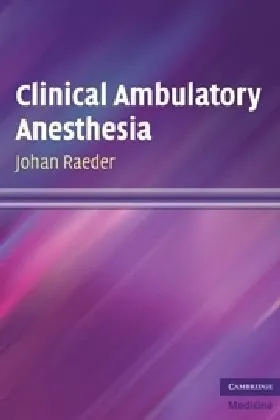
Cover of Clinical Ambulatory Anesthesia
English Beginner Medical

Clinical Ambulatory Anesthesia

Johan Raeder

Johan Raeder

4.6 / 5

0 reviews

2010

Published

195

pages

293

views

Ambulatory care can be a challenging setting in which to provide anesthesia - not all patients are suitable for rapid discharge post-operatively and opinions differ as to which types of surgery should be performed as day cases. This comprehensive guide delivers up-to-date, eviden

About this book

Ambulatory care can be a challenging setting in which to provide anesthesia - not all patients are suitable for rapid discharge post-operatively and opinions differ as to which types of surgery should be performed as day cases. This comprehensive guide delivers up-to-date, evidence-based advice on how to provide optimal anesthesia care for ambulatory surgery. Written by a leading clinical anesthesiologist, it provides clear guidance about how to handle particular patients in particular situations. The evidence and scientific knowledge for each issue are presented with reference to major studies and review papers, followed by practical advice based on the author's continuous clinical and scientific experience over 30 years. Topics include planning, equipping and staffing ambulatory units, pharmacology, basic concepts of ambulatory care, pre- and post-operative issues and current controversies. Clinical Ambulatory Anesthesia is essential reading for the clinical, postgraduate anesthesiologist as well as nurse anesthetists involved with ambulatory care.

Ask this book

Your question is answered in the context of this title and author. Each answer uses 2 points.

Sign in to ask the book assistant.

Reader reviews

0 reviews · 4.6 average out of 5

No reviews yet

If you have read this book, help the next reader with your experience.

Write a review

Sign in to publish a review.

Reader questions and answers

Ask a focused question and learn from the community.

Sign in to ask or answer a question.

No questions yet

Be the first to ask a clear, useful question.

Related references that continue this learning path.