Amazonian Dark Earths: Origin, Properties, Management
Johannes Lehmann,Dirse C. Kern,Bruno Glaser,William I. Woods
2004
View book
Book guide and evaluation
Majeti Narasimha Vara Prasad (editor),Marcin Pietrzykowski (editor)
0 reviews
Published
pages
views
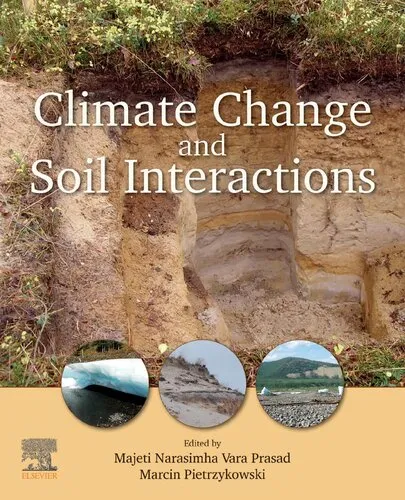
Introduction to 'Climate Change and Soil Interactions' Welcome to a comprehensive exploration of the intricate relationship between climate change and soil dynamics. This book is crafted for researchers, academics, agronomists, environmental scientists, and policy-makers
Before you read
Welcome to a comprehensive exploration of the intricate relationship between climate change and soil dynamics. This book is crafted for researchers, academics, agronomists, environmental scientists, and policy-makers who are keen to delve into the critical role soils play in regulating Earth's climate.
The book 'Climate Change and Soil Interactions' offers an in-depth examination of the interplay between soil science and climatic changes. It combines scientific research with real-world examples to highlight how soils are both a reactive and proactive component in the climate change narrative. The book elaborates on how soil acts as a carbon sink, the impact of global warming on soil composition, and the consequential effects these changes have on agriculture and natural ecosystems.
Divided into several thematic sections, each part of the book focuses on a specific aspect of soil-climate interactions. The early chapters set the stage by explaining fundamental concepts of soil science and climate dynamics. Following this, the book dives into detailed analyses of carbon sequestration potentials in different soil types and climates, the effect of rising temperatures on soil moisture and fertility, and the feedback mechanisms that could exacerbate climate change.
Special attention is given to the role of soil management practices in mitigating climate change. By examining a series of case studies from various geographical regions, the book illustrates successful techniques and challenges faced in sustainable soil management. The concluding chapters present future scenarios, integration of advanced technology in soil research, and the importance of policy interventions for climate moderation.
"Soil is not just a passive entity but a dynamic force in the fight against climate change."
"To understand climate change, we must first delve into the enigmatic world beneath our feet."
"The future of our climate lies not only in the skies but also in the very soil we tread upon."
This book stands out as a crucial resource in the ongoing dialogue about climate change and environmental conservation. While much focus has been directed toward emissions reductions and renewable energy, the role of soil in the climate equation often receives less attention. By illuminating how soils interact with climatic variables, this book underscores the unseen yet pivotal part that soil plays in both contributing to and potentially reversing the effects of global warming.
Furthermore, the multi-disciplinary approach presented in 'Climate Change and Soil Interactions' bridges the gap between scientific theory and applied practices. It calls for a collaborative effort among scientists, farmers, and policymakers to harness the potential of soil as a viable solution for climate resilience. Despite the technical nature of the subject, the book is accessible to a wide audience, making it an essential read for anyone interested in the future of our planet's climate.
Your question is answered in the context of this title and author. Each answer uses 2 points.
0 reviews, 4.3 average out of 5
Sign in to publish a review.
Ask a focused question and learn from the community.
Related references that continue this learning path.
Johannes Lehmann,Dirse C. Kern,Bruno Glaser,William I. Woods