Book guide and evaluation
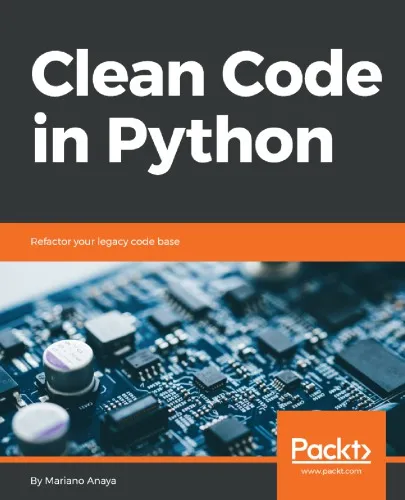
Clean code in Python: refactor your legacy code base
Anaya,Mariano
English
Beginner
Programming Languages
4.4 / 5
0 reviews
2018
Published
328
pages
541
views
Getting the most out of Python to improve your codebase Key Features Save maintenance costs by learning to fix your legacy codebase Learn the principles and techniques of refactoring Apply microservices to your legacy systems by implementing practical techniques Book Description
Before you read
What will you get from this book?
Getting the most out of Python to improve your codebase Key Features Save maintenance costs by learning to fix your legacy codebase Learn the principles and techniques of refactoring Apply microservices to your legacy systems by implementing practical techniques Book Description Python is currently used in many different areas such as software construction, systems administration, and data processing. In all of these areas, experienced professionals can find examples of inefficiency, problems, and other perils, as a result of bad code. After reading this book, readers will understand these problems, and more importantly, how to correct them. The book begins by describing the basic elements of writing clean code and how it plays an important role in Python programming. You will learn about writing efficient and readable code using the Python standard library and best practices for software design. You will learn to implement the SOLID principles in Python and use decorators to improve your code. The book delves more deeply into object oriented programming in Python and shows you how to use objects with descriptors and generators. It will also show you the design principles of software testing and how to resolve software problems by implementing design patterns in your code. In the final chapter we break down a monolithic application to a microservice one, starting from the code as the basis for a solid platform. By the end of the book, you will be proficient in applying industry approved coding practices to design clean, sustainable and readable Python code. What you will learn Set up tools to effectively work in a development environment Explore how the magic methods of Python can help us write better code Examine the traits of Python to create advanced object-oriented design Understand removal of duplicated code using decorators and descriptors Effectively refactor code with the help of unit tests Learn to implement the SOLID principles in Python Who this book is for This book will appeal to team leads, software architects and senior software engineers who would like to work on their legacy systems to save cost and improve efficiency. A strong understanding of Programming is assumed.
Ask this book
Your question is answered in the context of this title and author. Each answer uses 2 points.
Sign in to ask the book assistant.
Reader reviews
0 reviews, 4.4 average out of 5
No reviews yet
If you have read this book, help the next reader with your experience.
Write a review
Sign in to publish a review.
Reader questions and answers
Ask a focused question and learn from the community.
Sign in to ask or answer a question.
No questions yet
Be the first to ask a clear, useful question.
What to read next
Related references that continue this learning path.
Solutions Architect's Handbook: Kick-start your career as a solutions architect by learning architecture design principles and strategies, 2nd Edition
Saurabh Shrivastava,Neelanjali Srivastav
2022
View book
Solutions Architect's Handbook - Third Edition: Kick-start your career with architecture design principles, strategies, and generative AI techniques
Saurabh Shrivastava,Neelanjali Srivastav
2024
View book