

Trendology: Building an Advantage through Data-Driven Real-Time Marketing
Chris Kerns (auth.)
2014
View book
Book guide and evaluation
David Stafford
0 reviews
Published
pages
views
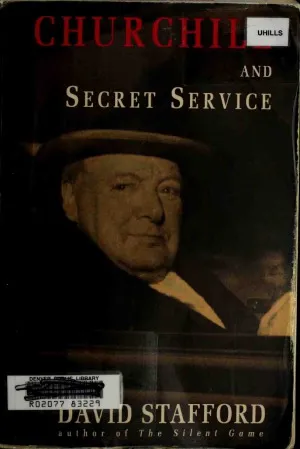
Introduction to "Churchill and Secret Service" "Churchill and Secret Service" is a captivating exploration of one of the most iconic figures in modern history, Winston Churchill, and his profound relationship with the shadowy world of espionage. Written by David St
Before you read
"Churchill and Secret Service" is a captivating exploration of one of the most iconic figures in modern history, Winston Churchill, and his profound relationship with the shadowy world of espionage. Written by David Stafford, this meticulously researched book delves into Churchill’s understanding and utilization of intelligence and covert operations, a relationship that ultimately proved pivotal in shaping both his leadership and the course of the 20th century. From his fascination with intelligence in the early days of his political career to his masterful use of secret services during World War II, Stafford paints a vivid and astute portrait of how secret intelligence shaped Churchill's strategic decisions and wartime success.
Winston Churchill, known for his indomitable will and charismatic leadership, was a man deeply entwined with the art of intelligence. Stafford offers readers a comprehensive account of Churchill’s lifelong engagement with espionage, revealing how his trust in secret services influenced major historical events. The book intricately details Churchill’s collaborations with MI5, MI6, and the Special Operations Executive (SOE), highlighting his pivotal role in their successes during some of the darkest hours of the modern era. With an engaging narrative style and extensive use of historical documents, "Churchill and Secret Service" provides an unparalleled insight into Churchill’s clandestine world.
"Churchill and Secret Service" spans Winston Churchill’s entire career, from his early days as a young soldier and war correspondent with a burgeoning interest in military strategy to his tenure as Britain’s Prime Minister during World War II. The book provides an intricate look at how Churchill's relationship with Britain’s intelligence services evolved over decades to shape his political and military approaches.
David Stafford begins with Churchill’s firsthand experiences in the Boer War, where espionage played a critical role, and follows with his time as First Lord of the Admiralty during World War I, when he became a fervent advocate for naval intelligence advancements. The narrative continues through Churchill’s time in the political wilderness during the interwar period, when he remained a vocal critic of appeasement policies and strongly supported the modernization of Britain’s intelligence systems.
The centerpiece of the book is Churchill’s extraordinary use of intelligence during World War II. Stafford explores several clandestine operations, including espionage missions, code-breaking efforts like those at Bletchley Park, and disinformation campaigns that helped turn the tide of the war. The author also examines Churchill’s personal traits: his foresight, adaptability, and sometimes controversial decisions in the realms of intelligence and secrecy.
"Churchill, more than any other leader of his time, understood the power of secret intelligence in shaping the destiny of nations."
"The decisions made at the intersection of politics and covert operations often determine the success of the battlefield."
"Winston Churchill believed that the eyes and ears of intelligence were as formidable as any weapon in the Allied arsenal."
"Churchill and Secret Service" is more than a biography of Winston Churchill; it is a reflection on the critical role of intelligence in warfare and statecraft. By diving deep into Churchill’s reliance on espionage and covert operations, David Stafford sheds light on the often-overlooked mechanisms behind Allied victory in World War II and the survival of democratic institutions during a time of total war.
This book matters to history enthusiasts, scholars, and those interested in understanding the nuances of leadership during periods of crisis. It provides valuable lessons on the intersection of power, secrecy, and decision-making. Churchill’s legacy as a statesman and wartime leader is enhanced by this compelling account of his profound embrace of intelligence work, making it an essential read for anyone who wishes to understand how leadership operates behind closed doors.
Your question is answered in the context of this title and author. Each answer uses 2 points.
0 reviews, 4.5 average out of 5
Sign in to publish a review.
Ask a focused question and learn from the community.
Related references that continue this learning path.
Chris Kerns (auth.)

Neumeier,Marty
Larry E. Greiner,Thomas G. Cummings