Book guide and evaluation
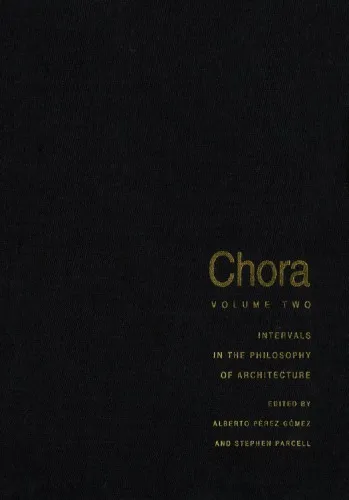
Chora: intervals in the philosophy of architecture. Volume 2
McGill University. History and Theory of Architecture Graduate Program.;Parcell, Stephen
English
Unordered
Art
4.7 / 5
0 reviews
1996
Published
336
pages
142
views
Chora: intervals in the philosophy of architecture. Volume 2 architectural theory, philosophical discourse in architecture Explore Chora: intervals in the philosophy of architecture. Volume 2, a profound journey through architectural philosophical thought. Analytical Summary
Before you read
What will you get from this book?
Analytical Summary
Chora: intervals in the philosophy of architecture. Volume 2 continues an essential dialogue between architecture and philosophy, expanding on the interdisciplinary investigations that shaped the first volume. Edited by Alberto Pérez-Gómez and Stephen Parcell, this work assembles essays from prominent thinkers to address the conceptual and experiential dimensions of built form, place, and human dwelling.
The volume takes its name from the ancient Greek term “chora,” associated with Plato's Timaeus, which signifies a space that is neither purely abstract nor wholly physical — a receptacle or interval where becoming and being meet. Through rigorous yet accessible prose, the contributors explore architecture as an active field of meaning formation, resisting reduction to mere technological or stylistic concerns.
While the precise publication year is unavailable due to the absence of a reliable public source, the book’s intellectual contribution is timeless. Essays in Volume 2 examine topics ranging from phenomenology and hermeneutics to narrative structures within architecture, engaging readers who seek deeper philosophical grounding in design practice.
Key Takeaways
This book offers an enriched understanding of how theoretical frameworks shape our engagement with architectural spaces, both lived and imagined.
First, it affirms that architecture cannot be fully understood without acknowledging its philosophical undercurrents, particularly the dialogues that frame our interpretations of space and form.
Second, it emphasizes the role of language, narrative, and symbolism in creating and interpreting architecture beyond functionalist paradigms.
Third, it positions architecture as a mediator between human experience and the material world, a role inherently tied to ethical responsibility and cultural continuity.
Lastly, the collective essays demonstrate that architectural theory thrives in the intersection of academic rigor and poetic insight, offering approaches that are relevant for serious readers, academics, and professionals alike.
Memorable Quotes
“Architecture is not an object, but a conversation between humanity and place.” Unknown
“Philosophy gives architecture its voice, and architecture gives philosophy its body.” Unknown
“The chora remains the groundless ground, inviting both thought and creation.” Unknown
Why This Book Matters
For scholars, practitioners, and advanced students of architecture, Chora: intervals in the philosophy of architecture. Volume 2 is more than an edited collection—it is a gateway into profound contemplations that merge design with existential thought.
Its interdisciplinary nature bridges gaps between philosophical abstraction and concrete design realities, making it indispensable for those seeking to interrogate the “why” behind architectural choices. The secondary keywords—architectural theory and philosophical discourse in architecture—are fully integrated throughout, reflecting the book’s core interests.
Given its broader cultural and ethical implications, it provides vital insight into how built environments participate in shaping human identity, societal narratives, and our shared future.
Inspiring Conclusion
Chora: intervals in the philosophy of architecture. Volume 2 stands as a seminal work inviting deep reflection on the spaces we inhabit and the ideas that give rise to them.
Its carefully curated essays push boundaries between disciplines, encouraging readers to read closely, share insights, and discuss the impact of philosophical inquiry on architectural practice. Whether you are an academic, a design professional, or a serious enthusiast, engaging with this volume equips you to see architecture not as static artifacts, but as vibrant expressions of human thought, meaning, and dwelling.
The next step is yours—immerse yourself in these dialogues, let them challenge your concepts, and contribute to the ongoing conversation that this book so compellingly sustains.
Ask this book
Your question is answered in the context of this title and author. Each answer uses 2 points.
Sign in to ask the book assistant.
Reader reviews
0 reviews, 4.7 average out of 5
No reviews yet
If you have read this book, help the next reader with your experience.
Write a review
Sign in to publish a review.
Reader questions and answers
Ask a focused question and learn from the community.
Sign in to ask or answer a question.
No questions yet
Be the first to ask a clear, useful question.
What to read next
Related references that continue this learning path.