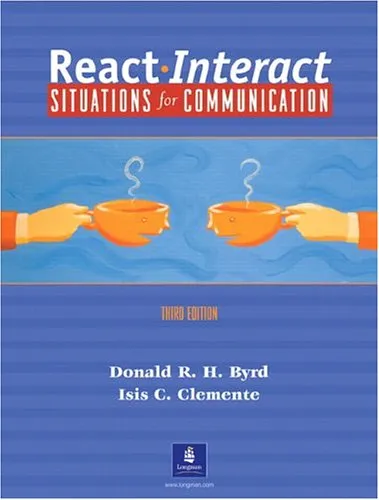
React Interact: Situations for Communication, Third Edition
Donald R. H. Byrd,Isis C. Clemente
2001
View book
Book guide and evaluation
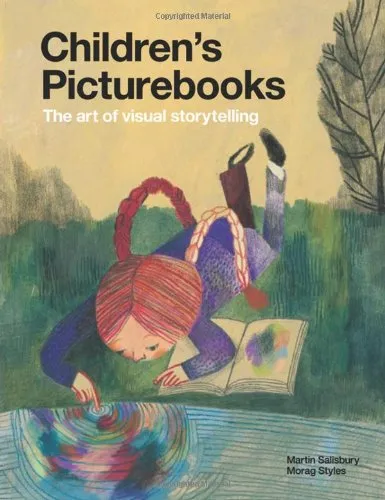
Martin Salisbury,Morag Styles
0 reviews
Published
pages
views
Introduction to "Children's Picturebooks: The Art of Visual Storytelling" Martin Salisbury and Morag Styles' seminal work, "Children's Picturebooks: The Art of Visual Storytelling," offers a profound exploration of one of the most beloved and complex forms of literature. This
Before you read
Martin Salisbury and Morag Styles' seminal work, "Children's Picturebooks: The Art of Visual Storytelling," offers a profound exploration of one of the most beloved and complex forms of literature. This book delves deeply into the fascinating world of children's picturebooks, illustrating their evolution, cultural impact, and the artistry that brings them to life. The authors thoughtfully consider both historical and contemporary perspectives, making this work accessible to scholars, artists, educators, and enthusiasts alike.
Picturebooks are often underestimated as simple, childish amusements; however, the authors masterfully demonstrate how they are sophisticated forms of narrative that merge visual and verbal storytelling techniques. By analyzing the intricate interplay between text and imagery, Salisbury and Styles bring to light the depth, creativity, and intentionality required to create these enduring works of art. Whether you're an aspiring illustrator, a parent, or a student of graphic arts, this book is a must-read to truly appreciate the magic of visual storytelling.
"Children's Picturebooks: The Art of Visual Storytelling" is a comprehensive guide designed to uncover the history, complexity, and artistry of picturebooks. It spans the journey of these books from their humble beginnings to their present-day sophistication. Salisbury and Styles explore how picturebooks have evolved alongside advancements in printing technologies, changes in societal norms, and shifts in the way we perceive childhood itself.
The book meticulously examines the collaborative nature of creating picturebooks, emphasizing the role of the illustrator, author, editor, and publisher in shaping the final product. Case studies of notable works are included to showcase how classic picturebooks utilize elements like color, composition, and typographic design to captivate audiences. Moreover, the authors highlight the importance of considering the reader's perspective, particularly the dual audience of children and adults, which makes these books uniquely challenging to create.
In addition to exploring the theoretical and technical aspects of illustration, Salisbury and Styles also provide insights into the practicalities of the industry. They discuss the process of designing a book, selecting materials, and ensuring that every aspect of the book is cohesive in telling its story. This makes the book an essential resource for anyone aspiring to enter the field of children’s publishing.
"A picturebook is a unique art form—a seamless blend of words and pictures requiring absolute harmony in its composition."
"The power of a great picturebook lies in its ability to transport the reader, regardless of age, into another world entirely."
"To truly appreciate the artistry of the picturebook, one must first understand the language of the image."
"Children's Picturebooks: The Art of Visual Storytelling" is more than just a textbook for illustrators or authors—it's a celebration of the picturebook as a cultural artifact. This book underlines the profound role picturebooks play in shaping childhood experiences and fostering a love of reading. By considering the emotional and intellectual engagement required to create and read them, Salisbury and Styles elevate picturebooks to a level of respect often reserved for fine art or literature.
The book also champions the idea that children's literature is a vital part of broader cultural conversations. It encourages readers to consider how picturebooks reflect issues such as diversity, identity, and representation. In an increasingly visual world, the lessons from this book about how meaning is conveyed through images and text extend far beyond children's publishing, offering valuable insights into storytelling in all its forms.
Whether you're a creative professional, a literary scholar, or someone looking to better understand the world of children's publishing, this book will offer you a wealth of knowledge and inspiration. Its enduring relevance is a testament to the importance of understanding and fostering the art of visual storytelling.
Your question is answered in the context of this title and author. Each answer uses 2 points.
0 reviews, 4.5 average out of 5
Sign in to publish a review.
Ask a focused question and learn from the community.
Related references that continue this learning path.
Donald R. H. Byrd,Isis C. Clemente