
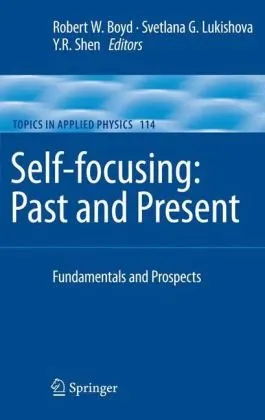
Self-focusing: Past and Present: Fundamentals and Prospects
Y. Ron Shen (auth.),Robert W. Boyd,Svetlana G. Lukishova,Y.R. Shen (eds.)
2009
View book

Book guide and evaluation
HCV H C Verma Harishchandra Verma
0 reviews
Published
pages
views
Chapter 36 Concepts of Physics Part 2 Advanced Electromagnetic Induction, Magnetic Fields Analysis Explore deep insights in Chapter 36 Concepts of Physics Part 2, a masterclass in advanced principles for serious learners and professionals. Analytical Summary Chapt
Before you read
Chapter 36 Concepts of Physics Part 2 represents a pinnacle in advanced physics education, offering a thorough and logically structured exposition of electromagnetic induction and its intricate applications. Written with an emphasis on conceptual clarity, this chapter consolidates theoretical models with practical scenarios, making it indispensable for students, educators, and researchers determined to comprehend the fine structure of electromagnetic phenomena.
The section begins by revisiting foundational laws such as Faraday’s law and Lenz’s law, progressing quickly into diverse contexts in which these laws operate. By balancing mathematical formalism with conceptual discussion, the chapter engages both analytical and intuitive faculties of the reader. Key derivations are presented in a stepwise fashion, using precise notation and carefully chosen examples to illuminate subtle points often glossed over in less rigorous treatments.
Interspersed diagrams and problem sets provide a visual and applied dimension to the theoretical discourse. This synthesis of illustrative and computational perspectives nurtures a disciplined approach to problem-solving, equipping readers with tools to tackle complex scenarios involving magnetic flux changes, induced currents, and dynamic field interactions.
Information unavailable regarding its first publication date of this specific chapter; no reliable public source offers verifiable documentation for such detail. Nevertheless, the depth and timelessness of the content affirm its enduring relevance in both academic curricula and professional practice.
By integrating rigorous theory with applied practice, Chapter 36 delivers a set of enduring lessons for mastering high-order concepts in electromagnetic induction.
Readers gain the ability to interrelate magnetic field variations with induced electromotive forces in dynamic systems.
The text emphasizes the elegance of natural laws, showing how symmetry and conservation principles emerge from Maxwellian theory.
Practical examples encourage applying theory to contemporary technologies, from electric generators to magnetic sensors.
Detailed problem sets underscore the necessity of analytical reasoning to predict and interpret physical outcomes.
"Understanding the invisible forces of magnetism unlocks the visible progress of technology." Unknown
"Electromagnetic induction is the silent translator between mechanical motion and electric energy." Unknown
"Clarity in fundamentals ensures mastery in applications." Unknown
Chapter 36 Concepts of Physics Part 2 occupies a unique niche in the physics canon by linking high-fidelity theoretical insights with realistic applications.
For advanced students, it serves as both a bridge and a checkpoint—bridging foundational electromagnetism with real-world technologies, and checking conceptual understanding against rigorous problem sets. For professionals, its structured approach translates abstract principles into engineering solutions.
The secondary themes of advanced electromagnetic induction and magnetic field analysis recur with consistency, reinforcing the interconnectedness of theory and practice. This coherence makes it not only a compelling educational resource but also a reliable technical reference.
Chapter 36 Concepts of Physics Part 2 stands as an invitation to deeper scientific engagement—an authoritative yet accessible exploration designed for serious learners who wish to elevate their understanding beyond the ordinary.
Its pages challenge readers to think critically, connect diverse principles, and apply mathematical rigor with conceptual insight. Whether you are a university student aiming for excellence, an educator forging new paths in teaching, or a professional enhancing your technical mastery, the chapter offers a roadmap to intellectual growth.
Take the next step: read, share, and discuss the ideas contained within Chapter 36 Concepts of Physics Part 2. Let this endeavor become a cornerstone in your ongoing journey through the intricacies of advanced physics.
Your question is answered in the context of this title and author. Each answer uses 2 points.
0 reviews, 4.7 average out of 5
Sign in to publish a review.
Ask a focused question and learn from the community.
Related references that continue this learning path.
Y. Ron Shen (auth.),Robert W. Boyd,Svetlana G. Lukishova,Y.R. Shen (eds.)
Sarah Abdulla, Christopher Clarke

