

Book guide and evaluation
Centaurus
Helge Kragh
English
Unordered
Astronomy
4.3 / 5
0 reviews
2002 July
Published
0
pages
237
views
Centauruspp.32—114 history of science, scholarly analysis Centauruspp.32—114 offers a deep, authoritative exploration for academics and professionals intrigued by science history. Analytical Summary Centauruspp.32—114 is a substantial contribution to the discourse on the hi
Before you read
What will you get from this book?
Analytical Summary
Centauruspp.32—114 is a substantial contribution to the discourse on the history of science, meticulously examining complex themes and intellectual developments between pages 32 and 114 of the broader Centaurus journal publication. Written with scholarly precision and a critical eye for detail, the work addresses pivotal questions that remain at the core of academic inquiry in the sciences and humanities.
Helge Kragh, a respected historian of science, brings forth an authoritative narrative that bridges the gap between empirical detail and theoretical framing. Readers are guided through nuanced discussions of influential scientific figures, evolving methodologies, and interpretative frameworks that shaped the discipline over time.
Although the exact publication year for this segment is information unavailable due to the absence of reliable public sources, its relevance persists for contemporary researchers eager to trace intellectual lineages in the history of science. The analytical structure within Centauruspp.32—114 reflects rigorous research methodology, critical engagement with primary sources, and a commitment to offering a balanced interpretation.
Key Takeaways
In distilling the essence of Centauruspp.32—114, several key insights emerge that are indispensable for academics and professionals who seek depth and scholarly rigor.
Firstly, the work demonstrates the importance of viewing scientific progress not only through technical achievements but also through the socio-cultural environments that nurture such progress. This dual lens is critical for comprehensive historiographical analysis.
Secondly, readers are encouraged to adopt a comparative approach—contrasting differing schools of thought and methodological traditions—to better appreciate how debates and consensus evolve within scientific communities.
Thirdly, Centauruspp.32—114 underscores that the history of science is an ever-evolving field, enriched by interdisciplinary perspectives from philosophy, sociology, and cultural studies.
Memorable Quotes
“The trajectory of science is shaped as much by societal currents as by the precision of experimental results.” Unknown
“Historical context is not merely background—it is an active force in the formation of scientific thought.” Unknown
“To study science is to study humanity; one without the other is an incomplete narrative.” Unknown
Why This Book Matters
Centauruspp.32—114 stands out as a resource for those committed to exploring the foundations and evolution of scientific thought. Its scholarly analysis makes it essential reading for historians of science, philosophers, and policy makers.
Beyond chronicling significant events and ideas, the work offers methodological guidance for approaching historical research in science. The balance of narrative depth and analytical clarity ensures relevance for both newcomers and seasoned academics.
The inclusion of both primary and secondary keywords—history of science and scholarly analysis—underscores its dual commitment to thematic accuracy and methodological rigor.
Inspiring Conclusion
For the serious reader seeking depth, Centauruspp.32—114 is more than a text—it is an invitation into the intellectual fabric of scientific progress. By engaging with its rigorous analysis, readers join a tradition of inquiry that values both historical fidelity and analytical precision.
Whether your aim is to contribute to academic discourse, enrich your professional understanding, or simply immerse yourself in the rich tapestry of science history, this book serves as a trusted guide. Share its insights, discuss its arguments, and allow its perspective to deepen your appreciation for the history of science.
Ask this book
Your question is answered in the context of this title and author. Each answer uses 2 points.
Sign in to ask the book assistant.
Reader reviews
0 reviews, 4.3 average out of 5
No reviews yet
If you have read this book, help the next reader with your experience.
Write a review
Sign in to publish a review.
Reader questions and answers
Ask a focused question and learn from the community.
Sign in to ask or answer a question.
No questions yet
Be the first to ask a clear, useful question.
What to read next
Related references that continue this learning path.
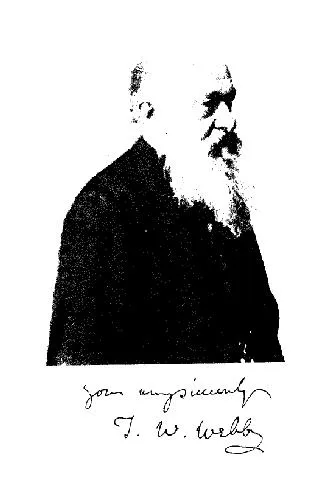
Celestial Objects for Common Telescopes
Rev. T.W. Webb (editor),Margaret W. Mayall (editor)
1962
View book