
Williams Obstetrics, 26th Edition
F. Gary Cunningham,Kenneth J. Leveno,Jodi S. Dashe,Barbara L. Hoffman,Catherine Y. Spong,Brian M. Casey
2022
View book
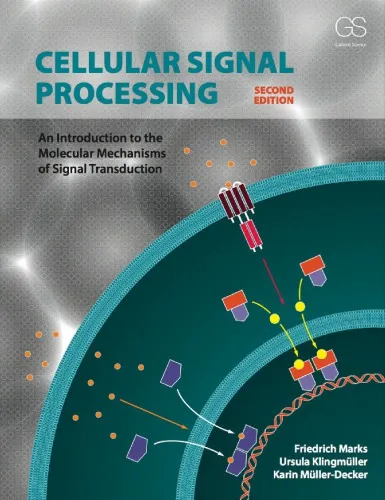
Book guide and evaluation
Friedrich Marks;Ursula Klingmuller;Karin Muller-Decker
0 reviews
Published
pages
views
Introduction to "Cellular Signal Processing" "Cellular Signal Processing: An Introduction to the Molecular Mechanisms of Signal Transduction" serves as a comprehensive guide for anyone interested in the detailed workings of cellular communication. Written by Friedr
Before you read
"Cellular Signal Processing: An Introduction to the Molecular Mechanisms of Signal Transduction" serves as a comprehensive guide for anyone interested in the detailed workings of cellular communication. Written by Friedrich Marks, Ursula Klingmuller, and Karin Muller-Decker, this book provides an in-depth exploration into the dynamic world of signal transduction, a pivotal aspect of cellular biology. Making complex scientific concepts approachable, it is a crucial resource for students, educators, and researchers alike.
The book is meticulously structured to cover the fundamentals as well as the advanced aspects of cellular signal processing. It begins with an introduction to the basic principles of cell communication and the nature of cellular signals. Following this, it delves into the biochemical pathways and molecular mechanisms that govern these signals, ensuring clarity by breaking down intricate processes into digestible segments.
Further chapters explore specific signaling pathways, including G-protein-coupled receptors, receptor tyrosine kinases, and nuclear receptors. Each pathway is detailed with a focus on its biological significance and the implications of its dysregulation in diseases. The authors also provide a historical context to signal transduction research, allowing readers to appreciate the evolution of this scientific field.
In later sections, the book transitions into discussing the technological advancements that have propelled signal transduction research forward. From molecular cloning techniques to high-throughput screenings, the authors outline how these tools have enhanced our understanding of cellular processes.
"The essence of cellular life lies in the cell's ability to perceive and properly respond to its environment."
"Signal transduction is not merely a cascade of biochemical events; it is the transmission of life’s language."
"Cellular Signal Processing" is pivotal because it bridges the gap between complex scientific concepts and practical understanding. It matters for the scientific community and for medical professionals working to develop treatments targeting signal transduction pathways. This book provides the foundational knowledge necessary for innovation in biomedical research, particularly in drug development and genetic therapies.
In academia, the book serves as an essential educational tool that encourages students to embark on a journey of discovery within the molecular realm. Its comprehensive coverage ensures that readers gain a holistic view of cellular signaling, which is indispensable for contributing to future scientific advancements.
Overall, this book's integration of theoretical knowledge with real-world applications makes it an invaluable resource, paving the way for advancements in understanding the communication within and between cells.
Your question is answered in the context of this title and author. Each answer uses 2 points.
0 reviews, 4.3 average out of 5
Sign in to publish a review.
Ask a focused question and learn from the community.
Related references that continue this learning path.
F. Gary Cunningham,Kenneth J. Leveno,Jodi S. Dashe,Barbara L. Hoffman,Catherine Y. Spong,Brian M. Casey
Alan Partin,Craig Peters,Louis Kavoussi,Roger Dmochowski,Alan Wein
John E. Bennett &Raphael Dolin &Martin J. Blaser