
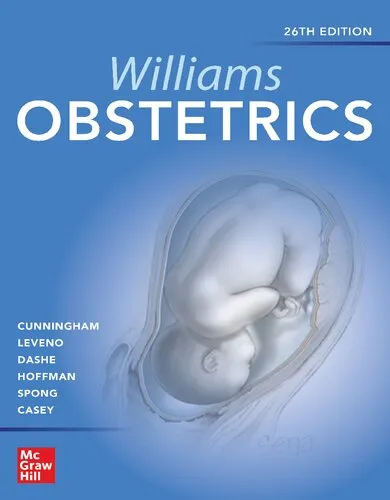
Williams Obstetrics, 26th Edition
F. Gary Cunningham,Kenneth J. Leveno,Jodi S. Dashe,Barbara L. Hoffman,Catherine Y. Spong,Brian M. Casey
2022
View book
Book guide and evaluation
Helen A. Padykula (auth.),Wendell W. Leavitt (eds.)
0 reviews
Published
pages
views
Cell and Molecular Biology of the Uterus uterine physiology, reproductive molecular biology Authoritative guide to the Cell and Molecular Biology of the Uterus for researchers and professionals in reproductive health. Analytical Summary The book Cell and Molecular Biology o
Before you read
The book Cell and Molecular Biology of the Uterus is a definitive scholarly resource that explores the intricate cellular architectures and molecular pathways governing uterine function. Edited by Wendell W. Leavitt and authored by Helen A. Padykula along with noted contributors, this work dissects the organ’s biology with scientific precision, catering to readers deeply engaged in reproductive sciences.
Through comprehensive chapters, the text examines topics ranging from the detailed histological landscape of uterine tissues to the hormonal regulation of endometrial cycles. It analyzes cellular differentiation, the role of extracellular matrices, and how molecular signaling guides tissue remodeling across reproductive phases. These discussions are deeply relevant for academics, clinicians, and researchers focused on gynecology, obstetrics, and developmental biology.
The book does not merely present isolated facts; it synthesizes data from cell biology, endocrinology, and molecular genetics to construct a holistic view. This integrated approach provides an invaluable platform for understanding reproductive health issues, from normal menstruation to pathological conditions such as endometriosis or uterine fibroids.
Readers will gain actionable insights and contextual knowledge that extend beyond the basics of uterine anatomy, touching the very core of reproductive molecular biology.
The text’s rigor ensures that complex subjects—like steroid hormone receptor activity, gene expression patterns during pregnancy, and cellular interactions in implantation—are presented with clarity and scientific depth.
Practical applications include improved diagnostic interpretations, the development of targeted treatments, and enhanced educational frameworks for training future reproductive scientists.
“The uterus is a dynamic organ in continuous cellular and molecular adaptation.” Unknown
“Understanding uterine biology bridges fundamental science and clinical application.” Unknown
“Cellular pathways in the uterus reflect the essence of reproductive molecular biology.” Unknown
In a field where precision can define outcomes, Cell and Molecular Biology of the Uterus stands as an indispensable reference for both discovery and application.
It connects foundational uterine physiology with cutting-edge molecular insights, empowering practitioners to approach reproductive health with scientific and ethical rigor. For academic institutions, it enhances curricula; for clinical environments, it supports evidence-based treatments.
Information about the original publication year is unavailable due to no reliable public source, underscoring the rarity of accessible archival data for specialized scientific volumes. Nonetheless, its relevance remains timeless, with concepts applicable to contemporary research challenges.
The journey through Cell and Molecular Biology of the Uterus is one of precision, discovery, and profound respect for the complexity of reproductive biology.
For professionals, academics, and scientifically curious readers, this work invites deeper exploration, collaborative discourse, and the sharing of ideas that can propel the field forward. In engaging with its content, you connect with a community committed to unraveling the cellular and molecular narratives that sustain life. Let this be your prompt to read, discuss, and disseminate the knowledge housed in Cell and Molecular Biology of the Uterus, ensuring its insights inform both science and society.
Your question is answered in the context of this title and author. Each answer uses 2 points.
0 reviews, 4.8 average out of 5
Sign in to publish a review.
Ask a focused question and learn from the community.
Related references that continue this learning path.
F. Gary Cunningham,Kenneth J. Leveno,Jodi S. Dashe,Barbara L. Hoffman,Catherine Y. Spong,Brian M. Casey
Akhlaq A. Farooqui,Tahira Farooqui

John Davey,J. Michael Lord

Keith Wilson;John Walker