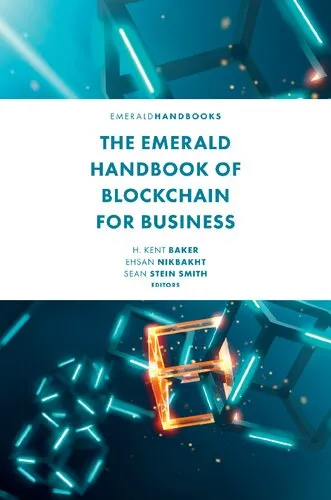
The Emerald Handbook of Blockchain for Business
H. Kent Baker,Ehsan Nikbakht,Sean Stein Smith
2022
View book
Book guide and evaluation
Giacomo Messina,Saveria Santangelo
0 reviews
Published
pages
views
Introduction to "Carbon: The Future Material for Advanced Technology Applications" Carbon, a fundamental element and the building block of life, is rapidly transforming itself from a material of basic structural applications to a key enabler of advanced technologies. In our bo
Before you read
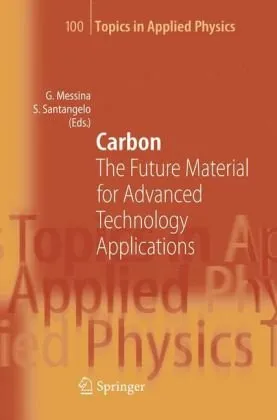
Carbon, a fundamental element and the building block of life, is rapidly transforming itself from a material of basic structural applications to a key enabler of advanced technologies. In our book, "Carbon: The Future Material for Advanced Technology Applications", we aim to explore the fascinating breadth and depth of carbon’s role in modern material science, engineering, and technology.
The book belongs to the Topics in Applied Physics series and draws upon the latest advances in carbon-based materials, including graphene, carbon nanotubes, fullerenes, and diamonds, to present a comprehensive narrative. Intended for researchers, industry professionals, and academic scholars—not to mention curious readers with an interest in the material’s vast potential—this work bridges the gap between fundamental physics and groundbreaking applications. It’s a rich exploration of the versatility and limitless opportunities carbon offers to industries such as electronics, medicine, energy storage, aerospace, and beyond.
"Carbon: The Future Material for Advanced Technology Applications" unfolds in four core sections:
The opening chapters provide a foundation in carbon’s structural, chemical, and physical properties. This section serves as a gateway to understanding why carbon is uniquely positioned to become the material of the future. Discussions range from its versatile allotropes—such as diamond, graphite, and amorphous carbon—to its nanoscale forms like graphene and carbon nanotubes.
In the second section, we dive into the revolutionary applications of carbon nanostructures in cutting-edge fields. Topics include electronics, where carbon’s high conductivity and mobility enable faster, more efficient components; and nanomedicine, where it offers new solutions for drug delivery and diagnostic tools. We also address energy solutions like lithium-ion batteries and supercapacitors, critically analyzing carbon's role in addressing global energy challenges.
The third section examines how carbon is changing industrial fields such as aerospace and automotive engineering. From ultra-lightweight carbon composites to materials with unparalleled strength-to-weight ratios, carbon is redefining material benchmarks for performance and sustainability.
Finally, the book reaches beyond materials science and into future possibilities. We speculate on how evolving carbon technologies could shape the upcoming decades and analyze the interdisciplinary collaborations required to unlock its full potential.
"The adaptability of carbon surpasses our imagination; its forms transition elegantly from the soft lubricity of graphite to the indomitable hardness of diamond."
"The future of technology will be written not only in silicon but also in carbon—a material that combines the essence of nature with the ingenuity of humanity."
"In the pursuit of sustainability, carbon-based materials offer us a roadmap to innovate responsibly while meeting some of the greatest challenges of our age."
Our book is essential reading for several reasons.
Firstly, it highlights an area of material science that is fundamentally altering the trajectory of technology. Carbon is no longer just a material for pencils and diamonds; it is the backbone of next-generation advancements in electronics, medicine, energy, and engineering.
Secondly, the book helps readers appreciate the immense interdisciplinary effort required to harness carbon's unique properties. Whether it’s graphene’s unmatched electrical conductivity or carbon nanotubes’ tensile strength, the potential applications reflect the countless hours of research and innovation behind them.
Finally, this book matters because it isn’t just about science. It’s about the future—our collective ability to create greener, more sustainable technologies and solve problems that affect every facet of human life. Carbon is the material that may very well define the 21st century, and understanding it is the first step toward embracing its full potential.
Your question is answered in the context of this title and author. Each answer uses 2 points.
0 reviews, 4.8 average out of 5
Sign in to publish a review.
Ask a focused question and learn from the community.
Related references that continue this learning path.
H. Kent Baker,Ehsan Nikbakht,Sean Stein Smith