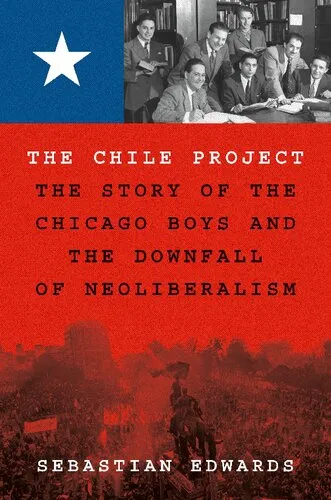
The Chile Project: The Story of the Chicago Boys and the Downfall of Neoliberalism
Sebastian Edwards
2023
View book
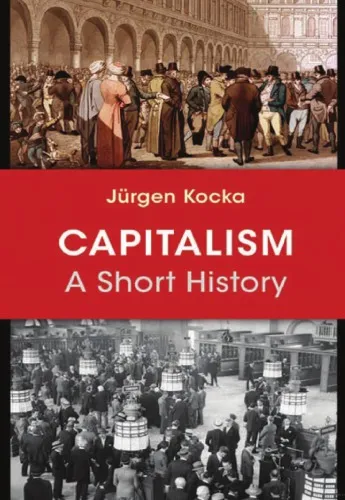
Book guide and evaluation
Jürgen Kocka
0 reviews
Published
pages
views
Introduction "Capitalism: A Short History" is a compelling and succinct exploration of capitalism's transformative journey through centuries. This book takes readers on a historical narrative, unpacking how capitalism evolved, influenced societies, and encountered
Before you read
"Capitalism: A Short History" is a compelling and succinct exploration of capitalism's transformative journey through centuries. This book takes readers on a historical narrative, unpacking how capitalism evolved, influenced societies, and encountered challenges that shaped its current form. Rich in context yet concise, it serves as an essential primer for anyone eager to understand the profound impact of capitalism on global economies, cultures, and the world's socio-political dynamics.
The book delves deep into capitalism's history, tracing its roots back to medieval Europe. It begins with the gradual shift from feudal systems to more market-oriented economies, driven by the desire for profit and growth. Emphasizing the pivotal moments in history, it chronicles the expansion of trade, the rise of industrial powers, and the influence of colonialism and imperialism in spreading capitalist ideals.
As the narrative progresses, the book examines the revolutionary changes brought about by the Industrial Revolution, highlighting how technological advancements catalyzed economic transformations and altered labor landscapes. It also explores the intricate relationship between capitalism and democracy, discussing how political ideologies and economic structures have frequently intertwined and influenced each other.
Further, the book sheds light on the complexities and contradictions inherent in capitalism, including the challenges of inequality, the crises of overproduction, and the environmental concerns that urgently demand solutions today. The narrative concludes by contemplating the future of capitalism amidst globalization, digital transformations, and the increasing calls for sustainability and reform.
"The heart of capitalism lies in the dynamic process of value creation, in the use of capital to generate profit and reinvest it to fuel further growth."
"While capitalism has proved to be an engine of prosperity, it is also fraught with cycles of boom and bust, demanding resilience and reinvention from its participants."
"Capitalism: A Short History" stands out as an essential work for its ability to distill complex economic phenomena into an accessible and engaging narrative. It matters because it provides readers with a nuanced understanding of how capitalism has shaped—and continues to shape—the modern world. It invites reflection on critical issues like inequality, environmental sustainability, and the role of innovation and regulation in ensuring equitable growth.
For students, educators, policymakers, and anyone interested in economic history and theory, this book offers foundational insights that foster a deeper comprehension of capitalism's enduring impact. In an era where socio-economic systems are increasingly under scrutiny, this narrative lays the groundwork for informed discussions about reforms and future trajectories of global economies.
Your question is answered in the context of this title and author. Each answer uses 2 points.
0 reviews, 4.9 average out of 5
Sign in to publish a review.
Ask a focused question and learn from the community.
Related references that continue this learning path.
Sebastian Edwards


Frans B. M. de Waal,Pier Francesco Ferrari