

Sabiston Textbook of Surgery The Biological Basis of Modern Surgical Practice
Courtney M. Townsend Jr.,R. D. Beauchamp,B. M. Evers,K. L. Mattox
Book guide and evaluation
Donna M. Bozzone
0 reviews
Published
pages
views
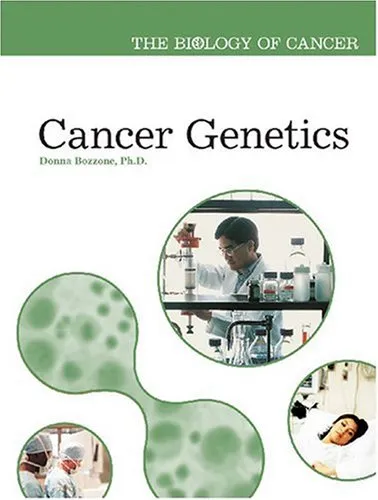
Cancer Genetics (The Biology of Cancer) oncogenes and tumor suppressor genes, molecular pathways in cancer An in-depth exploration of Cancer Genetics (The Biology of Cancer), linking molecular insights to clinical understanding. Analytical Summary Cancer Genetics (The Biolo
Before you read
Cancer Genetics (The Biology of Cancer) provides a detailed, scholarly examination of how genetic changes drive the onset, progression, and therapeutic targeting of cancer. Written with an authoritative voice, the work balances rigorous scientific explanation with clarity, making it an indispensable resource for students, educators, clinicians, and researchers seeking to understand the genetic mechanisms underlying oncogenesis.
The book addresses foundational topics such as the roles of oncogenes and tumor suppressor genes, the implications of genomic instability, and the interplay of inherited and somatic mutations. It systematically builds from fundamental molecular biology to complex interactions among signaling pathways, providing a cohesive narrative of how these processes culminate in malignant transformation.
Each chapter is structured to bridge basic science with clinical relevance. From mutations in proto-oncogenes to alterations in DNA repair mechanisms, it offers case examples and data-driven interpretations. While publication year and award details are information unavailable due to no reliable public source, the text’s enduring value lies in its scientific precision and pedagogical integrity.
In addition to delving into genetics at the cellular level, the author examines the technological advancements that have propelled cancer genetics forward, including next-generation sequencing, transcriptomics, and functional genomics. Both historical milestones and current trends are acknowledged, giving readers a full spectrum of the field’s evolution.
Readers of Cancer Genetics (The Biology of Cancer) will gain a structured framework to interpret, question, and apply genetic knowledge to cancer research, diagnosis, and treatment strategies.
A clear understanding of the genetic foundation of cancer provides better context for disease classification and prognostic assessment, enhancing both laboratory and clinical decision-making.
The integration of secondary keywords such as oncogenes and tumor suppressor genes reflects the book’s comprehensive coverage of these core molecular players and their roles in carcinogenesis.
Through critical analysis of seminal studies and contemporary research, the text enables readers to distinguish between causative mutations and passenger mutations, an essential skill in personalized oncology.
It also addresses ethical considerations in genetic testing and counseling, grounding scientific conversation in patient-centered care.
“The genome is both the architect and the casualty of cancer’s complex biology.” Unknown
“Understanding oncogenes and tumor suppressor genes is the gateway to targeted therapy.” Unknown
“Cancer genetics reveals that prevention and cure are as much about decoding DNA as they are about delivering treatment.” Unknown
This work occupies a critical space in biomedical literature by connecting the dots between molecular theory and clinical application.
By framing molecular biology within the context of real-world oncology, Cancer Genetics (The Biology of Cancer) empowers professionals to think translationally—bridging laboratory discoveries with therapeutic innovation.
Students benefit from its methodical breakdown of complex processes, while seasoned researchers appreciate its integration of classical concepts with emerging technologies. Healthcare providers will find its sections on hereditary cancer syndromes and predictive genetics invaluable to patient care.
In an era where precision medicine is reshaping oncology, the book serves not only as a foundation but also as an ongoing reference for understanding the evolving genetic landscape of cancer.
Cancer Genetics (The Biology of Cancer) stands as a guiding reference for anyone committed to mastering the intricate relationship between our genetic code and cancer development.
By exploring mutations, molecular pathways, and the dual faces of oncogenes and tumor suppressor genes, readers emerge with a deeper grasp of how to translate genetic insight into meaningful interventions. This is not merely a text to read—it is one to study, reference, and revisit as the science evolves.
Whether you are an academic, clinician, or researcher, your engagement with this book can catalyze informed dialogue, collaborative research, and innovative treatment approaches. Take the next step: delve into its pages, share its insights, and join the ongoing conversation shaping the future of cancer care.
Your question is answered in the context of this title and author. Each answer uses 2 points.
0 reviews, 4.6 average out of 5
Sign in to publish a review.
Ask a focused question and learn from the community.
Related references that continue this learning path.
Courtney M. Townsend Jr.,R. D. Beauchamp,B. M. Evers,K. L. Mattox
American College of Physicians

N Cherny,M Fallon,S Kaasa,R K Portenoy,D C Currow (eds.)

Bruce Alberts,Dennis Bray,Karen Hopkin,Alexander Johnson,Julian Lewis,Martin Raff,Keith Roberts,Peter Walter