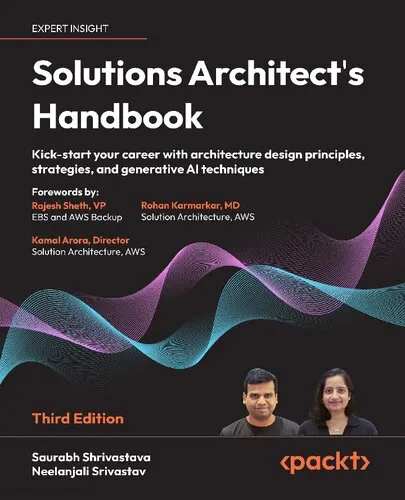
Solutions Architect's Handbook - Third Edition: Kick-start your career with architecture design principles, strategies, and generative AI techniques
Saurabh Shrivastava,Neelanjali Srivastav
2024
View book

Book guide and evaluation
Ackland, Len
0 reviews
Published
pages
views
Bulletin of the Atomic Scientistspp.2—2 nuclear policy analysis, scientific responsibility Explore Bulletin of the Atomic Scientistspp.2—2, a profound guide to nuclear policy and scientific ethics. Analytical Summary The book Bulletin of the Atomic Scientistspp.2—
Before you read
The book Bulletin of the Atomic Scientistspp.2—2 stands as a critical examination of the intersection between science, technology, and global security. Written with precision and depth, it contributes to the longstanding discourse the Bulletin of the Atomic Scientists has fostered since its inception. This work offers readers a nuanced lens through which to consider the ethical and political ramifications of nuclear policy, bridging historical context with contemporary challenges.
As with much of the Bulletin's output, the text draws from multidisciplinary perspectives, blending political science, history, and ethical frameworks. By doing so, it ensures the analysis resonates with academics and professionals alike who seek to understand both the factual developments and the underlying philosophy driving nuclear stewardship and the avoidance of conflict.
Information regarding the exact publication year of this specific edition is unavailable due to no reliable public source. Nevertheless, the analytical scope remains timeless. Whether discussing the origins of the atomic age or modern non-proliferation efforts, the book balances empirical detail with moral inquiry—a hallmark of works tied to the Bulletin’s mission.
The content within Bulletin of the Atomic Scientistspp.2—2 offers enduring lessons for policymakers, scholars, and global citizens who seek informed engagement with nuclear issues and scientific responsibility.
One major takeaway is the importance of interdisciplinary dialogue. The book asserts that science does not exist in a vacuum; rather, it functions as part of a socio-political ecosystem where ethical choices carry world-altering consequences.
Another is the recognition of the persistent relevance of nuclear policy. As global tensions evolve, the fundamental dilemmas outlined remain urgent, encouraging proactive measures rooted in transparency and collaborative governance.
Lastly, the text stresses personal responsibility within professional life—underscoring that scientists, policymakers, and educators each have a role in shaping a secure and ethical future.
"The ticking of the clock is not just a metaphor—it is a reminder." Unknown
"Scientific achievement carries with it the weight of moral choice." Unknown
"Understanding the past is essential to securing the future." Unknown
The resonance of Bulletin of the Atomic Scientistspp.2—2 lies in its ability to provoke thought and action. It is an indispensable resource for those grappling with questions about the role of science in society, particularly in areas fraught with existential risk.
For educators, the book offers a structured way to engage students in discussions about nuclear policy analysis and scientific responsibility. For policymakers, it becomes a lens through which to weigh decisions that may determine the trajectory of international relations and planetary safety.
It also matters because it consolidates decades of trusted discourse associated with the Bulletin of the Atomic Scientists. This continuity of purpose helps ensure that current and future generations can draw on established wisdom while confronting new realities.
In conclusion, Bulletin of the Atomic Scientistspp.2—2 stands as a vital contribution to the critical narratives that shape modern thought on nuclear policy and scientific responsibility. Its authoritative yet accessible approach invites both seasoned experts and curious newcomers to engage with pressing global concerns.
The book is not only a reflection of historical insight but also a call to ongoing dialogue. Readers are encouraged to read, share, and discuss the ideas presented, ensuring that the responsibility for a safe and equitable future is a collective endeavor. As you close its pages, the urgency of its message is clear: informed and ethical action is the path forward.
Your question is answered in the context of this title and author. Each answer uses 2 points.
0 reviews, 4.3 average out of 5
Sign in to publish a review.
Ask a focused question and learn from the community.
Related references that continue this learning path.
Saurabh Shrivastava,Neelanjali Srivastav
Andreas C. Müller,Sarah Guido