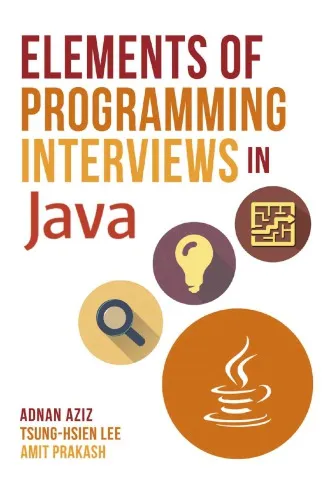
Elements of Programming Interviews in Java: The Insiders’ Guide
Adnan Aziz,Tsung-Hsien Lee,Amit Prakash
2016
View book
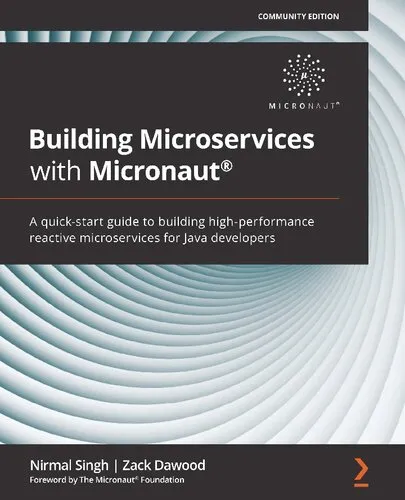
Book guide and evaluation
Nirmal Singh,Zack Dawood
0 reviews
Published
pages
views
Introduction to "Building Microservices with Micronaut®" Welcome to "Building Microservices with Micronaut®: A quick-start guide to building high-performance reactive microservices for Java developers". This book is your gateway to mastering microservices architecture usin
Before you read
Welcome to "Building Microservices with Micronaut®: A quick-start guide to building high-performance reactive microservices for Java developers". This book is your gateway to mastering microservices architecture using Micronaut—a modern, fast, and JVM-native framework built for developers who strive to create scalable, reactive, and performant applications.
The world of software development is rapidly evolving, with microservices becoming the cornerstone of modern application architecture. This book has been thoughtfully designed to cater to both beginners eager to dive into microservices and seasoned developers looking to explore Micronaut as their framework of choice. Whether you're a budding software engineer or an enterprise architect, this guide offers insightful concepts, practical examples, and hands-on exercises to accelerate your journey in building world-class microservices with Java and Micronaut.
"Building Microservices with Micronaut®" is a comprehensive, practical guide that simplifies the complex world of microservices. This book starts by introducing the fundamentals of microservice architecture, explaining why Micronaut is an excellent choice for developers due to its low memory overhead, startup speed, and support for reactive programming.
Across various chapters, you will dive into essential topics such as dependency injection, service discovery, configuration management, and building secure APIs with authentication and authorization. The book also explores Micronaut's support for Reactive Streams, making it a true enabler of highly responsive applications.
Developers will not only learn to design fault-tolerant and resilient microservices but also gain the ability to implement observability with tracing and metrics. The book ties theory to practice with examples that walk you through building real-world applications and deploying them using modern tools like Docker and Kubernetes. Whether you're running on a local machine or in the cloud, the book equips you with the knowledge to deliver scalable, maintainable solutions.
"Micronaut is not just another framework; it's a gateway to building lightning-fast, reactive solutions that redefine performance."
"In the era of microservices, the true power lies not just in segregating functionality, but in the resilience and ease of scaling each segment."
"Observability isn't a privilege—it's a necessity. Micronaut empowers developers to unlock insights into their applications like never before."
The landscape of Java development has evolved significantly, with microservices becoming the de facto standard for building large-scale, distributed systems. However, traditional frameworks often lack the speed and lightweight nature necessary to meet modern demands. This is where Micronaut shines.
"Building Microservices with Micronaut®" fills a crucial gap in developer resources by offering a practical, hands-on roadmap to mastering Micronaut. It combines theoretical knowledge with extensive examples to enable you to deliver high-performance, resilient software that meets the needs of users and businesses alike.
In a world where responsiveness, scalability, and efficiency drive success, this book gives you the tools and expertise necessary to rise to the challenge. By adopting Micronaut and the practices outlined in this book, you position yourself at the forefront of innovation in the software industry.
Your question is answered in the context of this title and author. Each answer uses 2 points.
0 reviews, 4.0 average out of 5
Sign in to publish a review.
Ask a focused question and learn from the community.
Related references that continue this learning path.
Adnan Aziz,Tsung-Hsien Lee,Amit Prakash
John Chapin,Mike Roberts