

Practical Troubleshooting of Electrical Equipment and Control Circuits
Mark Brown, Jawahar Rawtani M.Sc(Tech) MBA, Dinesh Patil B.E (I&C) DipEE
2005
View book
Book guide and evaluation
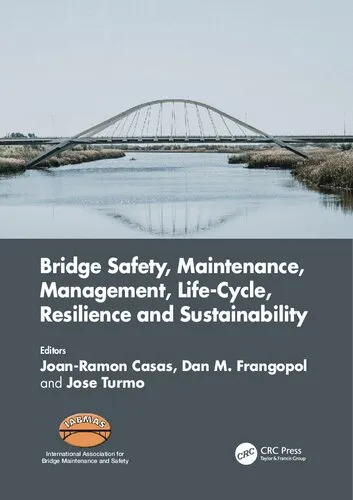
Joan-Ramon Casas,Dan M. Frangopol,Jose Turmo
0 reviews
Published
pages
views
Introduction to Bridge Safety, Maintenance, Management, Life-Cycle, Resilience and Sustainability Bridges play a critical role in connecting communities, facilitating trade, transportation, and communication. However, ensuring their safe and optimal functionality across their
Before you read
Bridges play a critical role in connecting communities, facilitating trade, transportation, and communication. However, ensuring their safe and optimal functionality across their lifecycle is no small task. The book “Bridge Safety, Maintenance, Management, Life-Cycle, Resilience and Sustainability” delves deeply into all aspects of bridge engineering and management, offering a comprehensive reference for professionals, researchers, and policymakers. Written by experts in the field, this book addresses the pressing challenges of maintaining and managing aging bridge infrastructure while also considering modern concerns like resilience and sustainability amidst climate change and urban expansion.
The book spans multiple vital facets of bridge engineering and lifecycle management. It begins by laying out fundamental principles of bridge safety—including structural integrity, risk factors, and strategies to mitigate failures. The authors expertly guide the readers through the theoretical and practical frameworks used in bridge maintenance, emphasizing proactive rather than reactive approaches.
Management strategies form the backbone of the discussion, where the authors cover asset management practices, decision-making frameworks, and the financial implications of bridge maintenance. Special focus is given to the utilization of advanced technologies like sensors, drones, and artificial intelligence for monitoring and assessing bridge conditions in real time.
Building upon this foundation, the book transitions into life-cycle performance analysis, encompassing topics like structural durability, service life prediction, and maintenance planning. The role of resilience is given significant attention, particularly as infrastructure faces new threats from natural disasters, climate change, and man-made hazards.
Finally, the book interweaves the concept of sustainability into the conversation. It provides guidelines on sustainable materials, construction techniques, and recycling in bridge design and maintenance. The authors advocate for an integrated approach that balances safety, resilience, and environmental responsibility, ultimately helping bridge engineers and managers meet the demands of a rapidly evolving world.
"Bridges are not merely structures; they are lifelines that bind society together. Their management requires both scientific precision and a visionary approach."
"Resilience is not a choice; it’s a necessity in the face of changing environmental and societal demands."
"Sustainability in bridge engineering is not just about reducing carbon footprints; it is an ethical commitment to future generations."
As global infrastructure ages and urban centers expand, the challenges of managing bridges are amplified. Natural disasters, increased traffic loads, and environmental concerns exacerbate these issues, making traditional strategies insufficient for the complex needs of the 21st century.
This book stands out as a pivotal resource because it not only educates on traditional engineering practices but also integrates modern technological advancements and emerging paradigms such as resilience and sustainability into its framework. It is written for a diverse audience, including engineers, managers, researchers, and decision-makers, ensuring the concepts are both accessible and applicable across disciplines.
Moreover, the book underscores the importance of responsible infrastructure management as a societal and ethical obligation. By offering actionable insights and in-depth analysis rooted in both theory and practice, it equips readers to better address the challenges of bridge lifecycle management in a holistic and forward-thinking manner.
Your question is answered in the context of this title and author. Each answer uses 2 points.
0 reviews, 4.0 average out of 5
Sign in to publish a review.
Ask a focused question and learn from the community.
Related references that continue this learning path.
Mark Brown, Jawahar Rawtani M.Sc(Tech) MBA, Dinesh Patil B.E (I&C) DipEE

Zoran Radmilović,Dragan Čišić (eds.)