Book guide and evaluation
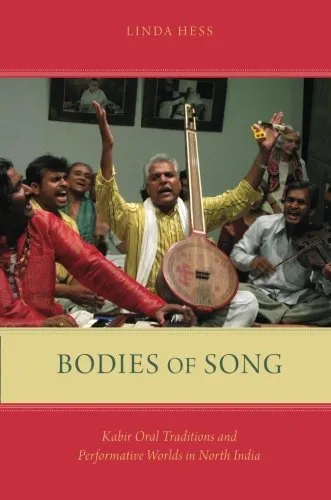
Bodies of song : Kabir oral traditions and performative worlds in North India
Hess, Linda;Kabir;Kabir
English
Unordered
Language Learning
4.9 / 5
0 reviews
2015
Published
489
pages
426
views
Kabir was a great iconoclastic-mystic poet of fifteenth-century North India; his poems were composed orally, written down by others in manuscripts and books, and transmitted through song. Scholars and translators usually attend to written collections, but these present only a par
Before you read
What will you get from this book?
Kabir was a great iconoclastic-mystic poet of fifteenth-century North India; his poems were composed orally, written down by others in manuscripts and books, and transmitted through song. Scholars and translators usually attend to written collections, but these present only a partial picture of the Kabir who has remained vibrantly alive through the centuries mostly in oral forms. Entering the worlds of singers and listeners in rural Madhya Pradesh, Bodies of Song combines ethnographic and textual study in exploring how oral transmission and performance shape the content and interpretation of vernacular poetry in North India. The book investigates textual scholars' study of oral-performative traditions in a milieu where texts move simultaneously via oral, written, audio/video-recorded, and electronic pathways.As texts and performances are always socially embedded, Linda Hess brings readers into the lives of those who sing, hear, celebrate, revere, and dispute about Kabir. Bodies of Song is rich in stories of individuals and families, villages and towns, religious and secular organizations, castes and communities. Dialogue between religious/spiritual Kabir and social/political Kabir is a continuous theme throughout the book: ambiguously located between Hindu and Muslim cultures, Kabir rejected religious identities, pretentions, and hypocrisies. But even while satirizing the religious, he composed stunning poetry of religious experience and psychological insight. A weaver by trade, Kabir also criticized caste and other inequalities and today serves as an icon for Dalits and all who strive to remove caste prejudice and oppression.
Ask this book
Your question is answered in the context of this title and author. Each answer uses 2 points.
Sign in to ask the book assistant.
Reader reviews
0 reviews, 4.9 average out of 5
No reviews yet
If you have read this book, help the next reader with your experience.
Write a review
Sign in to publish a review.
Reader questions and answers
Ask a focused question and learn from the community.
Sign in to ask or answer a question.
No questions yet
Be the first to ask a clear, useful question.
What to read next
Related references that continue this learning path.
Literary Subterfuge and Contemporary Persian Fiction: Who Writes Iran?
Mohammad Mehdi Khorrami
2014
View book