Book guide and evaluation
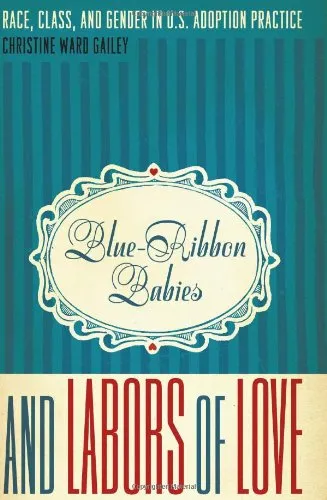
Blue-Ribbon Babies and Labors of Love: Race, Class, and Gender in U.S. Adoption Practice (Louann Atkins Temple Women & Culture)
Christine Ward Gailey
English
Intermediate
novel
4.8 / 5
0 reviews
2010
Published
200
pages
378
views
Blue-Ribbon Babies and Labors of Love: Race, Class, and Gender in U.S. Adoption Practice (Louann Atkins Temple Women & Culture) U.S. adoption policy, intersectionality in family studies An in-depth look at Blue-Ribbon Babies and Labors of Love, exploring race, class, an
Before you read
What will you get from this book?
Analytical Summary
In Blue-Ribbon Babies and Labors of Love: Race, Class, and Gender in U.S. Adoption Practice (Louann Atkins Temple Women & Culture), Christine Ward Gailey offers a penetrating examination of adoption in the United States, situating it firmly at the intersection of race, class, and gender. This work brings a scholarly yet accessible lens to the policies, practices, and personal narratives that shape the American adoption landscape.
The book analyses the cultural constructions of family and kinship, revealing how systemic power structures and inequalities influence who adopts, who is adopted, and how adoption is culturally valued. By drawing on ethnographic research and critical theory, Gailey dissects the ways in which socio-economic status, racial identity, and gender norms determine both the pathways to adoption and societal perceptions of adoptive families.
Gailey’s arguments are rooted in empirical evidence, including case studies, interviews, and policy reviews, ensuring that her conclusions are both academically rigorous and deeply human. Throughout, she interrogates not only the legal frameworks but also the unspoken cultural assumptions that continue to shape adoption practices in the modern era.
Key Takeaways
Readers of Blue-Ribbon Babies and Labors of Love will gain rich insights into the multifaceted realities of adoption in America, particularly through the lens of intersectionality in family studies.
The book underscores how race, class, and gender intersect to privilege certain adoptive arrangements while marginalizing others. Adoption is revealed not as a neutral act, but as one embedded in political and economic contexts, reflecting broader societal inequities.
Another critical takeaway is Gailey’s exploration of “blue-ribbon” labeling in adoption—a term signifying preference for certain children, often based on race or perceived desirability, which raises pressing ethical concerns about commodification in family formation.
By connecting these factors to public policy and cultural narratives, Gailey invites professionals, academics, and thoughtful readers to reassess the assumptions they may hold about what makes a family and the forces that determine adoption outcomes.
Memorable Quotes
Adoption is not merely the creation of kinship; it is a political act shaped by the contours of race, class, and gender. Unknown
When society labels certain children as 'blue-ribbon,' it reflects and perpetuates deeper biases. Unknown
The stories of adoption are as diverse as those who live them, yet they are often constrained by systems of inequality. Unknown
Why This Book Matters
This book fills a critical gap in understanding the social dimensions of adoption within the United States.
For policymakers, Blue-Ribbon Babies and Labors of Love highlights systemic issues that demand reform, such as unequal access to adoption opportunities and biases in child placement. For academics and students, it offers a deeply researched, theoretically rich text that aligns with current discussions on intersectionality.
By interrogating the relationship between personal acts of love and systemic structures of inequality, Gailey’s work compels readers to think beyond individual experiences and address adoption at its societal roots.
Inspiring Conclusion
In closing, Blue-Ribbon Babies and Labors of Love: Race, Class, and Gender in U.S. Adoption Practice (Louann Atkins Temple Women & Culture) stands as a vital text for anyone committed to understanding adoption as a complex social phenomenon.
By weaving together personal narratives, policy analysis, and critical theory, Christine Ward Gailey invites readers to confront uncomfortable truths and to envision more equitable adoption practices. Whether you are a scholar, practitioner, or engaged citizen, this book offers both the tools and impetus to deepen your understanding of family-making in America.
Read it to broaden your perspective, share it to spark dialogue, and discuss it to contribute meaningfully to ongoing conversations about justice and love in adoption.
Ask this book
Your question is answered in the context of this title and author. Each answer uses 2 points.
Sign in to ask the book assistant.
Reader reviews
0 reviews, 4.8 average out of 5
No reviews yet
If you have read this book, help the next reader with your experience.
Write a review
Sign in to publish a review.
Reader questions and answers
Ask a focused question and learn from the community.
Sign in to ask or answer a question.
No questions yet
Be the first to ask a clear, useful question.
What to read next
Related references that continue this learning path.