

The Secret Garden (Webster's Chinese-Traditional Thesaurus Edition)
Frances Hodgson Burnett
2006
View book
Book guide and evaluation
Anna Sewell
0 reviews
Published
pages
views
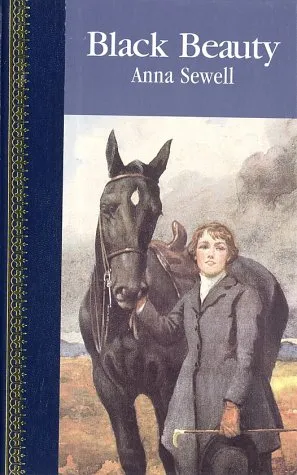
Introduction to 'Black Beauty (Children's Classics)' Published in 1877 by Anna Sewell, "Black Beauty" remains one of the most cherished children’s classics— lauded not only for its compelling narrative but also for its revolutionary advocacy for animal welfare. Through the eye
Before you read
Published in 1877 by Anna Sewell, "Black Beauty" remains one of the most cherished children’s classics— lauded not only for its compelling narrative but also for its revolutionary advocacy for animal welfare. Through the eyes of a noble black horse, Sewell unveils a richly textured tapestry of Victorian society and the treatment of animals, encouraging empathy, kindness, and moral reflection in the reader.
"Black Beauty" chronicles the life of its eponymous equine narrator, starting from his early days as a carefree foal on a gentle English farm. Black Beauty enjoys a loving upbringing under the care of Farmer Grey, learning virtues that will serve him throughout his life. The tale unfolds into a series of episodic adventures as Beauty is sold to various owners, each varying wildly in character and compassion.
Throughout the text, Beauty confronts the diverse spectrums of human nature—from the warmth and understanding of good owners like John Manly and Jerry Barker to the cruelty and ignorance of others. Significant experiences like his time in a fashionable London cab business, under both wicked and kind masters, reveal truths about human and animal interaction.
The novel explores numerous challenges faced by horses of the day: bearing heavy loads, cruel bits and reins, inadequate rest, and exposure to the elements. These adversities are delivered through vivid storytelling that brings forward the importance of humane treatment for horses and the broader theme of social justice.
"It is good people who make good places."
"My doctrine is this, that if we see cruelty or wrong that we have the power to stop, and do nothing, we make ourselves sharers in the guilt."
"Black Beauty" stands as a seminal work in literature due to its pioneering viewpoint—offering a narrative from an animal's perspective, thus birthing the immersive "animal autobiography" genre. Beyond its literary merits, the book has served as a catalyst for real-world animal welfare advocacy, profoundly influencing public policy and sentiment regarding humane treatment for horses ever since its publication.
Moreover, the timeless themes of compassion, patience, and respect transcend its Victorian roots, continuing to educate young readers on ethical conduct and social responsibility. By using the life journey of Black Beauty as a lens, Sewell educates the readership on the systemic issues faced by animals, urging reform through poignant storytelling and memorable characters.
Ultimately, "Black Beauty" endures as a powerful narrative, advocating for kindness in both word and deed. It is a testament to the impact literature can have in shaping societal values and promoting positive change. Whether read by children or adults, it promises to impart lessons that resonate with its audience long after the turning of its final page.
Your question is answered in the context of this title and author. Each answer uses 2 points.
0 reviews, 4.8 average out of 5
Sign in to publish a review.
Ask a focused question and learn from the community.
Related references that continue this learning path.
Frances Hodgson Burnett
Robert Louis(Author);Wyeth, N. C.(Illustrator);Avi(Illustrator) Stevenson


Mark Twain (editor);Paul Baender (editor)