
Book guide and evaluation
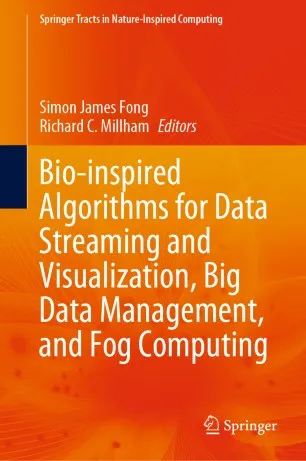
Bio-inspired Algorithms for Data Streaming and Visualization, Big Data Management, and Fog Computing
Simon James Fong,Richard C. Millham
English
Beginner
Engineering
5.0 / 5
0 reviews
2021
Published
228
pages
236
views
Introduction The rapidly evolving landscape of technology has given rise to complex challenges in managing, interpreting, and processing vast amounts of data. From real-time data streaming to advanced big data management techniques, and the emerging paradigm of fog
Before you read
What will you get from this book?
Introduction
The rapidly evolving landscape of technology has given rise to complex challenges in managing, interpreting, and processing vast amounts of data. From real-time data streaming to advanced big data management techniques, and the emerging paradigm of fog computing—these areas represent the frontier of computational innovation. It is at this frontier that biological principles and natural processes can inspire groundbreaking solutions.
"Bio-inspired Algorithms for Data Streaming and Visualization, Big Data Management, and Fog Computing" explores this intersection of nature-inspired algorithms and modern computational problems. This book is designed for researchers, computer scientists, data engineers, and technology enthusiasts seeking to understand not only how bio-inspired paradigms work but also their practical implementation in real-world applications.
Throughout the book, we delve into cutting-edge techniques that fuse biological metaphors—such as swarm intelligence, evolutionary computation, and neural-inspired architectures—with computational efficiency, scalability, and adaptability. This approach enables organizations to unlock the full potential of their data, whether it is via real-time streaming analytics, visualization of high-dimensional datasets, or efficient processing across distributed systems using fog computing.
Detailed Summary of the Book
At its core, this book provides a holistic view of how bio-inspired algorithms can address some of the pressing challenges in data analysis and edge computing.
Focusing on three main domains—data streaming and visualization, big data management, and fog/edge computing—the book unfolds in structured layers. The initial chapters introduce foundational concepts, exploring the principles of bio-inspired computing and their historical evolution. From there, we dive deeper into how these algorithms mirror natural processes, providing a rich context for their ability to handle real-world problems such as high-dimensional data analysis, clustering, and anomaly detection.
The middle sections of the book are dedicated to the application of these algorithms in data streaming and visualization. Readers will gain insight into real-time analytics, fine-grained data pattern recognition, and how nature-inspired strategies can dynamically adapt to the unpredictable behavior of streaming data. Visualization techniques powered by bio-inspired methods form another focal point, presenting methods to make complex data comprehensible in a visually intuitive way.
Finally, the book transitions to big data management and fog computing. Here, we explore cases where biological mechanisms—such as energy efficiency, resource optimization, and distributed intelligence—can be replicated in handling large datasets across decentralized networks. The chapters discuss the benefits of fog computing in bringing computational resources closer to data sources, reducing latency, and increasing reliability in IoT ecosystems.
Key Takeaways
- A comprehensive understanding of bio-inspired algorithms and their mechanisms, including swarm intelligence, evolutionary strategies, and more.
- Insights into applying bio-inspired algorithms to solve real-time data streaming and high-dimensional visualization challenges.
- Strategies for leveraging distributed computing, fog computing, and edge analytics for robust data management systems.
- Hands-on guidance for implementing natural algorithms in scalable systems to tackle computational bottlenecks in big data.
- A look ahead into the future of bio-inspired computing and its potential to transform AI, IoT, and data processing.
Famous Quotes from the Book
"Nature has always been the best teacher of efficiency. Understanding its principles not only enriches scientific discovery but also drives technological advancement in unimaginable ways."
"In an age dominated by data, biology-inspired computing offers a way to balance complexity with simplicity and chaos with order."
Why This Book Matters
In a world where the exponential growth of data challenges even the most advanced computational architectures, there is a pressing need for approaches that go beyond the limits of conventional methods. This is where bio-inspired computing steps in, offering frameworks and algorithms that inherently adapt and evolve—just like the biological systems they are inspired by.
By bridging the gap between natural processes and technological solutions, this book empowers readers to think outside the traditional paradigms of computing. It sheds light on how we can manage the deluge of data in a more effective, intelligent, and decentralized manner. For researchers and professionals, this book serves as a practical guide to pioneering models, while for students, it provides a foundation for exploring emerging areas in bio-computing.
More than anything, this book matters because it points to a sustainable, intelligent future of computing—one that mirrors the incredible ingenuity of life itself.
Ask this book
Your question is answered in the context of this title and author. Each answer uses 2 points.
Sign in to ask the book assistant.
Reader reviews
0 reviews, 5.0 average out of 5
No reviews yet
If you have read this book, help the next reader with your experience.
Write a review
Sign in to publish a review.
Reader questions and answers
Ask a focused question and learn from the community.
Sign in to ask or answer a question.
No questions yet
Be the first to ask a clear, useful question.
What to read next
Related references that continue this learning path.

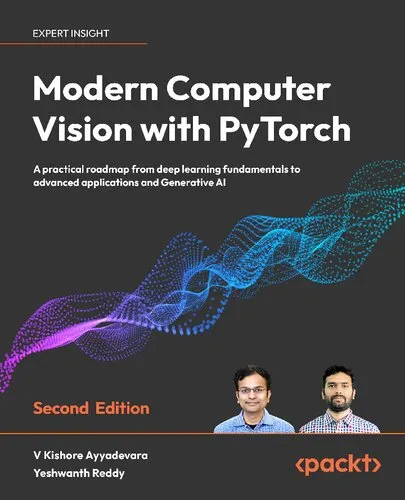
Modern Computer Vision with PyTorch: A Practical Roadmap From Deep Learning Fundamentals to Advanced Applications and Generative AI, 2nd Edition
V Kishore Ayyadevara,Yeshwanth Reddy
2023
View book