
e-Development toward the Knowledge Economy : Leveraging Technology, Innovation and Entrepreneurship for 'Smart' Development
Elias G. Carayannis,Caroline M. Sipp
2006
View book
Book guide and evaluation
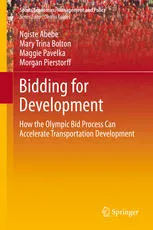
Ngiste Abebe,Mary Trina Bolton,Maggie Pavelka,Morgan Pierstorff (auth.)
0 reviews
Published
pages
views
Introduction to Bidding for Development: How the Olympic Bid Process Can Accelerate Transportation Development The Olympic Games have long been associated with international athletic excellence and global unity, but beyond the fanfare of the competitions lies a t
Before you read
The Olympic Games have long been associated with international athletic excellence and global unity, but beyond the fanfare of the competitions lies a transformative process with far-reaching implications for host cities and their infrastructure. Bidding for Development: How the Olympic Bid Process Can Accelerate Transportation Development explores the intersection of urban development, transportation infrastructure, and the Olympic bidding process, shedding light on how the pursuit of hosting rights can catalyze significant modernization efforts in cities worldwide.
Authored by Ngiste Abebe, Mary Trina Bolton, Maggie Pavelka, and Morgan Pierstorff, the book takes a critical yet optimistic look at how cities leverage the Olympic bid process to accelerate transportation projects that might otherwise take decades to materialize. With a focus on case studies, lessons from past host cities, and a forward-thinking perspective, this book is essential reading for policymakers, urban planners, and anyone intrigued by the intersection of sports and public infrastructure development.
At its core, Bidding for Development unpacks the complexities of the Olympic bidding process and its unique role as a catalyst for urban transformation.
Hoping to win the rights to host the Games, prospective cities embark on ambitious plans to improve public infrastructure, especially their transportation networks. The book delves into various case studies where cities used their Olympic bids, whether successful or not, as leverage to implement large-scale transportation projects. These range from new subway lines and expanded bus networks to completely revamped airport systems.
Through in-depth analysis, the authors examine how the time-sensitive nature of the bidding and preparation process imposes hard deadlines that compel cities to overcome barriers such as bureaucracy, funding limitations, and public skepticism. Furthermore, the book explores how the International Olympic Committee (IOC) evaluates bids, emphasizing the increasing importance of sustainability and legacy in influencing the Committee's decisions.
While the tone is largely hopeful, Bidding for Development also acknowledges the risks involved in this process. The pressures of meeting deadlines for the Games, coupled with the high costs of implementation, can lead to long-term financial strain if projects are not managed wisely. Cities that fail to win the bid also face challenges, such as justifying the expenses incurred during the bidding stage. Ultimately, the book provides an even-handed assessment of the opportunities and risks entangled in bidding for the world's largest sporting event.
"The Olympic Games are more than a sporting event; they are a visionary deadline that compels cities to transform aspirations into reality."
"An Olympic bid may be fleeting, but the legacy of improved transportation infrastructure can benefit generations."
"While not every city will win the honor of hosting the Games, every bidder has the opportunity to redefine its trajectory."
In an increasingly urbanized world, efficient transportation is a cornerstone of equitable and sustainable city development. Bidding for Development highlights how the Olympic Games, long viewed as a spectacle of sport, can also drive transformation in urban mobility. The book demonstrates how the bidding process encourages cities to think creatively, act decisively, and deliver results that extend beyond a single Olympic event.
For policymakers and urban planners, the book offers valuable insights into how the dynamics of the Olympic bid process can be harnessed to address pressing urban challenges. For citizens, it provides a behind-the-scenes look into how the Olympics shape their cities, offering the tools to advocate for responsible development. In aligning the hope of Olympic glory with the practical needs of urban residents, Bidding for Development presents a compelling argument for why this seemingly niche topic is of profound global significance.
Your question is answered in the context of this title and author. Each answer uses 2 points.
0 reviews, 4.0 average out of 5
Sign in to publish a review.
Ask a focused question and learn from the community.
Related references that continue this learning path.
Elias G. Carayannis,Caroline M. Sipp
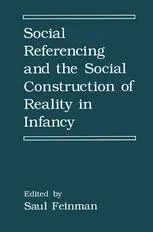
Saul Feinman (auth.),Saul Feinman (eds.)