

The Bitcoin standard: the decentralized alternative to central banking
Ammous,Saifedean
2018
View book
Book guide and evaluation
Ana Juan Ferrer
0 reviews
Published
pages
views
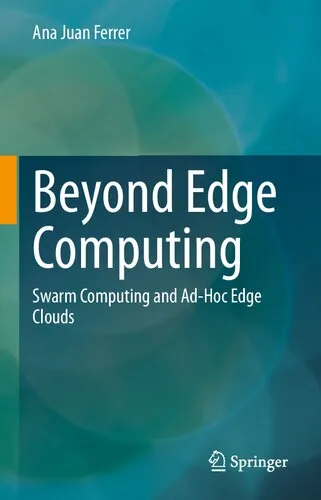
Introduction to "Beyond Edge Computing: Swarm Computing and Ad-Hoc Edge Clouds" In a world brimming with data and increasingly complex computational demands, traditional centralized cloud computing solutions are no longer sufficient. "Beyond Edge Computing: Swarm Computi
Before you read
In a world brimming with data and increasingly complex computational demands, traditional centralized cloud computing solutions are no longer sufficient. "Beyond Edge Computing: Swarm Computing and Ad-Hoc Edge Clouds" is a seminal exploration of the next frontier in distributed computing technologies. This book navigates the transformative shift from conventional edge computing to emergent paradigms like swarm computing and ad-hoc edge clouds, empowering readers to understand, design, and implement agile, intelligent, and decentralized systems.
With the volume of data produced by IoT devices, real-time applications, and edge devices growing exponentially, the need for dynamic, networked, and autonomous computational systems has never been greater. In this book, I illuminate how swarm intelligence—rooted in biological systems such as ant colonies and bird flocks—can be applied to develop decentralized and self-organizing computational ecosystems. This adaptation not only optimizes resource utilization but also ensures resilience, scalability, and adaptability in complex environments.
Designed for technology enthusiasts, developers, engineers, and industry leaders, this book bridges the gap between theoretical concepts and practical applications. Whether you're a systems architect seeking to implement modern edge solutions or a strategist curious about the future impact of distributed intelligence, this text will serve as your compass.
The book begins with a foundational review of traditional edge computing architectures and their limitations in today's data-driven society. It then delves into swarm computing, a decentralized approach inspired by collective behaviors observed in nature. Readers are introduced to the guiding principles of swarm intelligence, including the concepts of distributed decision-making, scalability, and fault tolerance.
In subsequent chapters, the book discusses ad-hoc edge clouds—temporary, task-specific computational clusters formed from edge devices. These clusters are designed to provide time-sensitive processing capabilities closer to data sources, enabling ultra-low latency and responsive systems. Through real-world examples, the book explains how these technologies can transform industries such as autonomous vehicles, healthcare, and smart cities.
Through extensive research and case studies, "Beyond Edge Computing" also explores the synergies between swarm computing and ad-hoc edge clouds, illustrating how combining these paradigms can lead to revolutionary breakthroughs in distributed intelligence. From technical blueprints for creating swarm-enabled applications to ethical discussions surrounding decentralization, this book offers a comprehensive guide to the future of computing.
"Just as a flock of birds can shift direction as one entity, distributed computing systems built on the principles of swarm intelligence can adapt fluidly to changing conditions."
"Edge computing is no longer about proximity; it’s about intelligence at the edge, where collaboration becomes a force multiplier."
"The shift to swarm computing fundamentally alters our relationship with technology—it’s no longer just centralized systems orchestrating devices, but ecosystems of devices orchestrating themselves."
"Ad-hoc edge clouds redefine resilience. In the face of failure, these decentralized networks heal, reorganize, and continue to operate."
The future of technology lies in decentralization and intelligence at every level of computation. This book matters because it sheds light on the transformative power of swarm computing and ad-hoc edge clouds—technologies that challenge the status quo of centralized systems. By drawing from lessons in natural systems and applying them to computing, this text provides a revolutionary roadmap for the next generation of networks.
From practical implications for industries to philosophical and ethical questions about autonomy and control, this book touches on the myriad ways in which these advancements will shape our world. By providing readers with both theoretical frameworks and actionable insights, "Beyond Edge Computing" positions itself as an essential resource for anyone aiming to stay ahead in the ever-evolving landscape of technology.
In essence, this book not only pushes the boundaries of what is possible today but also lays the groundwork for what will be possible tomorrow. It’s a must-read for anyone eager to be part of this exciting technological evolution.
Your question is answered in the context of this title and author. Each answer uses 2 points.
0 reviews, 4.0 average out of 5
Sign in to publish a review.
Ask a focused question and learn from the community.
Related references that continue this learning path.
Ammous,Saifedean
Indraneel Mitra,Ryan Burke
Yushu Zhang,Yong Xiang,Leo Yu Zhang