Abrham
2025/10/30
5 / 5
good book but should have a very expliciese and all
Book guide and evaluation
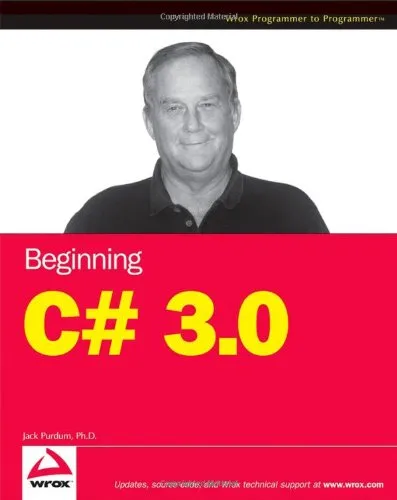
Jack Purdum
1 reviews
Published
pages
views
Welcome to 'Beginning C'! This book serves as a comprehensive guide for anyone who is curious about the C programming language, whether you are new to programming or an experienced programmer looking to brush up your skills. By providing clear explanations, practical exampl
Before you read
Welcome to 'Beginning C'! This book serves as a comprehensive guide for anyone who is curious about the C programming language, whether you are new to programming or an experienced programmer looking to brush up your skills. By providing clear explanations, practical examples, and hands-on exercises, this book aims to equip you with a solid foundation in C programming, enabling you to develop efficient software solutions that are both robust and portable.
'Beginning C' starts with the basics of C programming, bringing readers through essential concepts such as variables, data types, and control structures. As you progress through its pages, you'll delve into more complex topics including pointers, file handling, and even dynamic memory allocation—all explained in an easily digestible way.
The book is meticulously organized to build your understanding step-by-step. Each chapter introduces new concepts while reinforcing what has been previously covered, giving you a well-rounded comprehension of the language. Furthermore, 'Beginning C' places significant emphasis on hands-on practice. Every chapter comes packed with examples and exercises that encourage you to write actual code, helping to bridge the gap between theory and practice.
Throughout the book, the challenges and projects are designed to provoke critical thinking and enhance problem-solving skills. You will also appreciate the practical aspects of learning, as the projects simulate real-world scenarios where you can apply your newly acquired skills to meaningful tasks.
"Programming today is a race between software engineers striving to build bigger and better idiot-proof programs, and the universe trying to produce bigger and better idiots. So far, the universe is winning."
"Learning to program is learning to think."
The importance of 'Beginning C' lies in its accessibility and effectiveness in demystifying a language known for its complexity. Despite the development of many high-level languages, C remains the backbone of much modern software, including operating systems, compilers, and embedded systems. Thus, learning C is essential for anyone aspiring to understand how software interacts with hardware at a fundamental level.
Moreover, the principles and skills you develop in C are transferable across many other programming languages. Understanding C gives you insights into how computers work, improving your ability to write efficient code in any language. 'Beginning C' is not just a book; it is a journey into the world of programming that promises to shape your understanding of computer science in significant ways.
Persian Summary
Your question is answered in the context of this title and author. Each answer uses 2 points.
1 reviews, 5.0 average out of 5
2025/10/30
5 / 5
good book but should have a very expliciese and all
Sign in to publish a review.
Ask a focused question and learn from the community.
Related references that continue this learning path.
Syed Fahad Gilani,Vidya Vrat Agarwal,Jon Reid,Ranga Raghuram,James Huddleston,Jacob Hammer Pedersen