


Book guide and evaluation
Beauty, Ugliness and the Free Play of Imagination: An Approach to Kant's Aesthetics
Mojca Küplen (auth.)
English
Beginner
Art
5.0 / 5
0 reviews
2015
Published
159
pages
302
views
Introduction to "Beauty, Ugliness and the Free Play of Imagination: An Approach to Kant's Aesthetics" "Beauty, Ugliness and the Free Play of Imagination: An Approach to Kant's Aesthetics" explores new horizons in philosophical aesthetics while offering a refreshing
Before you read
What will you get from this book?
Introduction to "Beauty, Ugliness and the Free Play of Imagination: An Approach to Kant's Aesthetics"
"Beauty, Ugliness and the Free Play of Imagination: An Approach to Kant's Aesthetics" explores new horizons in philosophical aesthetics while offering a refreshing re-examination of Immanuel Kant's seminal work in the Critique of Judgment. This book sets out to unravel the timeless questions of beauty and ugliness, delving into their profound implications for art, the human spirit, and the boundless nature of imagination. Through this detailed exploration, I aim to not only illuminate Kant's foundational ideas but also to address their relevance to modern philosophical and aesthetic debates.
Kant’s analysis of beauty has long fascinated scholars for its philosophical depth and intricacy. However, discussions surrounding the aesthetic ideal often overlook the significance of ugliness. By placing beauty and ugliness on equal footing, this book highlights the duality of aesthetic experience and argues that both play complementary roles in shaping our imaginative, emotional, and intellectual lives. At its core, this work offers a re-interpretation of Kant's theory of free play, linking it to both the pleasure we derive from beauty and the discomfort caused by ugliness, while demonstrating how each enriches our understanding of the human condition.
Detailed Summary of the Book
The book begins by retracing the philosophical underpinnings of Kant’s aesthetics. In the Critique of Judgment, Kant examined the subjective yet universal judgments we make about beauty, emphasizing the unique “free play” of imagination and understanding. I take this foundational concept as my starting point, expanding it to incorporate new dimensions of experience, such as our aesthetic responses to ugliness.
The first section contextualizes Kantian aesthetics within the broader philosophical tradition, drawing distinctions between the sublime, the beautiful, and the ugly. It critically examines the dual processes of attraction and aversion, questioning why human beings are naturally drawn toward certain forms and repelled by others.
Next, I focus on the free play of imagination and its role in reconciling beauty and ugliness. The book highlights how imagination mediates between sensory perception and rational thought, enabling us to appreciate aesthetic experiences beyond just sensory pleasure. A significant portion of the analysis demonstrates how both beauty and ugliness challenge the mind, prompting profound cognitive and emotional engagement.
Finally, the book investigates practical applications of Kant’s aesthetics in contemporary culture, art, and society. By embracing both beauty and ugliness, we achieve a fuller understanding of creativity, artistic expression, and moral development. This dual approach contributes to a richer, more inclusive philosophy of art and aesthetics.
Key Takeaways
- Kant’s concept of the “free play” of imagination and understanding is central to the aesthetic experience of beauty and ugliness alike.
- Beauty and ugliness are not opposites but complementary forces that together enrich our creative and intellectual capacities.
- Ugliness, far from being negative, challenges the limits of perception and understanding, offering a deeper engagement with art and nature.
- The intersection of Kantian aesthetics and contemporary culture fosters a more inclusive and enriched philosophy of art.
- Aesthetic judgments, though subjective, reveal universal truths about the human spirit and our ability to imagine alternatives.
Famous Quotes from the Book
"Beauty invites us to linger—it captivates our imagination and resonates with harmony; ugliness challenges us, urges reflection, and compels us to explore the unknown."
"To comprehend the sublime interplay between beauty and ugliness is to embrace the full depth of human creativity."
"Kant’s aesthetic vision extends beyond beauty: it beckons us to examine all elements of existence—pleasing or painful—with critical imagination."
Why This Book Matters
In a world increasingly polarized by binary thinking and marked by divergent artistic and cultural expressions, revisiting Kantian aesthetics offers valuable insights. Understanding beauty and ugliness through the lens of Kant’s philosophy reveals the complex and multifaceted nature of aesthetic judgment, urging us to approach art, creativity, and the human experience with greater openness.
This book contributes to modern aesthetics by addressing neglected aspects of Kantian thought, particularly the role of ugliness in shaping our responses to art and the world around us. It invites readers to transcend the conventional dichotomy of beauty as good and ugliness as bad, exploring instead how these experiences intertwine and mutually enrich one another.
By bridging historical philosophy with contemporary concerns, "Beauty, Ugliness and the Free Play of Imagination" elevates our understanding of creativity, moral development, and the transformative power of imagination. It is not only a tribute to Kant's enduring legacy but also a call to engage with aesthetics as a vital and relevant field of study.
Ask this book
Your question is answered in the context of this title and author. Each answer uses 2 points.
Sign in to ask the book assistant.
Reader reviews
0 reviews, 5.0 average out of 5
No reviews yet
If you have read this book, help the next reader with your experience.
Write a review
Sign in to publish a review.
Reader questions and answers
Ask a focused question and learn from the community.
Sign in to ask or answer a question.
No questions yet
Be the first to ask a clear, useful question.
What to read next
Related references that continue this learning path.


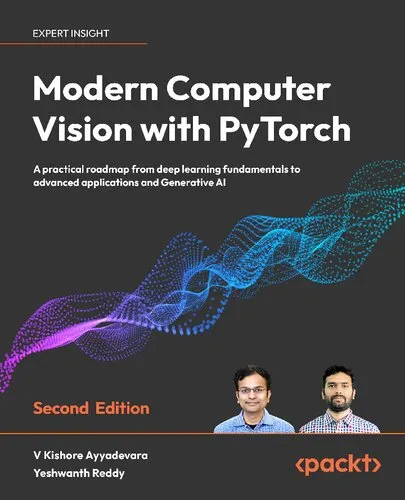
Modern Computer Vision with PyTorch: A Practical Roadmap From Deep Learning Fundamentals to Advanced Applications and Generative AI, 2nd Edition
V Kishore Ayyadevara,Yeshwanth Reddy
2023
View book