
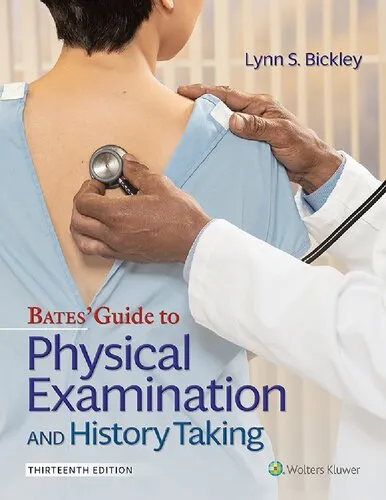
Bates' Guide To Physical Examination and History Taking (Lippincott Connect)
Lynn S. Bickley MD FACP,Peter G. Szilagyi MD MPH,Richard M. Hoffman MD MPH FACP,Rainier P. Soriano MD
2020
View book
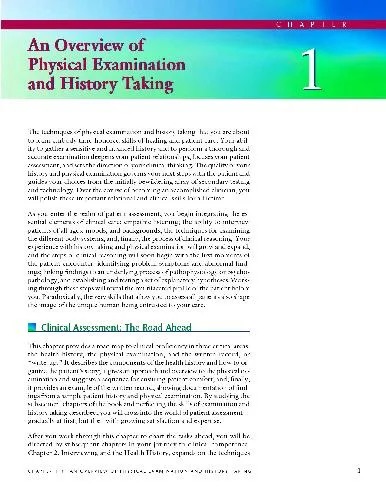
Book guide and evaluation
Lynn S. Bickley
0 reviews
Published
pages
views
Introduction to Bates' Guide to Physical Examination and History Taking Bates' Guide to Physical Examination and History Taking is an essential resource for healthcare professionals and students aiming to master the art and science of clinical evaluation. This comp
Before you read
Bates' Guide to Physical Examination and History Taking is an essential resource for healthcare professionals and students aiming to master the art and science of clinical evaluation. This comprehensive textbook, continuously updated and refined, offers a systematic approach to physical examination and historical assessment—a foundation critical for effective patient care.
Bates' Guide begins by highlighting the importance of integrating clinical skills with critical thinking to ensure accurate diagnosis and effective treatment. The book meticulously details each step of the physical examination, from initial patient interaction to nuanced assessment techniques for each body system. It underscores the importance of building a rapport with patients, understanding their concerns, and employing both observation and hands-on skills to gather critical health information.
Each chapter is dedicated to a specific system, providing in-depth guidance on relevant anatomy, examination techniques, and common findings. These chapters are augmented with illustrations, mnemonics, and evidence-based practices to enhance learning and application. Furthermore, Bates' Guide emphasizes the importance of documentation, offering guidelines on recording findings accurately to support clinical reasoning and communication.
- Mastery of physical examination techniques is essential for accurate diagnosis and patient care.
- Effective communication and the ability to build patient trust are foundational skills for clinicians.
- Systematic and thorough examination of each body system, with attention to detail, leads to superior clinical outcomes.
- Integration of evidence-based practices enhances the reliability of examination and history taking.
"A successful encounter is one in which the clinician establishes rapport, efficiently gathers information, and skillfully conducts the physical examination to yield useful data and insights."
"Careful observation and effective patient communication are as crucial as technical skills in arriving at the right diagnosis."
Bates' Guide is more than just a textbook; it is a pivotal reference that equips healthcare professionals with the understanding and skills necessary for thorough patient evaluation. By promoting a methodical approach to physical examination and history taking, the book sets a standard for clinical excellence. It empowers clinicians to practice with empathy and precision, ultimately leading to improved healthcare outcomes.
The book's enduring presence in medical education underscores its relevance and utility in an ever-evolving healthcare landscape. As diseases and healthcare technologies advance, Bates' Guide remains a consistent source of foundational knowledge that bridges scientific innovation with humane patient interaction.
Your question is answered in the context of this title and author. Each answer uses 2 points.
0 reviews, 4.7 average out of 5
Sign in to publish a review.
Ask a focused question and learn from the community.
Related references that continue this learning path.
Lynn S. Bickley MD FACP,Peter G. Szilagyi MD MPH,Richard M. Hoffman MD MPH FACP,Rainier P. Soriano MD
Richard LeBlond,Donald Brown,Manish Suneja,Joseph F. Szot
Graham Douglas BSc(Hons) MBChB FRCP(Ed),Fiona Nicol BSc(Hons) MB BS FRCGP FRCP(Ed),Colin Robertson BA(Hons) MBChB FRCP(Ed) FRCS(Ed) FSAScot