
The Mind Illuminated: A Complete Meditation Guide Integrating Buddhist Wisdom and Brain Science
Culadasa (John Yates),M. Immergut
2011
View book

Book guide and evaluation
Oliver,Dean
0 reviews
Published
pages
views
Introduction to "Basketball on Paper: Rules and Tools for Performance Analysis" "Basketball on Paper: Rules and Tools for Performance Analysis" serves as a groundbreaking exploration into the quantitative analysis of basketball. Written by a pioneer in the field, this bo
Before you read
"Basketball on Paper: Rules and Tools for Performance Analysis" serves as a groundbreaking exploration into the quantitative analysis of basketball. Written by a pioneer in the field, this book combines statistical insights with a comprehensive understanding of the game’s strategic and tactical elements. Whether you're an avid basketball fan, a coach, or an analytics professional, this book equips you with the tools you need to delve deep into the intricacies of basketball and evaluate team and player performance like never before.
Statistics have transformed the way modern basketball is understood and played, and this book was among the first to bridge the gap between traditional basketball knowledge and data-driven analysis. Rather than relying solely on conventional wisdom, "Basketball on Paper" challenges readers to think critically and statistically about the sport, providing both theoretical frameworks and practical techniques. Combining historical examples, engaging narratives, and actionable insights, the book underscores why data analysis is an essential part of basketball decision-making at every level.
The book begins with an explanation of the foundational concepts of basketball analytics, walking readers through key terms, statistical measures, and their applications in the sport. From shooting percentages to pace and possessions per game, the initial chapters focus on demystifying the numbers while keeping them grounded in the realities of professional and amateur basketball alike.
One of the core principles laid out in the book is that basketball should be analyzed as a team sport. Unlike baseball, where players act in isolation, basketball players operate in a highly interconnected environment. "Basketball on Paper" accounts for these dynamics by evaluating how players influence their teammates, opponents, and the flow of the game.
Later chapters explore advanced concepts such as the Four Factors of Basketball Success, which are shooting efficiency, turnovers, rebounding, and free throws. These factors were revolutionary when introduced, as they provide a concise way to determine a team's strengths and weaknesses in any game or season.
The book also discusses player evaluation metrics, strategies to optimize lineups, and the impact of clutch performance under high-pressure situations. By integrating math and creative storytelling, the work ensures that the numbers come alive, enabling readers to connect analytics to what actually happens on the court.
"Basketball is a game of numbers, stories, and emotions, and sometimes the unexpected comes from dissecting those elements."
"The Four Factors are not the only elements to winning basketball games—but they are remarkably predictive of success."
"Statistics can tell us what happened. Insight and creativity tell us why it happened."
As the sports analytics movement gains momentum, "Basketball on Paper" remains a timeless reference for understanding the interaction between numbers and basketball's dynamic, fast-paced nature. The book’s methodologies have been adopted by NBA teams, analysts, and sports technology companies alike, cementing its status as one of the cornerstone texts in basketball analytics.
What makes this book unique is its ability to merge theory and practice. By learning from historical precedents and present-day examples, readers gain a holistic understanding of how basketball evolved and where it is heading in the era of big data. This book also fosters respect for both quantitative and qualitative perspectives, offering balanced insights that appeal to statisticians and traditionalists alike.
Ultimately, "Basketball on Paper" matters because it empowers readers to see basketball in a new light. It transforms fans into analysts, coaches into strategists, and players into intellectuals of the sport. The lessons contained within its pages help anyone—from casual enthusiasts to industry professionals—appreciate the beauty, complexity, and art behind the numbers.
Your question is answered in the context of this title and author. Each answer uses 2 points.
0 reviews, 4.5 average out of 5
Sign in to publish a review.
Ask a focused question and learn from the community.
Related references that continue this learning path.
Culadasa (John Yates),M. Immergut
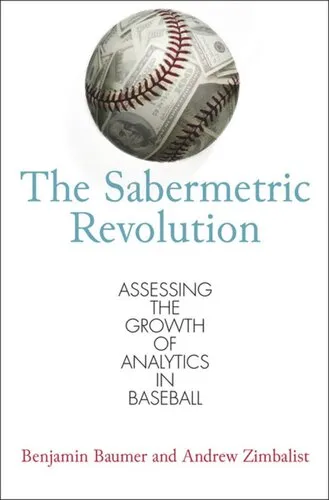
Benjamin Baumer;Andrew Zimbalist