

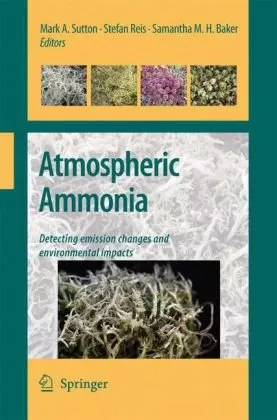
Book guide and evaluation
Atmospheric ammonia: detecting emission changes and environmental impacts: results of an expert workshop under the Convention on Long-range Transboundary Air Pollution
Mark Sutton,Stefan Reis,Samantha Baker
English
Beginner
Physics
4.8 / 5
0 reviews
2008
Published
463
pages
392
views
The book "Atmospheric Ammonia: Detecting Emission Changes and Environmental Impacts: Results of an Expert Workshop under the Convention on Long-range Transboundary Air Pollution" provides a comprehensive exploration of the critical challenges and scientific understand
Before you read
What will you get from this book?
The book "Atmospheric Ammonia: Detecting Emission Changes and Environmental Impacts: Results of an Expert Workshop under the Convention on Long-range Transboundary Air Pollution" provides a comprehensive exploration of the critical challenges and scientific understanding related to ammonia emissions in the atmosphere. Written by Mark Sutton, Stefan Reis, and Samantha Baker, the book draws upon the findings and discussions from an expert workshop held under the auspices of the Convention on Long-Range Transboundary Air Pollution (CLRTAP). This foundational work bridges the gaps between policy-making, scientific understanding, and actionable mitigation strategies.
Atmospheric ammonia, a key component in the nitrogen cycle, has far-reaching implications for both human and environmental health. While ammonia emissions are vital for agricultural productivity, their atmospheric presence can have deleterious effects – contributing to air pollution, eutrophication, and biodiversity loss. This book distills complex information from the workshop, providing a structured guide for detecting emission changes, assessing environmental impacts, and implementing transboundary solutions. It is an essential resource for policymakers, environmental scientists, and practitioners working towards sustainable nitrogen management globally.
Summary of the Book
The overarching focus of the book is the role of atmospheric ammonia in environmental degradation and pollution. It delves deeply into the mechanisms of ammonia emission detection, the tools and methodologies available for monitoring changes in emissions, and their interactions within the atmosphere. The book also emphasizes the role of international collaboration in addressing these challenges, particularly under the framework of the UNECE Convention on Long-range Transboundary Air Pollution.
Key sections of the book include an analytical overview of ammonia sources, from agricultural activities to industrial processes, and the pathways through which ammonia interacts with ecosystems and the atmosphere. The authors provide case studies and practical examples of emission reduction strategies, linking them to real-world successes and ongoing challenges. Moreover, the book discusses how advancements in technology and modeling can improve ammonia emission inventories and impact assessments.
By presenting both technical insights and policy-oriented solutions, the book seeks to serve as a catalyst for more effective cooperation among nations. The urgency of addressing atmospheric ammonia is emphasized throughout, underscoring its significance in mitigating issues like particulate matter formation and nitrogen deposition.
Key Takeaways
- Ammonia's Critical Role in the Nitrogen Cycle: The book explains the chemical and biological importance of ammonia emissions while highlighting their unintended contributions to air pollution and environmental degradation.
- Improved Detection Methods: Readers gain valuable insights into state-of-the-art tools and techniques for tracking ammonia emissions and detecting environmental changes.
- Policy Frameworks and Collaboration: The book underscores the role of international laws and cooperative frameworks, particularly those under CLRTAP, in addressing transboundary issues.
- Innovative Case Studies: Practical examples demonstrate how countries have successfully employed mitigation strategies to reduce ammonia emissions and their harmful impacts.
- Interconnections Across Sectors: The text examines the links between agriculture, industry, air quality, and ecosystem health, advocating for an integrated, cross-disciplinary approach.
Famous Quotes from the Book
"The challenges posed by atmospheric ammonia transcend borders, requiring international solutions informed by science, innovation, and collaboration."
"Reducing ammonia emissions is not merely an environmental imperative; it is a societal necessity to protect human health and preserve ecological integrity."
"Understanding ammonia's role in air pollution is the first step towards creating solutions that harmonize agricultural productivity with environmental sustainability."
Why This Book Matters
This book is a crucial contribution to the global discourse on nitrogen management and air pollution control. Atmospheric ammonia has emerged as a pressing environmental concern, yet it is often overshadowed by conversations around other pollutants like carbon dioxide and methane. The authors illuminate the unique challenges and opportunities in managing ammonia emissions, providing a much-needed scientific and policy-focused perspective.
By combining expertise across fields, this book offers a rare synthesis of environmental science, policy analysis, and practical application. It equips policymakers with the evidence needed to develop effective regulations and guides practitioners in implementing solutions on the ground. Furthermore, the emphasis on international collaboration serves as a reminder that environmental problems require cooperative approaches for lasting success.
Whether you are an environmental scientist, a policymaker, or someone interested in sustainable agriculture and air quality, this book is an indispensable resource. It reminds us that proactive measures in reducing ammonia emissions will not only protect ecosystems but also promote healthier societies worldwide.
Ask this book
Your question is answered in the context of this title and author. Each answer uses 2 points.
Sign in to ask the book assistant.
Reader reviews
0 reviews, 4.8 average out of 5
No reviews yet
If you have read this book, help the next reader with your experience.
Write a review
Sign in to publish a review.
Reader questions and answers
Ask a focused question and learn from the community.
Sign in to ask or answer a question.
No questions yet
Be the first to ask a clear, useful question.
What to read next
Related references that continue this learning path.
Conservation Science and Advocacy for a Planet in Peril: Speaking Truth to Power
Dominick A. DellaSala (editor)
2021
View book